
By Ben McDorman
Will a metal roof turn every summer storm into a tin-drum concert that rattles you right out of bed? That fear prevents many Valley homeowners from ever asking for a quote. Maybe you have watched your shingles curl, cup, and shed granules for fifteen years, or maybe you cannot stop picturing a clean standing seam roof on your own home. Either way, you deserve straight answers before you spend a single dollar.
At Valley Roofing & Exteriors, we have spent 22 years putting roofs on homes across Central Virginia and the Shenandoah Valley, so we have seen firsthand what works here and what does not. This guide walks you through what actually changes when you convert from shingles to metal: the noise, the cost, the tear-off, the dents, the gutters, and the pitch of your roof.
Why Does Roofing in the Shenandoah Valley Need Special Thought?
The Valley is not a flat, mild place, and your roof should not treat it as such. We sit tucked between two mountain ranges that funnel the wind, wring out heavy rain, and drop the occasional hailstorm right on top of us. Summers swing hot, winters bring ice, and the freeze-thaw cycle works on a roof all season long.
We also work on a great many historic homes and classic farmhouses, where a metal roof does not just perform well; it fits the look of the land.
Why Do Valley Homeowners Switch From Shingles to Metal?
The number one reason, plain and simple, is longevity. A quality metal roof can last two to three times as long as asphalt shingles, so many homeowners buy one roof instead of two or three over a lifetime.
Second is nostalgia. A lot of folks grew up in a house that had a metal roof; they love the memory of it, and they want that feeling back over their heads.
| At a glance | Asphalt shingles | Metal roof |
|---|---|---|
| Typical lifespan | 15 to 25 years | 40 to 70 years |
| Roofs bought per lifetime | Two to three | Usually one |
| Storm and fire resistance | Moderate | High |
| Curb appeal on Valley farmhouses | Standard | Standout |
Independent lifespan data from Englert lines up with what we see on real roofs.
Does a Metal Roof Actually Add Value to My Home?
Yes, and it is fair to ask by how much. From what we have researched and watched play out at resale, a metal roof lifts a home’s value, even if not every dollar the day you sell. A good rule of thumb is that you recoup roughly a third to nearly half of what you put in, and independent resale reports by The Roofing Brief rank roofing among the stronger home improvements for return on investment. The rest pays you back in decades of no-worry protection, since you are not buying this roof again in just fifteen years.
Are Metal Roofs Really That Loud When It Rains?
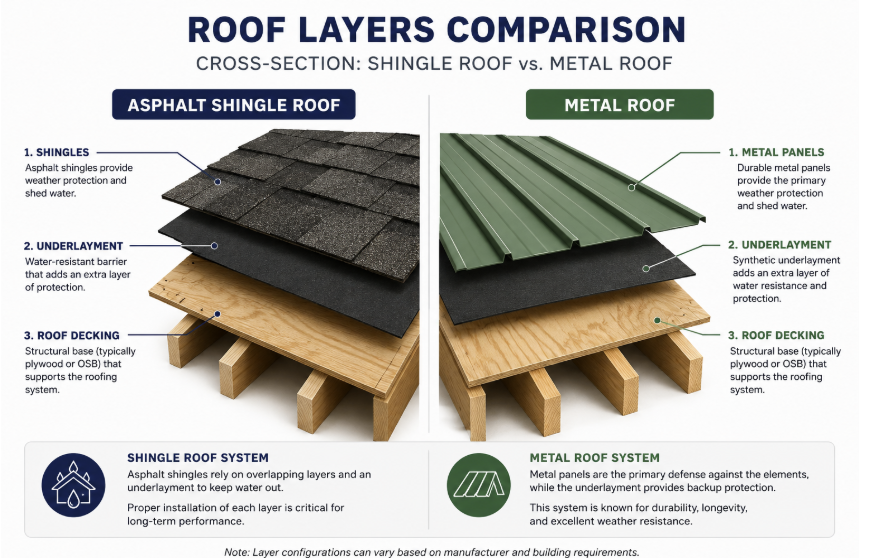
This is the fear we hear most from (potential) customers, so let us settle it. Yes, old metal roofs were loud. One of our team grew up under a metal roof in the Valley, and when it rained, you knew it. But that noise was never really only about the metal. On an older roof, the panel moves, and sometimes there is a slight belly, a gap between the metal and the deck below, so when rain hits it, the sound magnifies like a drum.
Today’s metal is a different animal. It is thicker, which makes it stiffer, so it does not move the way it used to. That same team member now has a new metal roof on his home in Bridgewater, and he cannot tell whether it is raining outside or not. Fastened tight against a solid deck with the right underlayment, metal simply does not make that racket anymore.

Do You Tear Off the Old Shingles or Go Over Them?
We recommend tearing off the old shingles almost every time. A clean deck lets us inspect the wood, fix any surprises, and lay the roof flat and tight. When you cover shingles instead of removing them, you generally will not get the full longevity out of the new roof, and longevity is the whole reason most people choose metal.
There are rare exceptions. On one farm shop that housed horses and cattle, the owners did not want loose nails dropping onto their animals. So we left the shingles, added paper, set purlins, and ran a corrugated metal panel over the top. Purlins are simply the horizontal wood or metal strips we fasten across the roof, and the new metal panels screw down into them. Think of them as the rails the metal rides on. It was the right call for that shop, but for a typical home, tear-off is the route that protects your investment.
Will a Metal Roof Dent From Hail?
It can, but far less than most people expect. Older, thinner metal shows hail sooner. The heavier metal we install now takes a much bigger hit, a good-sized limb or serious hail, before it shows a dent. We have had storms here that marked some metal, so we will never promise a dent-proof roof. But today’s panels shrug off the weather far better than the roofs your grandparents knew, and many even carry a Class 4 impact rating, the top mark for hail resistance.
Will Metal Change My Gutters and Roof Pitch?
Two practical details catch homeowners off guard.
Gutters. When we install a metal roof, we recommend swapping the gutters out for two reasons. First, we have to remove them anyway to work the bottom edge of the roof. Second, metal sheds water fast. The volume is no higher than before, but it comes off the roof at a much higher rate of speed. Many Valley homes have five-inch gutters sized for shingles. We have worked jobs where a homeowner asked us to keep the old ones, and after the first hard rain, the water shot right past them and missed the gutters altogether. That is why we recommend stepping up to six-inch gutters, which our gutter team can handle wrapped up in the same project.
Roof pitch. The slope of your roof decides which metal systems will work, and this is where the type of metal matters. Pitch is written as two numbers, like 3:12, and it tells you how many inches the roof rises for every 12 inches it runs sideways. A 3:12 roof climbs three inches for every foot, so a lower first number means a flatter roof, and a higher one means a steeper roof. That flatness matters because water drains more slowly on a low slope, so it needs the right panel to move it off safely. Standing seam can go on a very low slope, while snap-lock and corrugated panels require a greater pitch to shed water. Read more on types of metal roofing.
| Roofing system | Minimum pitch we can install |
|---|---|
| Asphalt shingles (manufacturer minimum) | 2:12 |
| Standing seam metal | 1:12 |
| Snap-lock metal | 3:12 |
| Corrugated metal panel | 3:12 |
Even though shingles are rated down to 2:12, we prefer not to install them below 3:12. Metal, and standing seam in particular, gives you far more freedom on a low-slope home.
When Is Metal Roofing the Wrong Call?
We will tell you plainly: metal is not for everyone. If your decision comes down to budget alone, and you plan to move on in ten or fifteen years, shingles may make more sense, and there is nothing wrong with that. But if you are staying put and want a roof that outlasts you and builds value over those years, metal is the better choice. Honesty like that is how we have earned trust in the Valley for 22 years.
Is Making the Switch Worth It for Your Home?
You now know the big picture. A metal roof in the Shenandoah Valley lasts two to three times longer than shingles, adds real value, and stays surprisingly quiet in a storm when it is installed right. Tear-off beats a roof-over, today’s heavier panels handle hail far better, and the small details like gutters and pitch separate a roof that performs from one that disappoints.
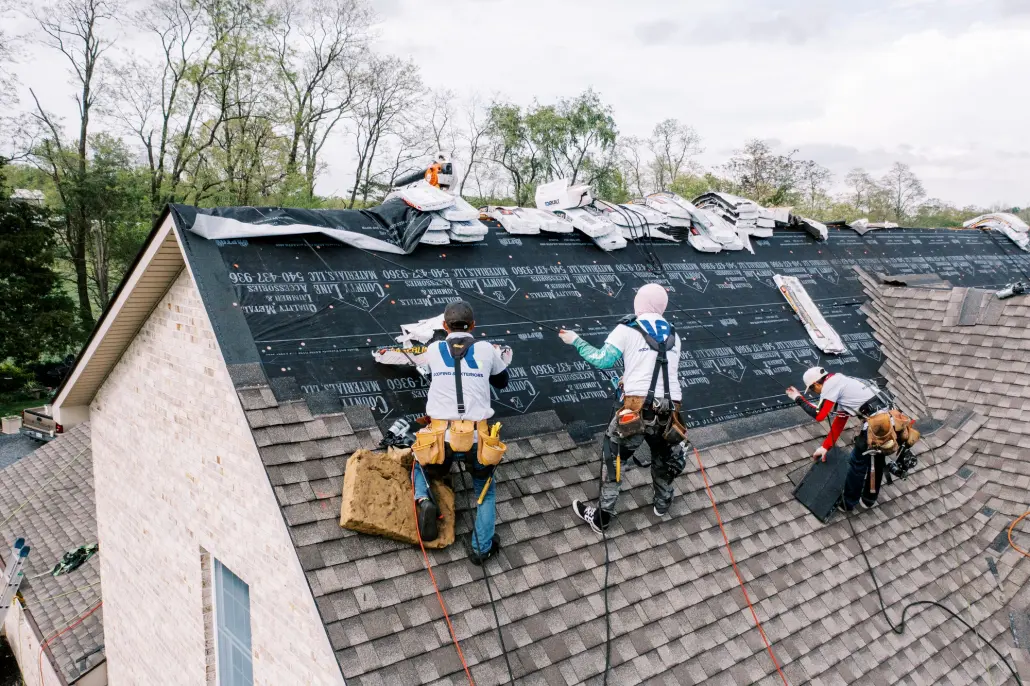
The best way to see what quality metal work looks like is to browse our project gallery. When you are ready to talk specifics, book a discovery call with a project consultant. We will walk your roof and give you the honest version, just as we did here.