
Pricing
If you are thinking about adding a sunroom to your home, you are probably asking one question first: “How much will it cost?”
The honest answer is…it depends. But we can help.
Our goal is simple: Help you understand why sunroom prices vary so you can make an informed decision.
In this guide, we explain:
Average Sunroom Costs in Virginia
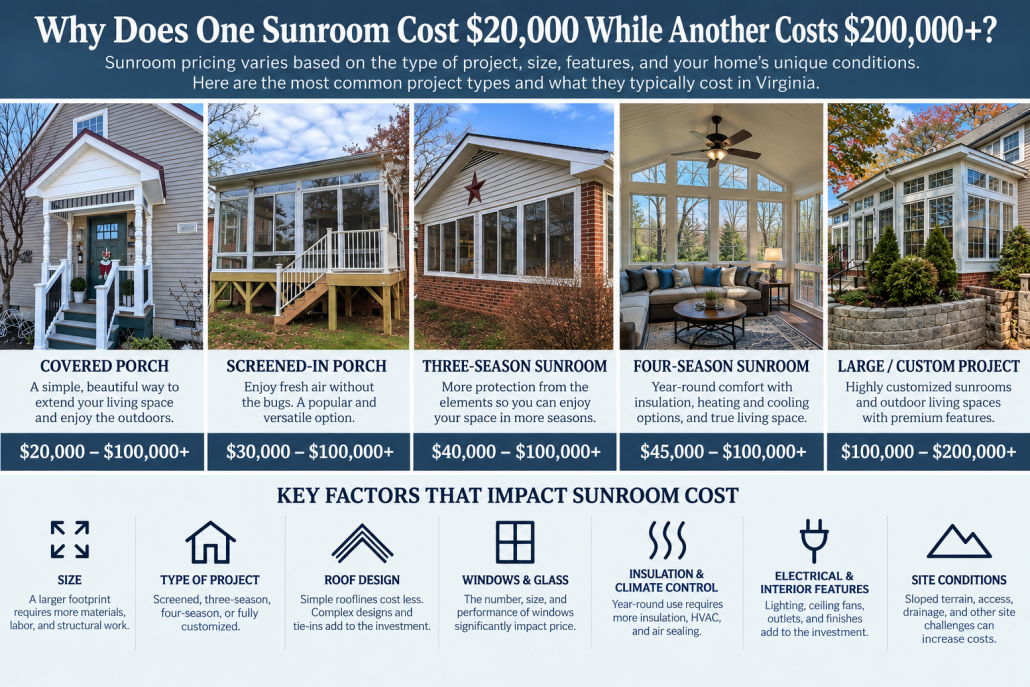
Why such a large range?
Because you are not simply buying a certain number of square feet. You are paying for a complete structure that has to work with your existing home.
The foundation, roof, windows, insulation, electrical work, heating and cooling, site conditions, finishes, and amount of existing structure that can be reused can all change the final investment.
What Makes Some Sunroom Contractors
More or Less Expensive?
Two sunroom estimates can look similar at first glance and still represent two very different projects.
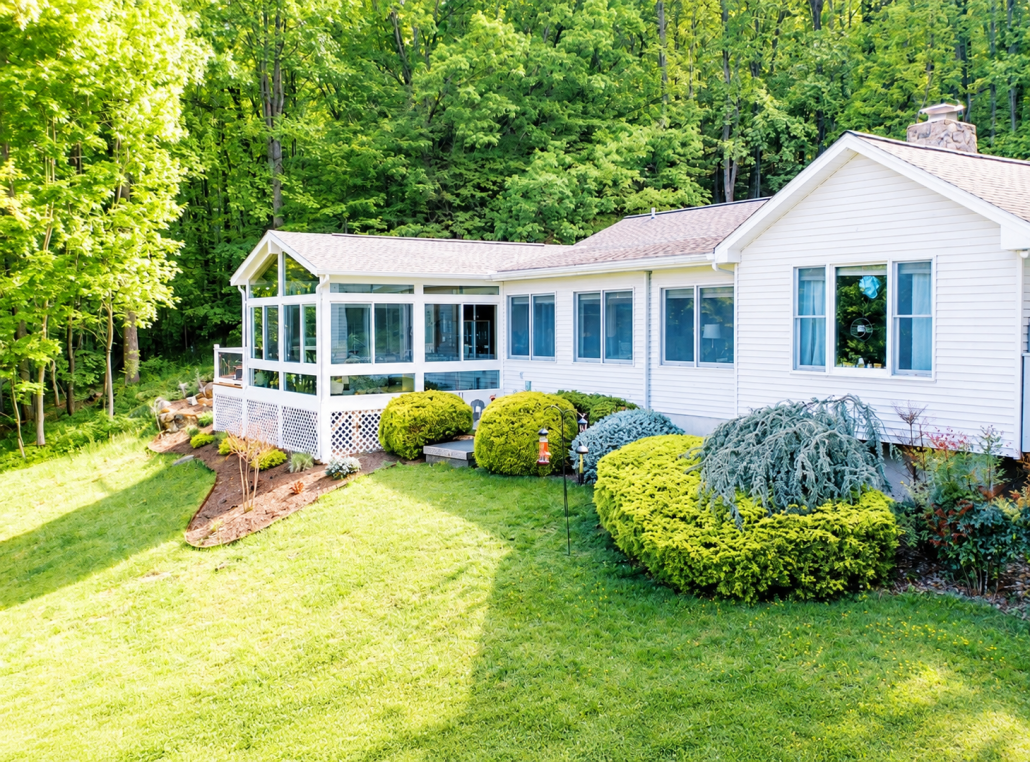
Higher-Priced Sunrooms Typically Have Features That May Include:
- Higher-performance sunroom systems
- Better windows and doors
- More substantial structural work
- Proper roof integration and water management
- More insulation
- Better warranties
- Experienced installation crews
- Dedicated project management
- More detailed design and planning
- Better communication throughout the project
At Valley Roofing & Exteriors, we install Betterliving sunrooms, patio rooms, screen rooms, and enclosed porches, and help homeowners determine which type of space makes sense for their home and how they intend to use it.
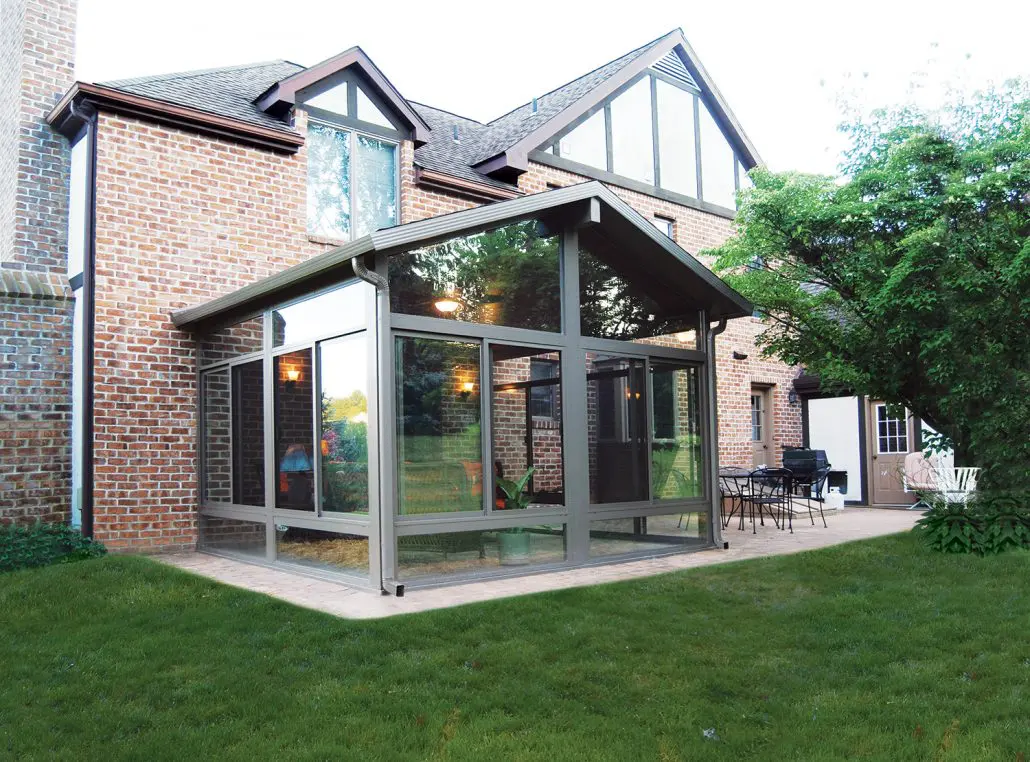
Why Is Another Sunroom Quote So Much Cheaper?
A lower-priced estimate may reflect:
- A simpler room design
- Less glass
- Lower-performing windows or doors
- Less insulation
- No heating or cooling
- Reuse of existing structures
- Fewer electrical features
- Less interior finish work
- Different warranty coverage
- Less project management
And sometimes, the contractor simply has a lower overhead structure.
That doesn’t automatically make a lower-priced sunroom bad.
The important question is:
Are you actually comparing the same room?
If one contractor is quoting a basic three-season enclosure and another is quoting a fully insulated, climate-controlled four-season room, comparing only the bottom-line price isn’t useful.
Make sure you understand exactly what you’re getting, and what you’re not getting.
Screen Room vs. Three-Season vs. Four-Season:
What’s the Best Value?
| Feature | Screen Room | Three-Season Room | Four-Season Room |
|---|---|---|---|
| Initial Investment | $$ | $$$ | $$$$ |
| Bug Protection | ✅ | ✅ | ✅ |
| Protection From Rain | ❌ | ✅ | ✅ |
| Glass Windows | ❌ | ✅ | ✅ |
| Insulated for Year-Round Use | ❌ | Limited | ✅ |
| Heating & Cooling | ❌ | Usually Limited | ✅ |
| Year-Round Living Space | ❌ | ❌ | ✅ |
Legend: ✅ Meets criterion • ❌ Does not meet criterion
Read more about the differences in types of sunrooms here.
Upfront Cost vs. Lifetime Value
The least expensive sunroom is not automatically the least expensive room to own.
A lower upfront investment may make sense if you are primarily looking for seasonal outdoor living.
But if you build a room you eventually discover is too hot in July and too cold in January, you may find yourself paying later to upgrade a space that was not designed for how you really wanted to use it.
That’s why one of the most important questions is not:
“What is the cheapest sunroom I can build?”
Instead, the question is:
“How do I actually want to use this room five or ten years from now?”
Build around that answer.
Read more about planning the outdoor living space of your dreams here.
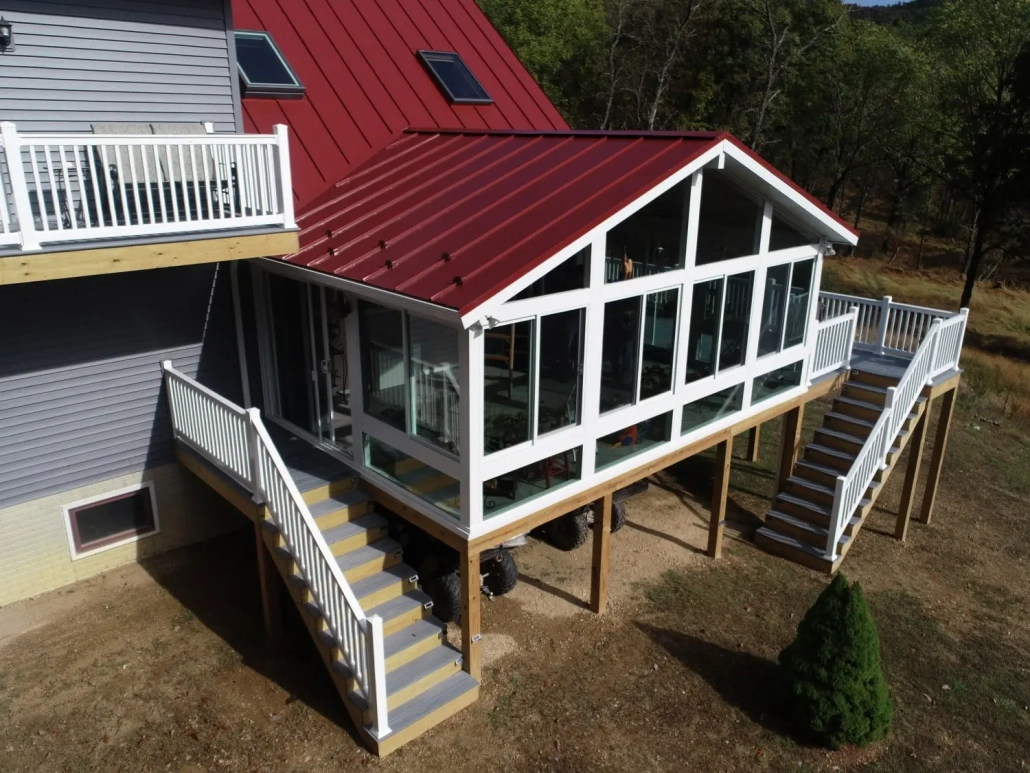
Sunroom Costs Homeowners Should Consider
These are potential factors that may require additional work beyond the room itself:
- Permits (read more here).
- Demolition
- Foundation or footing work
- Deck reinforcement or replacement
- Roofing modifications
- Electrical work
- Heating and cooling
- Drainage improvements
- Landscaping repairs
- Interior flooring
- Structural modifications
- Steps, landings, or exterior access
A good estimate should make these items clear before construction begins, whenever they are reasonably foreseeable.
Nobody enjoys signing a contract for one amount and discovering halfway through construction that the actual project costs considerably more.
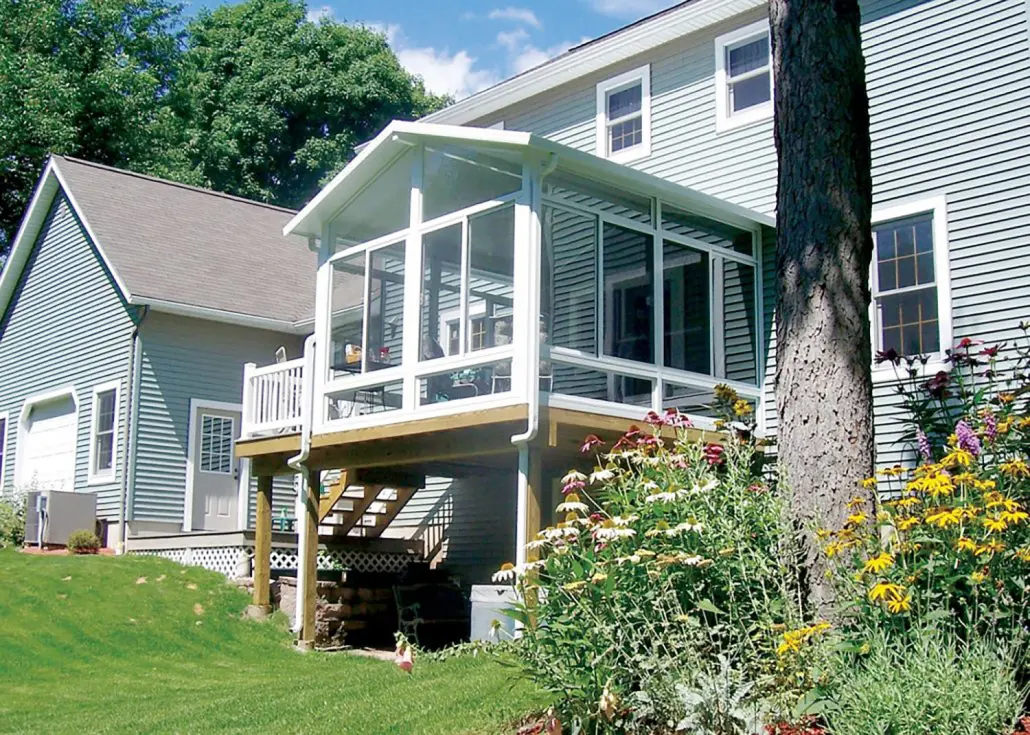
Can Converting My Existing Deck or Porch Save Money?
Yes—sometimes significantly.
The best candidates are generally existing structures that already provide much of what the finished room needs.
An existing covered porch can be especially valuable because the roof, posts, footprint, and basic structure may already be in place.
But an existing deck is not automatically a sunroom foundation.
Before planning your budget around reuse, the structure needs to be evaluated to determine whether it can safely and practically support the new room.
Sometimes reuse saves substantial money.
Sometimes reinforcing an inadequate structure becomes so extensive that starting over is the smarter investment.
Read more about building a roof on your existing deck and when converting a porch or deck can save you money.
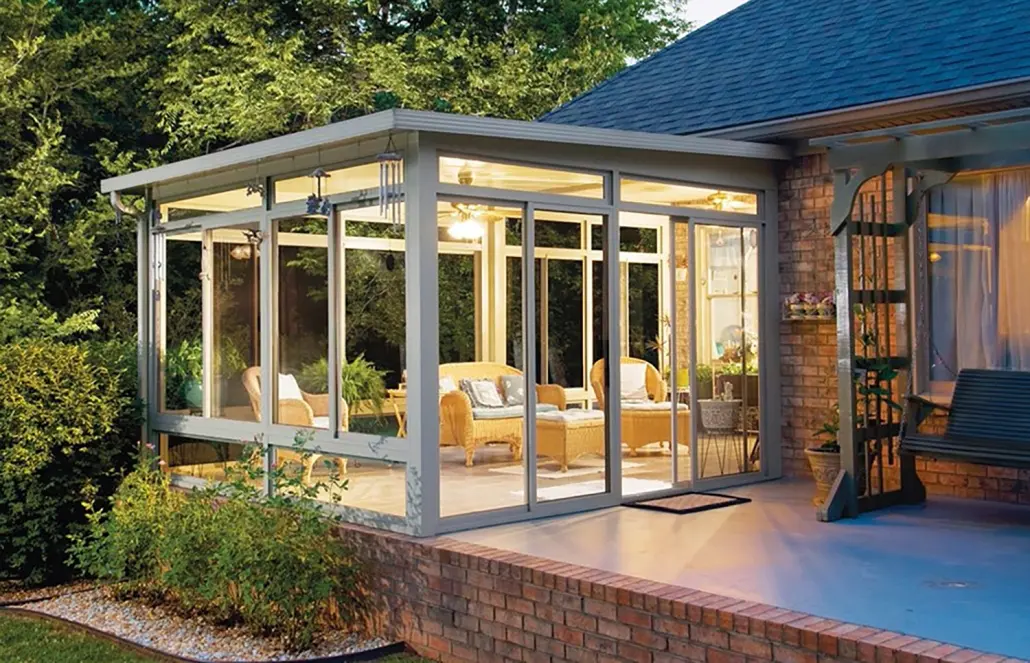
Real Sunroom Projects & Prices
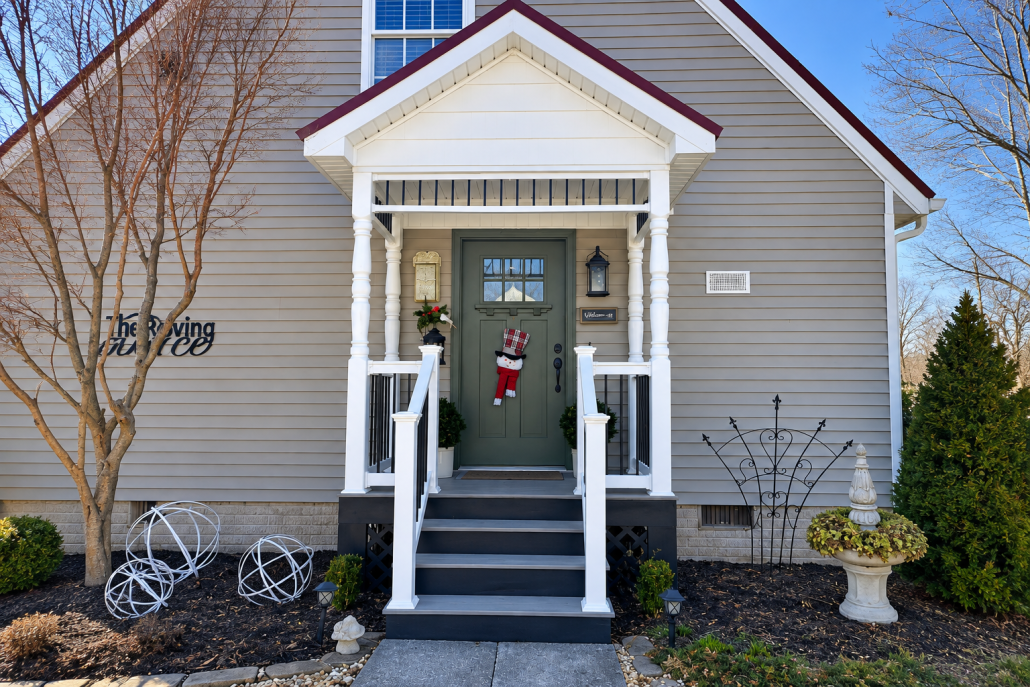
Example #1: Covered Porch
-
- 5’x’6′
- Composite boards
- Vinyl railing
- Maintenance-free wraps and lattice around base
- Approximate investment $20,000-$24,000
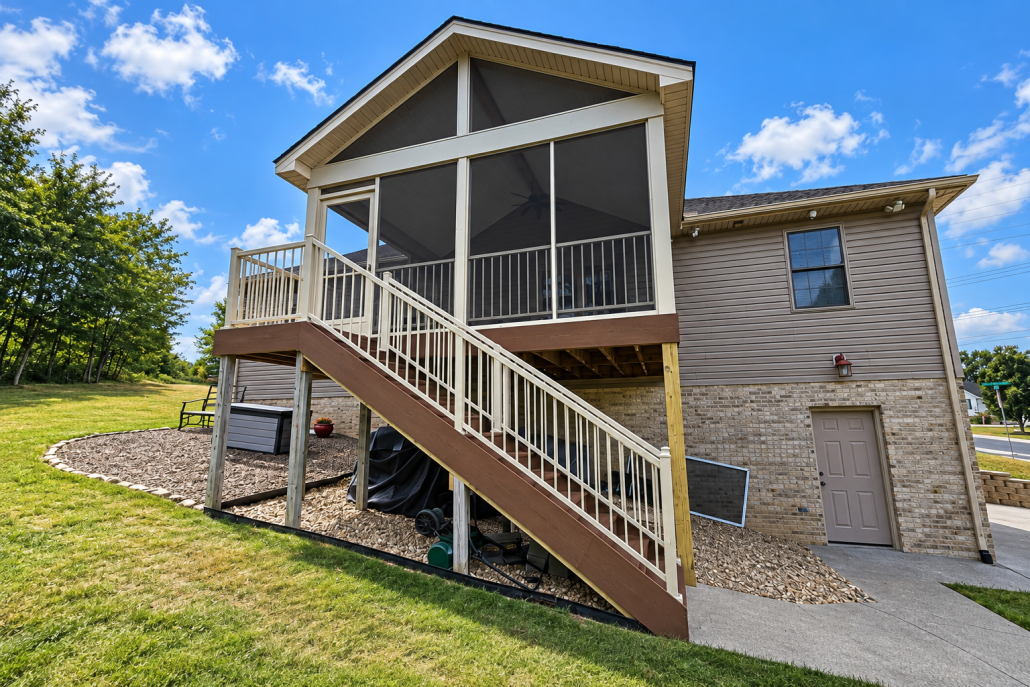
Example #2: Screened Porch
-
- 12’×16′
- Composite deck board
- Aluminum railing
- A-frame with vaulted ceiling
- Approximate Investment $50,000-$60,000
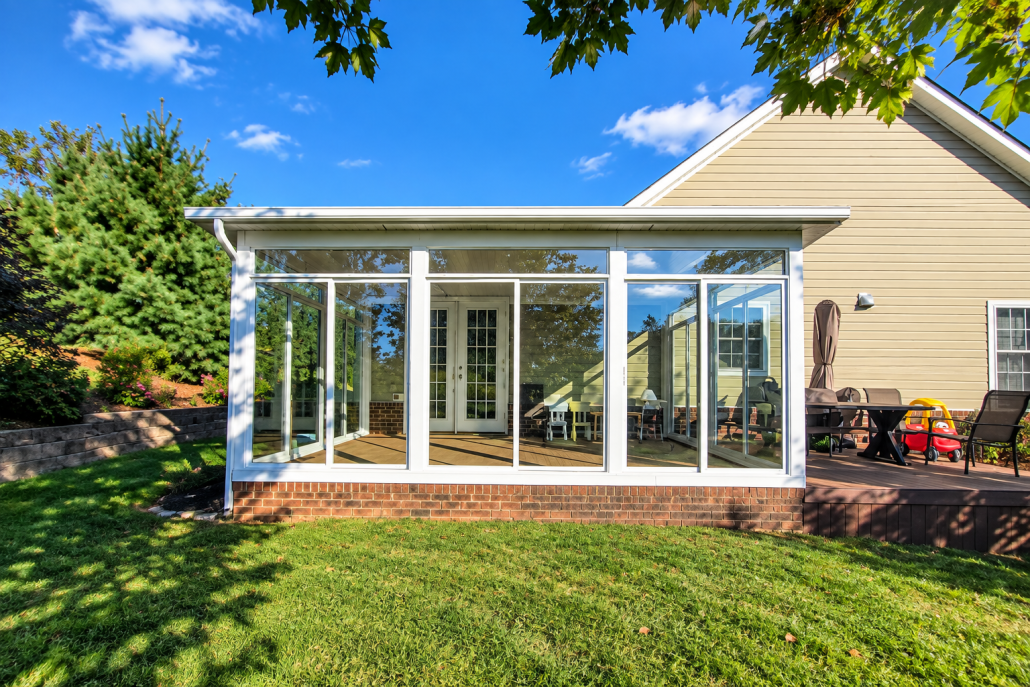
Example #3: Three-Season Sunroom
-
- 12’x18’
- Shed-style roof
- All patio doors
- Standard transom windows
- Approximate investment $60,000-$80,000
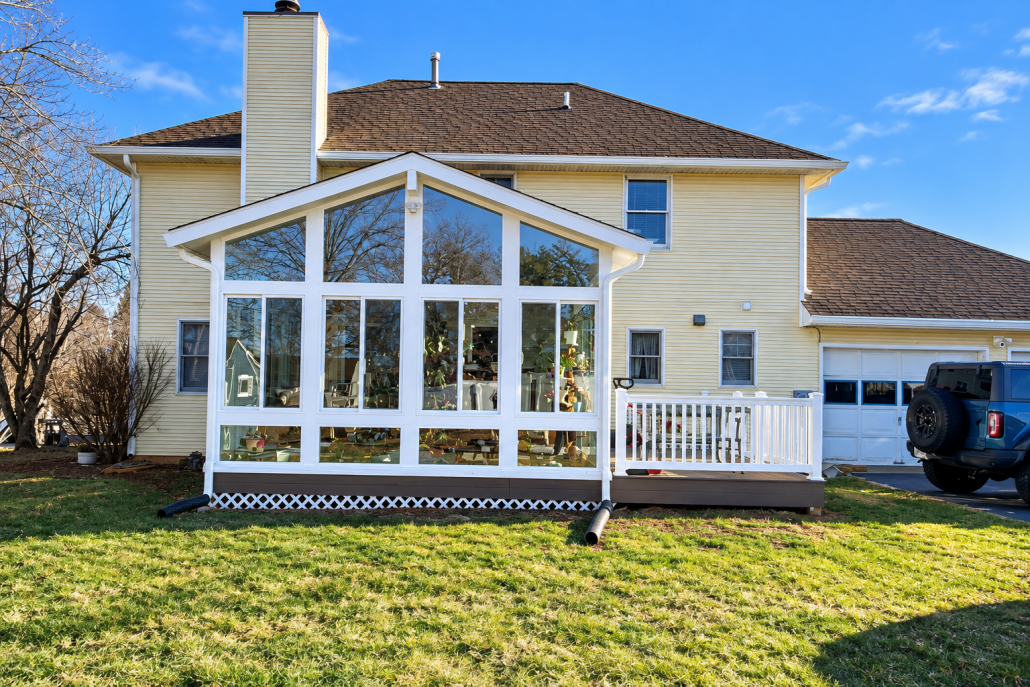
Example #4: All-Season Sunroom
-
- 16’x16′
- Pressure-treated deck
- Vaulted A-frame roof
- Composite deck board
- Vinyl railing
- Approximate investment $80,000-$110,000
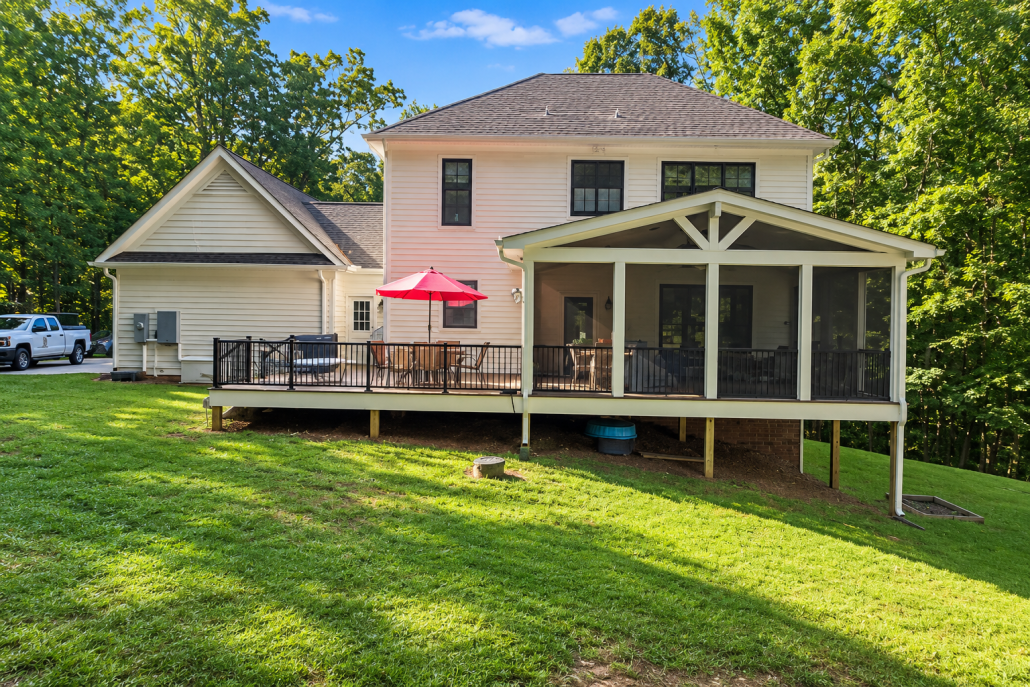
Example #5: Screened Porch
-
- 16’x24′
- Adjacent deck
- A-frame-style with vaulted ceiling
- Premium Wolf PVC deck boards
- Aluminum railing
- Custom large stone fireplace
- Approximate investment $150,000+
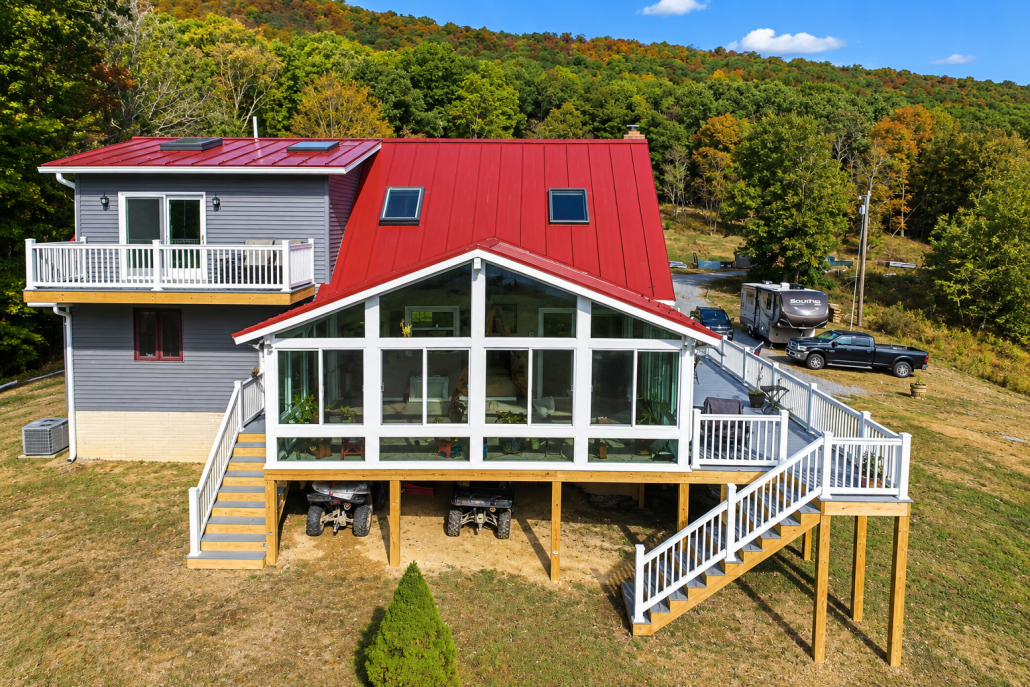
Example #6: All-Season Sunroom
-
- 14’x24′
- Vaulted A-frame-style roof
- Composite deck
- Vinyl rail
- Large wraparound deck
- Approximate investment $150,000+
Frequently Asked Questions
Is a four-season sunroom worth the extra cost?
It can be if you genuinely want to use the room year-round.
You are paying more for insulation, windows, air sealing, electrical work, and climate control, so the initial investment is higher. But you are also creating a room with much greater year-round utility.
If you will primarily use the room during mild weather, paying for a four-season room may not make sense.
Is a sunroom cheaper than a traditional home addition?
Often, yes, depending on the design and level of finish.
But homeowners should not assume every sunroom will be inexpensive. Large, highly customized four-season rooms can become substantial construction projects.
Can you build a sunroom on my existing deck?
Sometimes.
The existing deck needs to be evaluated for its foundation, framing, condition, attachment, and ability to carry the loads created by the new room.
What is the least expensive sunroom option?
Generally, a screened enclosure is the lowest-cost option because it doesn’t require the windows, insulation, and climate-control features associated with a four-season room
What causes sunroom prices to increase the most?
Some of the biggest factors are typically:
- Room type
- Size
- Foundation requirements
- Roof complexity
- Amount and type of glass
- Insulation
- Heating and cooling
- Electrical work
- Interior finishes
- Site conditions
How much should I budget for a sunroom in Virginia?
As a broad planning range, many sunroom and outdoor-living projects fall somewhere between $20,000 and $150,000, depending on what you are building.
A screened porch may fall toward the lower end, while a large, fully finished four-season room can reach or exceed the upper end.
The best way to narrow that range is to first decide how you want to use the room, then determine the size and level of performance necessary to achieve it.
Is a sunroom a good investment?
That depends on what you mean by “investment.”
If you are evaluating it purely based on immediate resale return, a sunroom may not return every dollar you spend.
But that is only one way to measure value.
If the room becomes the place where you drink coffee every morning, entertain family, work from home, read, watch the mountains, or spend time together, its value also comes from years of actual use.
So before building one, ask yourself:
Will this space meaningfully improve the way we live in our home?
If the answer is yes, and you plan to stay in the home long enough to enjoy it, a well-designed sunroom can be a very worthwhile investment.
Ready to Find Out What Your Sunroom Will Cost?
Online pricing ranges are useful for planning, but they cannot account for your home’s structure, site conditions, roofline, design preferences, or how you want to use the finished space.
That is why the next step is to look at your home and talk through your goals.
We will help you understand which options make sense, what may unnecessarily increase the price, and what you can realistically expect to invest.
Not ready for an estimate yet?
See completed Valley Roofing & Exteriors sunrooms and start identifying the size, style, and features you’d want in your own space.