
Can You Install a New Roof Over an Existing Roof?
The short answer is yes, but that does not mean it should be done. While it is technically possible, our honest recommendation is usually no.
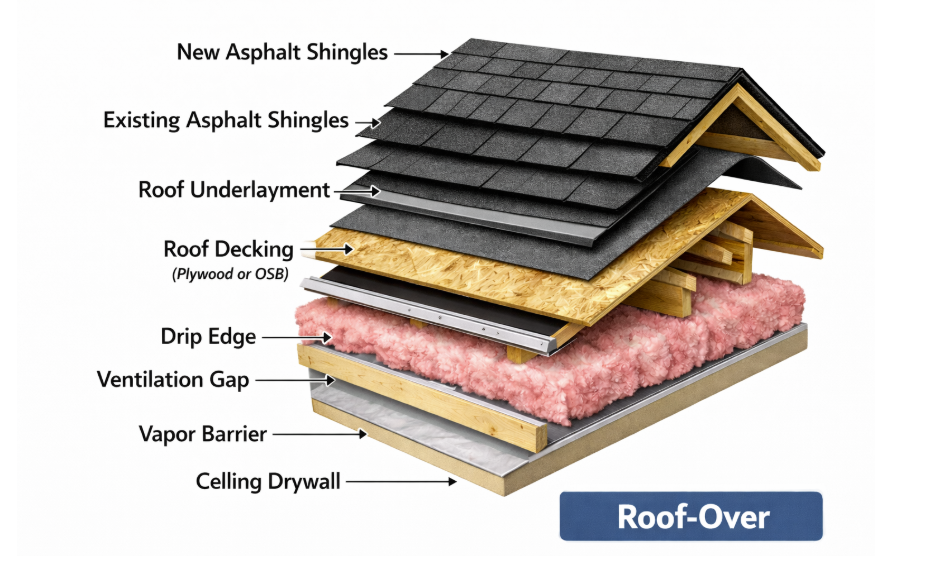
This process, often called a roof-over, involves installing a second layer of shingles directly on top of the existing roof.
From a technical standpoint, most shingle manufacturers allow one additional layer without immediately voiding the material warranty. However, that does not mean the roof will perform the same. Quite often, the manufacturer will determine that the roof got too hot because of poor ventilation, in which case the warranty is deemed void.
Installing a new roof over an old one is possible, but it is rarely the best long-term decision.
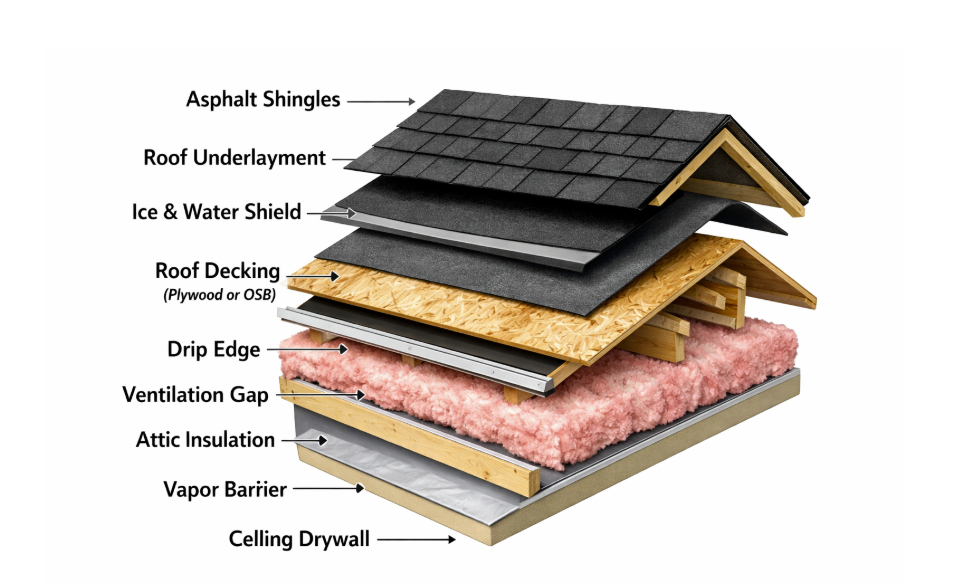
Layers in a full roof replacement pictured above.

How Does the Shenandoah Valley Climate Affect Roof Layering Decisions?
Not all climates treat roofs the same, and the Shenandoah Valley creates unique challenges.
This region experiences:
-
- High humidity
- Heavy rain
- Seasonal snow
- Extended periods of 90+ degree heat
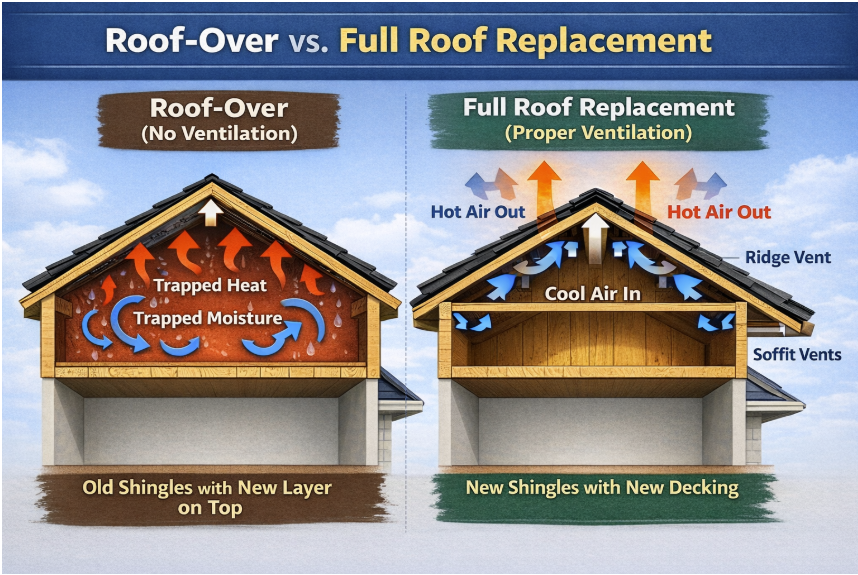
In our climate, where we spend two to three months out of the year with the possibility of 90-plus degrees and heavy sun, it is just building up way too much heat in that roofing system.
That trapped heat becomes the main issue with roof-overs. Instead of dissipating properly, it gets absorbed between layers, accelerating wear. Shingles then curl or deteriorate early, losing their grit much earlier, and the seal fails. Also possible is the entire roofing system getting too hot and overwhelmed.
Historic homes in the area add another layer of complexity. Many of these homes feature dormers, wood siding, and integrated flashing systems.
Local climate and home design make roof-overs significantly riskier in the Shenandoah Valley than in cooler regions.
What Are the Advantages of a Roof-Over?
There is one primary reason homeowners consider this option: cost savings.
| Benefit | What It Means |
|---|---|
| Lower upfront cost | No tear-off or disposal fees |
| Faster installation | The project can take a fraction of the time |
| Less disruption | Fewer materials and less job-site mess |
Typically, the only reason a homeowner orders a roof-over is to avoid the cost of the tear-off.
In terms of time, it may take about one-third to half of the time of a full replacement.
These benefits are real, but they are short-term advantages that often come with long-term consequences.
What Are the Risks of a Roof-Over?
This is where most homeowners do not get the full picture.
Common Problems with Roof-Overs
| Problem | Why It Matters |
|---|---|
| Heat buildup | Causes shingles to curl, warp, and fail early |
| Hidden damage | The project can take a fraction of the time |
| Skipped components | Flashing and underlayment are often not replaced |
| Shorter lifespan | The roof lasts significantly less time |
| Future cost increase | Tear-off becomes more expensive later |
You are going to see about half to two-thirds of the lifespan of a full roof replacement.
Additionally, people do not replace chimney flashings, dormer flashings, or pipe flashings. Those can often be the cause of new problems.
A roof-over may look good initially, but it often compromises the entire roofing system underneath. In addition, it hides all of the possible issues underneath.
When Is It Okay to Install a New Roof Over an Old One?
In residential circumstances, acceptable scenarios are extremely limited. The only situation in which we recommend roof-overs is on storage sheds, buildings with no heat or air conditioning.
For homes, the conditions would have to be near perfect:
-
- Only one existing layer
- No moisture
- No structural damage that would prevent the extra load
- Proper ventilation is already in place
Even then, the long-term trade-offs remain.
When Should You Not Install a New Roof Over an Existing Roof?
In most cases, a roof-over should not be considered.
Situations where it should be avoided include:
-
- Multiple existing layers
- Signs of leaks or rot
- Poor ventilation
- Complex rooflines with dormers or valleys
- Homes with siding-integrated flashing systems
In many ways, a roof-over is just prolonging the inevitable, at a higher cost.
If problems exist beneath the surface, layering shingles will only hide them, not fix them.
The most we have seen is four layers of shingles in a house in Dayton, Virginia. The home had two layers of asbestos shingles and two layers of asphalt shingles. The full thickness was about an inch and a half of shingle layers. The nails attaching the top layer were not even penetrating the roof sheathing.
Another example was a home in Highland County with three layers of shingles. They had installed hardboard sheathing and then two layers of three-tab shingles on top of it.
How Does a Roof-Over Compare to a Full Tear-Off?
| Factor | Roof-Over | Full Tear-Off |
|---|---|---|
| Upfront cost | Lower | Higher |
| Lifespan | Shorter | Full lifespan |
| Inspection | Limited | Complete |
| Heat management | Poor | Proper |
| Long-term value | Lower | Higher |
You may be getting that lower price up front, but you are compromising much more. You are not only skipping the tear-off process, but also skipping the deck inspection, the drip edge, and the underlayment install.
How Does a Roof-Over Affect Long-Term Value?
This is where many homeowners miscalculate.
A typical “lifetime” shingle is realistically a 35-year product.
A roof-over is likely going to fail in the 20 to 25-year range. If you replace the roof with proper underlayment and ventilation, that same shingle can last 35 to 40 years.
The upfront savings often disappear when viewed over the full life of the roof.
Buyers and inspectors do not automatically flag a roof-over; it is typically considered on a case-by-case basis during the resale process.
What Should Homeowners Ask When Considering a Roof-Over?
If a contractor suggests this option, key questions include:
-
- How will flashing be handled around chimneys and siding?
- Will the underlayment be replaced?
- How will ventilation be addressed?
- What happens to the warranty?
Is Installing a New Roof Over an Existing Roof Worth It?
A roof-over may seem like a quick and affordable solution, but it comes with real trade-offs.
-
- If long-term durability and value matter, then a full tear-off is the better investment
- If there are any underlying issues, then layering will only make them worse
Homeowners often come to this decision looking for a shortcut. What becomes clear is that roofing systems are not designed for shortcuts.
At Valley Roofing & Exteriors, the goal is to help homeowners make informed decisions based on real conditions, not just initial cost.
If a roof is replaced the right way the first time, it delivers full value, full lifespan, and fewer problems down the road.
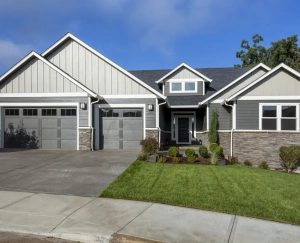
If the goal is to see what quality roofing work looks like, explore the project gallery to understand what proper installation entails.
If a roof decision is coming soon, the next step is to schedule a discovery call and get a professional evaluation based on your home and situation.