

Is your home’s rainwater running wild, spilling over the edges, streaking your siding, and pooling against your foundation every time a Shenandoah Valley storm rolls through? If you have ever stood on your porch watching a waterfall pour off your roofline, you already know that the wrong gutters do more than annoy you. They can quietly damage your dream home.
We understand the uncertainty. Gutters are one of those parts of a house nobody thinks about until they fail, and once you start shopping, the choices can overwhelm you. K-style or half-round? Five-inch or six? Aluminum or copper? At Valley Roofing & Exteriors, we have spent 22 years installing gutters across Central Virginia and the Shenandoah Valley, so we have seen what holds up and what falls apart. This guide walks you through the main types of gutter designs, in plain language, so you can choose with confidence. It is written for the homeowner who wants the job done once and done right.
What Makes Gutter Choices Different in the Shenandoah Valley?
The Valley is not a one-size-fits-all place, and neither are its homes. We get heavy summer downpours, wet springs, and real winter snow and ice that sit on a roof for days. That weather is hard on gutters, especially undersized ones.
Then there are the homes themselves. From the historic brick houses in Staunton to metal-roofed farmhouses out in the country, many properties here were built long before modern gutters existed. Matching the right design to both the weather and the architecture is where good gutter work begins.
What Are the Main Types of Gutter Designs?
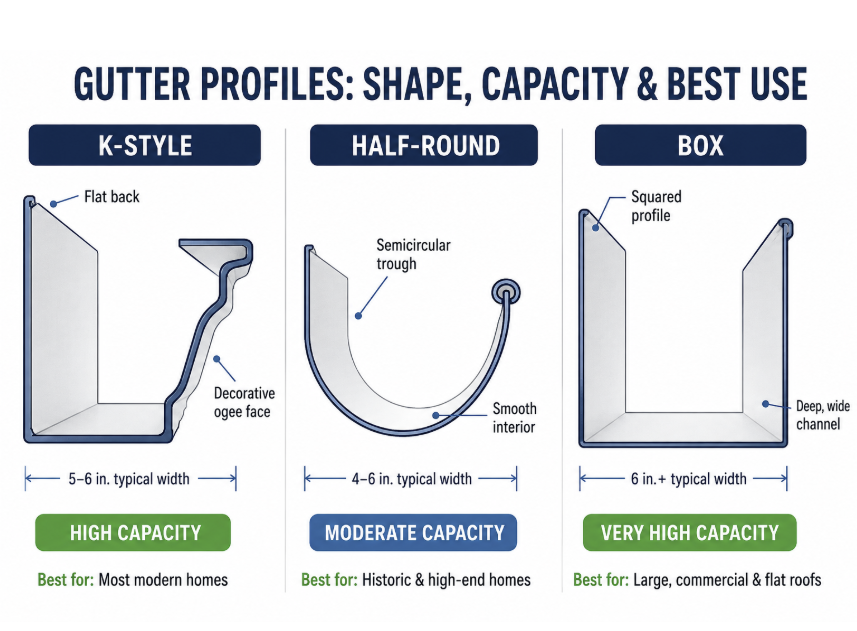
Most gutters come down to three shapes. Here is how they compare.
| Gutter design | What it looks like | Best fit | Watch out for |
|---|---|---|---|
| K-style (ogee) | Flat back with a decorative front, like crown molding | Most modern Valley homes | Debris can collect in the inner corners |
| Half-round | Open, rounded trough | Historic and pre-1950 homes, metal roofs | Needs the right brackets to hang well |
| Box | Wide, built-in rectangular channel | Commercial buildings and very large homes with metal roofs | Must have snow guards |
K-style is the profile you see on most homes here. Half-round suits older houses. Box gutters are the wide, built-in channels found on commercial buildings and some very large homes.
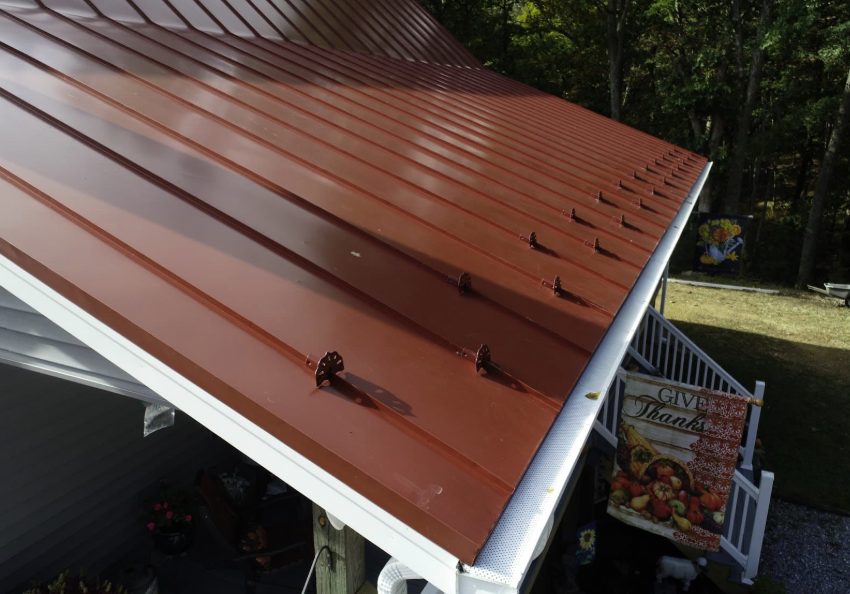
One warning on box gutters: you will almost always see them on metal roofs, and they do need snow guards (pictured below). Over the last three years, nearly every failed box gutter we have been called to had the same problem: no snow guards to stop snow and ice from sliding off the roof in one heavy drop. Add the guards, and box gutters hold up well.
What Size Gutter Does Your Home Actually Need?
About ten years ago we switched to six-inch gutters, and today they go on roughly 95% of the homes we do. The only time we step down to five-inch is when the smaller size simply fits the house better, think a small ranch, a shed, or a roofline where six-inch would look out of place. Why go bigger? Water. A six-inch gutter carries far more of it.
That extra capacity of a 6-inch gutter is the difference between a gutter that keeps up with a Valley cloudburst and one that overflows onto your foundation. According to LeafFilter, a six-inch gutter holds about two gallons of water per foot, versus 1.2 gallons for a five-inch — about 50% more.
Size is only half the story. Hangers, the brackets that hold the gutter to the house, matter just as much. We space ours about every 16 inches. Many failing gutters we inspect have hangers 24, 40, 50, or even more inches apart (pictured), which is exactly why the gutter sags and pulls away from the house.
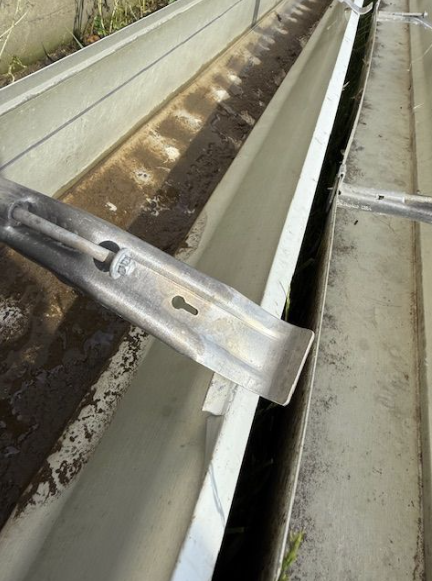
In snowy, wet regions like ours, gutter experts recommend tighter spacing, not wider, to carry the added weight of snow and ice. Pair the right size with gutter guards and regular gutter cleaning, and you have a system built to last.
Which Gutters Belong on a Historic or Pre-1950 Home?
Historic homes play by their own rules. In many of the Valley’s historic districts, the goal is to stick with what was already there, because that is what the neighborhood is used to seeing. For most of these homes, especially old brick houses with metal roofs, that means half-round gutters. They simply look right. On an old brick home in Staunton, a clean half-round profile can make the whole house look finished.
Now and then a homeowner asks for galvanized steel, because it is what they have always known. We tend to steer away from it. Galvanized is not seamless, and it comes in 20-foot sections. On a short run, that is fine, but on a 40-foot wall you have to seam the pieces together, and seams are where the trouble starts. In most cases, we go back to aluminum, which gives the historic look without leaks.
Seamless or Sectional: Which Lasts Longer?
This is the question that matters most over the life of your gutters, and the honest answer is simple: wherever there is a seam, water will eventually find it. In our experience, sectional gutters start to leak at the joints after about five years. Seamless gutters, cut to length right on site, have no joints along the run, only at the corners and downspouts, so there is far less for water to work through.
Is Copper Worth the Premium, or Is Aluminum the Smarter Choice?
For 95% of homes, aluminum is the smart, seamless, budget-friendly choice, and it is our default for good reason.
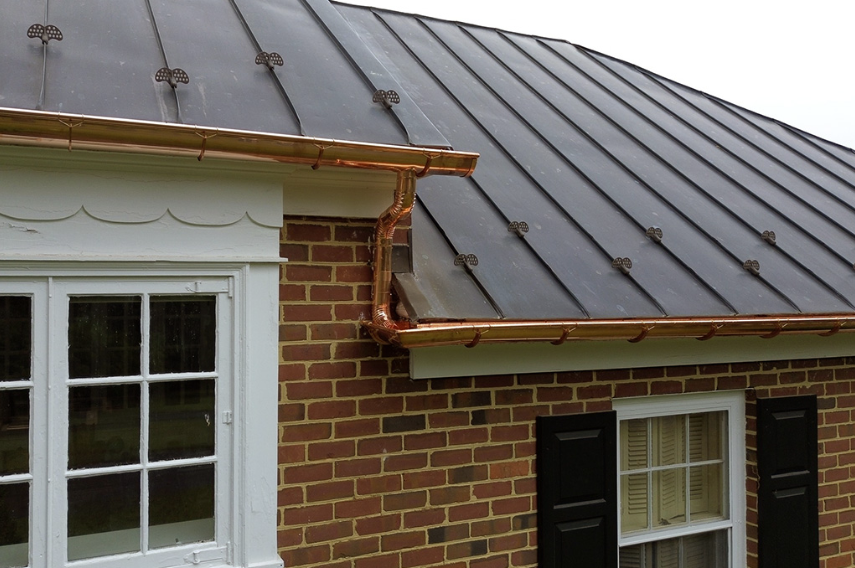
Copper is a different story. Copper genuinely earns its premium rating in two cases. First, when the roof itself is copper: aluminum and copper do not mix well, so a copper roof deserves copper gutters. Second, on historic brick homes and churches, where copper ages into a rich patina that pairs beautifully with old masonry. If you do not have a copper roof or a showpiece brick façade, aluminum is almost always the better value.
What Do Homeowners Get Wrong That Costs Them Later?
The biggest mistake we see is choosing a smaller gutter to save a little money. On an average home, most gutter jobs here run between $3,000 and $5,000, the price gap between a big gutter and a small one is only a few hundred dollars. Paying $300 to $400 more for a gutter that actually keeps up with the weather is money well spent.
The second mistake is spacing, and it is often hidden. When an installer spaces hangers at 50 inches instead of 16, they use about a quarter of the materials, and your gutter sags, overflows, and fails early. Cheap up front, costly later.
One more thing homeowners overlook is downspouts. A good quote already includes them. We have never installed a gutter without the downspouts to carry the water away, because doing the job halfway defeats the whole purpose.
So, Which Gutter Design Is Right for Your Home?
By now you can see there is no single “best” gutter. There is the right gutter for your roof, your weather, and your home’s age. For most Valley homes, that means seamless six-inch aluminum gutters, properly spaced, with the downspouts included. For historic brick beauties, half-round in copper or aluminum keeps the character intact. And wherever snow slides off a metal roof, snow guards protect what sits below.
You do not have to figure this out alone. Take a look at our project gallery to see what quality gutter work looks like on real Shenandoah Valley homes. When you are ready, meet with a project consultant for a straight, no-pressure walkthrough of the right design for your home. We are happy to help you do it once and do it right.