
By Anson Martin
When the crew rips off your old roof and hauls it away, where does all of that torn-off material actually go: a recycling plant, or a landfill that will hold it for the next three hundred years?
You want a home that lasts and protects your family, and you do not want a mountain of old building materials outliving your grandchildren.
The greenest product is almost always the one you do not have to replace. Recycling matters, and we will get into where your old roof really goes. But true sustainability is less about buzzwords and more about durability, choosing quality materials, installing them well, and maintaining them so they last for decades. At Valley Roofing & Exteriors, with our 22 years of quality craftsmanship across the Shenandoah Valley, that is the heart of our “Make It Last A Lifetime” approach.
This guide covers where old roofs really go, which materials last longest, how to cut energy waste, and how siding, windows, and maintenance round out a genuinely sustainable home.
Where does my old roof go when it is torn off?
Most torn-off asphalt shingles head to the landfill. Ours included. According to EPA data, roughly 11–13 million tons of asphalt shingles are torn off U.S. roofs every year, and only about 10–20% of that is recycled today (asphalt shingle recycling); the remainder is buried. A single shingle can take around 300 years to break down.
Why is asphalt shingle recycling a challenge?
For years, companies have attempted to recycle asphalt shingles into road materials and other products. Few programs have had success, and widespread recycling remains difficult because shingles contain a mix of asphalt, fiberglass, granules, nails, and other contaminants. Transportation costs, processing requirements, and inconsistent markets have made large-scale shingle recycling challenging in many areas. Every nail and every piece of aluminum flashing has to be separated, much of which is fused together. When you take it to the recycling location, the cost outweighs the benefit.
Valley Roofing & Exteriors tried shingle recycling for years; it created a lot of extra labor, and we decided it was not beneficial yet. We say “yet” because the idea of old roofs ending up back in roads is a good one, and we hope the process gets fine-tuned in the next couple of years to make it feasible.
How can you recycle the valuable metals on your roof?
Metals are the bright spot. When certain roofing materials are removed, they can often be recycled and even have scrap value. Copper roofing, copper flashing, aluminum gutters, and aluminum trim are commonly recycled and may generate money that helps offset a small portion of the project cost. Rather than sending these materials to a landfill, responsible contractors work with local recycling facilities to keep valuable metals in circulation.
How can you choose roofing materials that last longer?
One of the most sustainable decisions a homeowner can make has nothing to do with the recycling bin. It is picking products that last.
A roof that lasts 50 years creates far less waste than one replaced every 15–20 years. Premium asphalt shingles, standing seam metal, slate, and certain synthetic products all stretch the time between replacements and keep material out of landfills.
In the Shenandoah Valley, longevity also depends on how a roof is built, not just what it is made of. After 22 years, we have seen roofs that have failed. Many did not fail because someone picked the wrong product for the region. They failed because the house was not designed with proper ventilation, and the roof was installed on top of that problem.
More important than trying to pick the perfect product for the area, make sure you have the complete system for ventilation and everything for it all to work together. The greenest roof is the one you do not have to replace twice, and a complete, well-ventilated system is what gets you there.
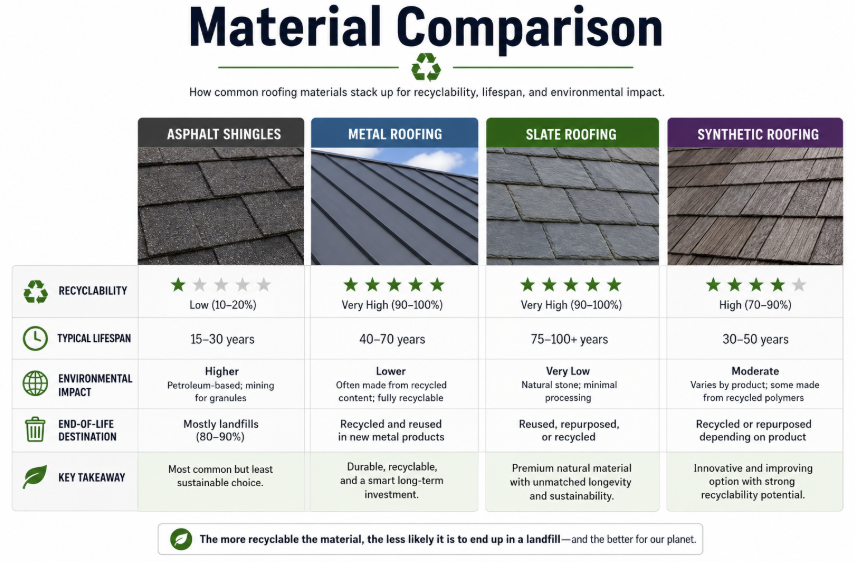
The Metal Roofing Alliance and Drexel Metals both attest that metal is the standout for end-of-life: it is recyclable up to 100% and often contains a high share of recycled content already.
Slate lasts generations on the right home, and synthetic or composite products can deliver a slate look at a lighter weight.
Which are the most energy-efficient roofing systems?
Modern roofing can also trim energy use. Lighter-colored shingles, reflective metal, and, most importantly, a properly ventilated attic lower attic temperatures and ease the strain on your cooling system in hot weather. Asphalt absorbs roughly 85–90% of the sun’s energy, while reflective metal sends much of it back, with industry figures putting cooling savings around 10–25% in the right climate.
Be realistic about roof color on a house, though. The myth is that a light residential roof dramatically beats a dark one on your bill. On a massive commercial building, think a Walmart distribution center, a light reflective roof likely pays off. Lighter colors and reflective coatings do help attic temperatures; just do not let roof color be sold to you as the whole sustainability story.
Sustainable siding choices
Sustainability does not stop at the roofline. Siding can play a major role, too. Products such as LP® SmartSide®, fiber cement, and high-quality vinyl siding are built for long service lives and low maintenance. Durable siding means fewer replacement cycles, less waste, and better protection for your home’s structure against moisture, which prevents the kind of hidden damage that leads to bigger, more wasteful repairs down the road.
High-performance windows and doors
Old windows and doors are often the single biggest source of energy loss in a home, and the upgrade we recommend, since it has the largest impact on energy efficiency. If you have ever stood next to an old window in winter and felt the draft, you have felt your heating dollars leaking out. Modern energy-efficient replacements use advanced glass coatings, insulated frames, and improved weather sealing to cut heat transfer. Homeowners typically notice better comfort, lower heating and cooling bills, and a smaller environmental footprint.
Proper maintenance is sustainability
The greenest product is the one you never have to replace. Routine inspections, gutter cleaning, roof maintenance, and prompt repairs can add many years to the materials you already own. A small maintenance investment now frequently prevents a major repair later, and keeps materials out of the landfill that much longer
-
- Schedule a professional roof inspection once a year and after major storms.
- Keep gutters and downspouts clear so water drains away from the roof and foundation.
- Clear leaves, branches, and debris from valleys and around chimneys and vents.
- Check flashing, sealant, and pipe boots for cracks or gaps, and reseal promptly.
- Keep attic ventilation and insulation clear and working to prevent heat and moisture damage.
- Repair small leaks and replace damaged or missing shingles right away, before the issue spreads.

Building for the long term
Sustainability is about more than recycling. It means choosing products and installation methods that perform well for decades. When homeowners invest in quality materials, skilled installation, and regular maintenance, they reduce waste, conserve resources, and often save money over the life of their home. A home built to last is one of the most sustainable investments anyone can make.
What should I ask a contractor to make sure the job is truly sustainable?
Take this short checklist to your contractor of choice:
-
- Do you recycle the tear-off metals, and what honestly happens to the asphalt?
- What is the realistic lifespan of what you are quoting in our climate?
- Is the roof properly ventilated and the attic properly insulated? This affects your bills more than roof color does.
- What maintenance do you recommend to make it last, and do you offer it?
The most sustainable home is one built to last
Most old roofs still go to landfills. Recycling, especially of metal roof materials, genuinely helps.
But the decision that impacts your environmental footprint and your wallet the most is durability: quality materials, installed right, maintained well, lasting decades instead of years. That is what “Make It Last A Lifetime” really means, and it applies to your roof, your siding, your windows, and the home as a whole.
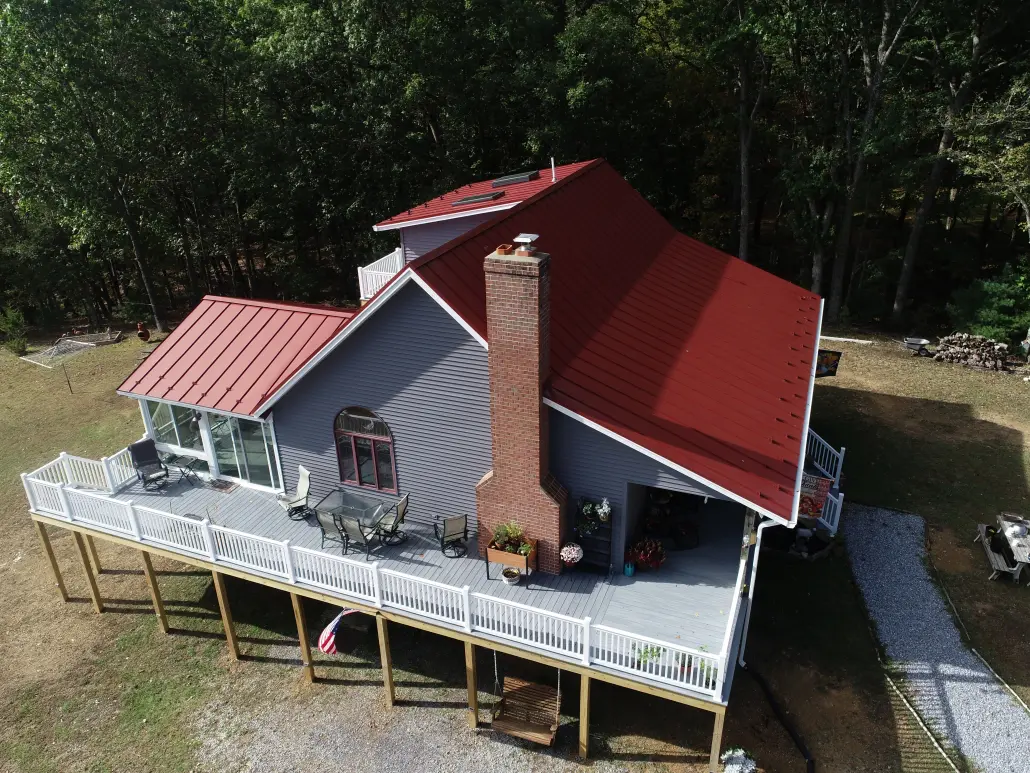
If you want to see what lasting work looks like across the Valley, browse our project gallery. And when you are ready to talk through the most durable, sustainable choices for your specific home, book a discovery call or meet with one of our project consultants. We are ready to answer the hard questions.