

What does property protection actually mean during a roofing install?
For most homeowners, property protection means three things:
-
- Your driveway does not crack
- Your landscaping survives
- You are not finding nails for the next six months
Property protection covers two main zones:
-
- The exterior: Driveway, vehicles, landscaping, lawn, decks, septic systems, sprinklers, and outdoor furniture.
- The interior: Walls, ceilings, and fragile items sensitive to vibration.
Protection starts before the first nail is pulled and continues until the final magnetic sweep of your yard.

Why does roofing property protection matter in the Shenandoah Valley?
Homes in the Valley have personality.
Roof replacements in the Shenandoah Valley come with challenges you do not find on every job site. Many homes here are older, built on stone or masonry foundations that are more sensitive to vibration and heavy equipment. Some properties have septic systems, buried irrigation lines, or basement walls that may already be under pressure from shifting soil.
Add steep terrain, mature landscaping, and fast-changing weather, and small mistakes can become expensive problems quickly.
That is why planning matters so much during a roofing install. A professional crew should know where heavy trailers can safely sit, which areas of the yard to avoid, and how to adjust the setup based on the property itself.
Older homes and hidden underground systems do not leave much room for guesswork.
How does Valley Roofing & Exteriors protect your driveway, yard, and exterior during a roofing install?
A typical brick ranch can produce six to twelve thousand pounds of torn-off shingles and fifteen to thirty thousand nails. Add a loaded trailer weighing roughly forty-five hundred pounds, and suddenly, where equipment sits matters just as much as the roofing work itself.
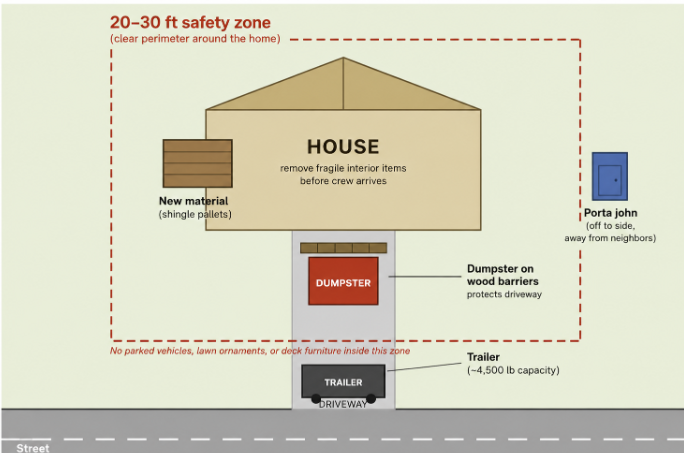
To help reduce that risk, we place wood barriers beneath dumpsters and carefully choose where heavy equipment sits before work begins. We also plan traffic patterns so trucks and trailers are not repeatedly driving over weak areas of the driveway.
That said, some driveways already have underlying weaknesses like age-related brittleness, surface cracking, thin concrete, or poor base support that may not be visible before the project starts. In those situations, even properly staged equipment can sometimes contribute to cracking that was already likely to occur under heavy weight.
If we see signs that a driveway may be especially vulnerable, we will discuss the risks with you before work begins and may recommend documenting existing conditions or signing a waiver acknowledging those pre-existing concerns.
This is why every project starts with a staging and protection plan tailored to your property.
Here is how Valley Roofing & Exteriors professional crews think about each zone:
| Area of Property | Protection Method | Risk Prevented |
|---|---|---|
| Driveway | Wood barriers and planned dumpster placement (pictured below) | Cracked concrete or asphalt |
| Vehicles, campers, boats | Moved 30 feet from the home | Falling shingles, dents, scratches |
| Soft landscaping (hostas, daffodils) | Honest expectations, selective plywood shields | Crushed plants, false promises |
| Hard landscaping (roses, shrubs) | Plywood and vented tarps in hot weather | Broken branches, heat-burned leaves |
| Septic tanks and basement walls | Heavy equipment kept 6 feet from foundations | Wall failure, septic line damage |
| Sprinklers and underground utilities | Homeowner marks heads and lines before work | Cut irrigation, expensive repairs |
| Decks and patios | Furniture and umbrellas moved | Punctured cushions, broken glass |
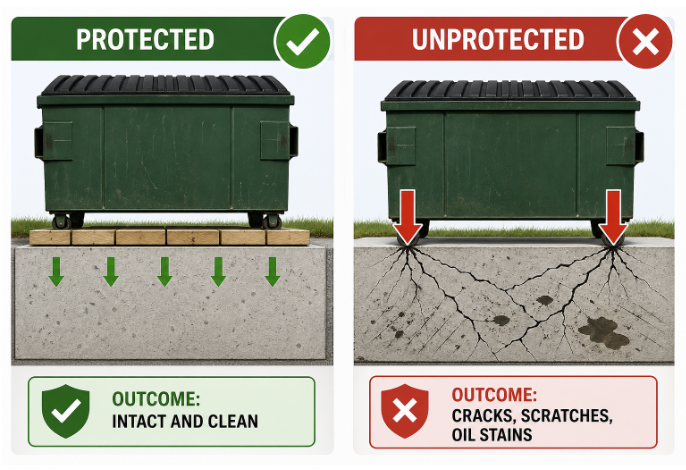
Most property damage during roofing projects happens when crews fail to plan ahead. A professional roofing install should feel organized long before the first shingle comes off the roof.
A note on landscaping: soft plants will take some abuse, no matter what we do. The moment a tarp lands on a hosta, the weight flattens it. We cannot promise you a force field. What we will do is ask which plants matter most, choose dump zones that avoid them, and use vented tarps when the sun is strong so we do not cook your shrubs.
How do we plan job site logistics to avoid property damage?
In some projects, there is little to protect; on other jobs, multiple areas need protection. And those areas can move or vary during the job.
Every project starts with a conversation, and most begin with a pre-construction walkthrough. We map the general area where the dumpster will go, where material can be staged on the strongest ground, where the crew can plug in tools, and where the porta john sits.
If a home shows signs of an existing foundation issue, we document it with photos before any work begins.
On one project in Verona, we noticed a basement wall leaning slightly inward and learned the homeowner had already had earth anchors installed by a foundation repair company. We wrote it into the plan that no equipment would come within six feet of the building. That single conversation prevented a much bigger problem.
What happens inside your home during a roofing install?
Roofing is a vibration-heavy job. Crews drop bundles of shingles, walk the decking, and drive thousands of nails. Most homes handle the vibration fine, but anything fragile and lightly anchored is at risk.
Items to remove or lay flat the night before:
-
- Heirloom photos, mirrors, and anything hung on a thin brad nail.
- Shadow boxes with porcelain figurines. The box usually survives. The figurines usually do not.
- Plates standing on display rails, especially grandmother’s gold-rimmed china.
- Anything irreplaceable, regardless of weight.
Bathroom mirrors bracketed on all sides typically stay put. Use your judgment, and when in doubt, take it down.
What should you do before installation day to protect your property?
Here is what you can control as a homeowner:
-
- Move every vehicle, camper, boat, and motorcycle about 20 to 30 feet from the home. If a vehicle does not run, hire a tow truck. A hundred-dollar tow is far cheaper than repainting your dad’s classic Cadillac.
- Remove yard ornaments: gazing balls, gnomes, solar lights, flags, rope lights, hammocks, and porch umbrellas.
- Mow the lawn a day or two before we arrive. It makes the final magnetic sweep dramatically more effective.
- Mark sprinkler heads, septic lids, and any underground utilities you know about.
- Take down fragile wall items and lay collectibles flat inside cabinets.
If you have mobility limits or simply want a hand, ask the crew on day one. We are happy to help move heavier items.
How can you tell if a contractor will actually protect your property?
Most contractors will tell you they “take care of your property.” The difference is whether they can explain exactly how.
Before you sign a contract, ask these three questions:
-
- How will you protect my driveway and landscaping?
- Where will the dumpster, trailer, and materials be placed?
- What does your cleanup process look like each day and at the end of the project?
A professional contractor should answer those questions clearly and specifically. They should walk the property with you, point out staging areas, discuss potential problem spots, and explain the trade-offs involved.
Be cautious if you hear vague answers like:
-
- “We’ve never had an issue.”
- “Don’t worry about it.”
- “We’ll figure it out when we get there.”
Those are warning signs that there may not be a real protection plan in place.
You should also be skeptical of promises that sound unrealistic, especially around landscaping. Unfortunately, no roofing job is completely impact-free. A trustworthy contractor will be honest about what can be protected, what carries some risk, and what steps they will take to minimize damage.
The best roofing crews do not just focus on the roof itself. They think through the entire property before the first shingle comes off.
What does proper cleanup look like after a roofing install?
We clean up some things every single day. The heavy waste, including old shingles, wrappers, and felt, goes into the dumpster or trailer as we work.
The fine work happens at the end. We comb the bushes, sweep the mulch, and run magnets through the flower beds and the lawn.
Realistically, you might find six to twelve nails after we leave. That is normal across thirty thousand removed nails. If you find fifty, call us. That tells us the cleanup was not up to standard, and we will return to finish the job properly.
What is the bottom line on protecting your property during a roofing install?
A roofing project should leave your home better than it found it, not just on top, but all the way around. Property protection is not an extra. It is the job.
If a contractor cannot walk you through their protection plan in plain language, that is your warning sign. The damage you fear is far more likely to happen on a job site without a plan.
If proper precautions are taken, nearly every common issue can be avoided.
If you do your part with vehicles, ornaments, and fragile interior items, then the crew can focus on the roof.
To see what well-managed job sites look like, browse our project gallery.
Ready to plan a roof replacement that protects your home from the first walkthrough to the final magnetic sweep? Schedule a discovery call. We will walk your property, review your protection plan, and answer every question on this page.