

Can you picture yourself sipping coffee in a sunlit room off the back of your house, watching the morning light spill across the Blue Ridge, and wondering if that dream is actually worth the investment?
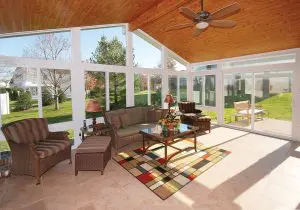
You have seen the photos on Pinterest. You have walked through a friend’s sunroom and thought, I want that. But you also know that adding a room to a home in Virginia is not a decision to take lightly. The weather is unpredictable. Contractor quality varies wildly. And you do not want to pour money into something that fails to return what you put in.
At Valley Roofing & Exteriors, with 22 years of experience serving homeowners across Central Virginia and the Shenandoah Valley, we know that not every homeowner is going to choose us for their sunroom or exterior project. And that is okay. You deserve a quality job, no matter who you hire.
In this article, we walk you through what a sunroom actually does for your home value in Virginia, what climate and housing factors matter here in the Valley, the most common pitfalls we see, and how to know if a sunroom is the right move for your home, your budget, and your goals.

What Makes the Shenandoah Valley Different for Sunroom Projects?
The Valley is not a forgiving place to build. Summers run humid. Winters can swing from sunny and 50 degrees to ice loads overnight. Spring storms hammer the ridges, and the pollen volume here will coat any outdoor living space in yellow dust by mid-April.
Add to that the wide mix of housing stock, historic farmhouses around Staunton, mid-century homes in Harrisonburg, and newer builds in Waynesboro and the surrounding counties, and you have a sunroom market with no one-size-fits-all answer.
Many lots in the Valley also offer the kind of mountain views and pasture vistas that turn a sunroom into the most-used room in the house.
A sunroom built to handle Valley weather lasts longer and appraises better than a generic glass box bolted onto a back wall.
How Much Value Does a Sunroom Actually Add to a Home in Virginia?
Here is the honest answer: Sunroom additions typically return between 40% and 80% of project cost at resale, with four-season rooms recouping more than three-season rooms or screened porches. Read more about the differences between products here.
According to Angi’s research on sunroom value, the resale recoup is real but partial. Their reporting puts most sunroom additions at a return of 50% to 80% of project cost at sale, with four-season rooms, those that are insulated, heated, and cooled like the rest of the house, pulling the higher end of that range. There is a technical reason for the gap. A properly built four-season room can be counted by an appraiser as added Gross Living Area, the official term for finished, conditioned square footage. That single classification often determines whether your sunroom delivers a modest bump on appraisal or a meaningful one.
HomeLight’s sunroom cost analysis backs up the price ranges we are seeing on our projects. Their reporting puts most sunroom builds between $22,000 and $80,000, with prefabricated kits anchoring the low end and custom four-season builds at the top. They call out the same three cost drivers we see on nearly every quote we write: foundation work, glazing quality, and whether the homeowner chooses to extend HVAC into the new space.
Most homeowners do not earn back every dollar on resale alone, they break even when they factor in years of daily use. If you plan to stay in your home for five years or more, the lived value usually closes the gap. If you plan to sell within twelve months, the math is tighter.
There is a difference between resale value (what an appraiser or buyer pays) and lived value (the joy and use you get for years before you sell). In college towns, retirement areas, and rural Valley markets, buyers will pay a premium for usable, outdoor-feel living space.
We can think of very few sunroom projects that failed to raise the value of the home.
The biggest wow factor shows up when a sunroom turns a cramped kitchen-dining area into a space that finally breathes, and that effect is most dramatic on smaller-square-footage homes.
Sunroom Value Snapshot (Virginia Averages):
Four-season rooms typically offer the highest usability, but not always the highest ROI percentage.
| Sunroom Type | Typical Cost Range | Estimated Resale ROI | Best For |
|---|---|---|---|
| Screened-in porch | $15,000–$30,000 | 50–75% | Spring and fall use, bug-free evenings |
| Three-season room | $25,000–$60,000 | 45–60% | Most Virginia homeowners |
| Four-season room | $50,000–$120,000+ | 40–55% | Year-round living, full HVAC |
When Does a Sunroom Make Sense, and When Should I Skip It?
A sunroom makes sense if you fall into a few familiar buckets:
-
- Empty nesters who entertain
- Work-from-home homeowners craving a daylight desk
- Families wanting a screen-free dinner space
- Sellers who want a listing that stands out
A sunroom makes the most sense when it solves a real problem in your home. Not only when it looks appealing.
One surprise we hear all the time on follow-up visits: clients use the sunroom as their main holiday-decorating room. The vaulted ceilings and floor-to-ceiling glass make a Christmas tree feel twice as tall, and the room often becomes the most-photographed corner of the house in December.
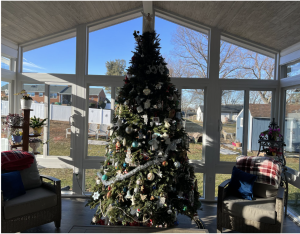
Another tip from years of follow-ups: pairing the sunroom with a small adjoining deck almost always doubles the room’s usefulness. People overflow onto the deck during gatherings instead of into the house.
You should probably skip the project if:
-
- Your HOA restricts or limits additions
- Your foundation needs repair
- You plan to sell within 12 months
- The layout will not integrate naturallywith your home
In those cases, your dollars likely go further on a different remodeling project.
Will a Sunroom Add Value to Your Virginia Home?
A sunroom in Virginia returns a partial but real share of its cost at resale, and it delivers strong lived value for the years you stay. Climate, roof tie-in quality, and how the new room connects to the rest of the home matter more than raw square footage, especially in the Valley.
A sunroom is rarely a pure financial play. It is a lifestyle investment that also protects resale when it is built right.
If you are planning to stay in your home for five years or more, then the lived value often justifies the build.
If you are selling within the next 12 months, then your dollars probably go further on a kitchen or bathroom refresh.
If your home sits on a lot with mountain or pasture views, then a sunroom is one of the highest-impact additions you can make in the Valley.
If your contractor cannot show you photos of past sunroom projects, then keep looking.
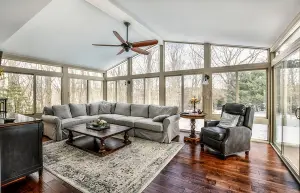
When you are ready to see what a quality build looks like in person, visit our project gallery for real projects.
When you are ready to talk specifics, book a no-pressure discovery call with a Valley Roofing & Exteriors project consultant. If you are considering a project and want to have a sunroom for this fall, the time to start would be spring, so that we have plenty of time to put together design plans and get you on the schedule.