
What Are Skylights, Chimneys, and Dormers?
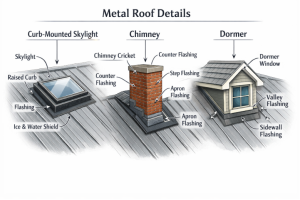
Before discussing how metal roofs work with these features, it helps to understand what each one is.
Skylight
A skylight is a window installed directly into the roof, allowing natural light to enter the home. They are commonly installed in bathrooms, hallways, or attics where traditional wall windows may not provide enough daylight.
Chimney
A chimney is a vertical structure that vents smoke and gases from fireplaces, wood stoves, furnaces, or water heaters out of the home. Chimneys typically extend through the roof and are often built from brick, stone, or metal.
Dormer
A dormer is a small structure that projects out from a sloped roof and usually contains a window. Dormers are often used to create additional headroom and natural light in upper-floor rooms, especially in homes like Cape Cod or story-and-a-half houses.
Why Do Skylights, Chimneys, and Dormers Matter More in the Shenandoah Valley?
Before talking about metal roofing details, it helps to understand why roof penetrations matter in our region.
According to the National Weather Service, Virginia receives 40–45 inches of rain annually, meaning flashing around penetrations must be carefully installed.
Older homes tend to have more chimneys, while newer homes often feature more complex rooflines and dormers, which create additional valleys and transitions. These features make proper flashing and water management even more important when installing a metal roof. The good news is that a good metal roofing system will be designed to accommodate these features.
Do Metal Roofs Work With Skylights?
Yes. Metal roofs work very well with skylights when the flashing system is installed correctly.
A real example of skylight problems
Occasionally, we are called to fix skylight issues installed by other contractors. One recent project involved a five-year-old metal roof in Elkton where skylights had been installed incorrectly. The original installer used deck-mounted skylights and poorly integrated flashing, which soon caused leaks.
To fix the problem, our team had to:
- Remove the surrounding metal panels
- Remove the skylight
- Rebuild the flashing system properly
This story demonstrates why proper installation techniques matter more than the roofing material itself.
Can a Metal Roof Seal Properly Around a Chimney?
Yes. Chimneys are one of the most common roof penetrations we see. In fact, chimneys are often the most common penetration on older homes throughout the Shenandoah Valley.
Homeowners frequently ask the same question: “How does metal actually seal against the chimney?” The answer lies in a multi-layer chimney flashing system.
The four parts of chimney flashing:
| Flashing Type | Purpose |
|---|---|
| Wall flashing | Directs water down the roof slope |
| Apron flashing | Protects the front of the chimney |
| Cricket flashing | Diverts water around the chimney |
| Counter flashing | Seals flashing into masonry |
A chimney cricket is especially important on metal roofs. A cricket is a small triangular structure built behind the chimney to redirect water and snow around it. Without a cricket, water can collect behind the chimney and eventually find its way inside.
Most building codes require a chimney cricket when the chimney is wider than 30 inches, according to the International Residential Code (Section R1003.20).
Do Dormers Cause Problems on Metal Roofs?
We often see dormers on homes like Cape Cod–style houses, where upstairs bedrooms have small window alcoves or a nook that projects from the roof.
Dormers themselves do not cause problems on metal roofs. However, they create more roof transitions that must be flashed correctly.
Key areas around dormers that require proper flashing:
| Area | Why It Matters |
|---|---|
| Sidewalls | Constant water runoff |
| Dormer valleys | Funnel large volumes of water |
| Dormer roof intersection | Must tie into the main metal panels |
| Window trim | Prevents wind-driven rain |
Dormer valleys are especially important. Valleys naturally funnel large volumes of water during storms. When dormers sit near valleys, the water flow increases dramatically.
During replacement projects, installers may also need to modify the siding slightly to properly install flashing.
For example, the siding above the roofline is sometimes trimmed slightly so metal flashing can be installed behind the siding, creating a cleaner and more waterproof seal.
Historic or older homes occasionally create additional challenges if dormer windows sit extremely close to the roofline. Older windows often have only a half-inch clearance. We prefer at least 3 inches between the roofline and the bottom of the window for proper flashing.

4 Common Problems That Cause Metal Roof Leaks Around Skylights, Chimneys, and Dormers
Here are the most common issues for homeowners to be aware of.
1. Improper flashing installation
The biggest problem is simple: The flashing was installed incorrectly.
2. Incorrect skylight type
Deck-mounted skylights can sometimes create more complications on metal roofs compared to curb-mounted designs.
3. Poor integration with roof panels
Metal panels must be cut and shaped carefully around penetrations. Improper cuts can lead to exposed seams, water entry points, or premature corrosion.
4. Inexperienced installers
Many roofers install asphalt shingles but do not specialize in metal roofing. Metal roofing requires different tools, training, methods and planning. The most common skylight leaks occur when installers treat a metal roof as if it were an asphalt shingle roof. Metal roofing requires different flashing techniques because the panels expand, contract, and shed water differently.
What Can Go Wrong (And What It Can Cost You)
One poorly installed penetration can wipe out the savings of choosing a metal roof in the first place. Several examples are:
- Bad skylight install → $2,000-$5,000 + water damage
- Chimney flashing failure → $600-$3,000 + interior damage + mold risk
- Dormer leaks →$600-$3,000 + siding + framing repairs
What Makes Skylights, Chimneys, and Dormers Successful on Metal Roofs?
In our experience, successful installations usually come down to three factors.
| Factor | Why It Matters |
|---|---|
| Proper planning | Roof penetrations must be planned before installation |
| Correct flashing systems | Each feature needs its own flashing solution |
| Experienced installers | Metal roofs require specialized knowledge |
A well-installed metal roof can last 40–70 years, even with skylights, chimneys, and dormers.
When Should You Avoid Adding Roof Penetrations?
Sometimes it is better to avoid adding new roof penetrations. Situations where caution is recommended include:
- Extremely low-slope metal roofs
- Older homes with structural limitations
- Skylights added long after the roof installation
Should You Be Concerned About Skylights, Chimneys, or Dormers on a Metal Roof?
The problem is rarely the metal roof itself. Metal roofs absolutely work with skylights, chimneys, and dormers when installed correctly. But when these details are handled poorly, they become a common source of leaks.
The problem is almost always poor installation. That is why it is critical to evaluate your roofing contractor before signing a contract.
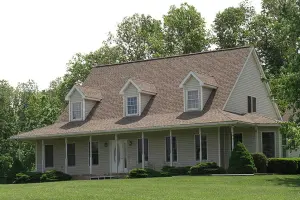
If you want to see what properly installed metal roofs look like in homes throughout the Shenandoah Valley, explore the Valley Roofing & Exteriors project gallery to see real examples of our work.
If you want to talk through skylights, chimneys, or dormers before starting your project, schedule a discovery call with the Valley Roofing & Exteriors team. We are happy to help you understand the right approach for your home and your roof.