

What Are Gutter Guards and How Do They Work?
The goal is simple: keep water moving and keep debris out.
Gutter guards are systems designed to keep debris like leaves and pine needles out of your gutters while still allowing water to flow through.
In real-world conditions, here is what happens:
-
- Water flows through the guard into the gutter
- Leaves and debris land on top
- Once debris dries out, it blows off or falls away
There is an important reality that homeowners do need to understand: gutter guards reduce clogs, but they do not eliminate maintenance entirely.
After heavy storms, you may still see wet debris sitting on top. The difference is that once it dries, it usually clears on its own instead of clogging your gutters.

Why Are Gutters a Bigger Problem in the Shenandoah Valley?
Not every region puts the same stress on gutter systems. In the Shenandoah Valley, gutters face more extreme conditions.
Heavy Rain and Wind
This geographical area sees frequent, heavy rainstorms combined with strong winds. That means water hits your roof fast and in large volumes. If your gutters are undersized or clogged, they will overflow.
Tree Density
Homes here are surrounded by trees. Oak, maple, and especially pine trees constantly drop debris into gutters.
One of the most important things to understand: wet pine needles behave like concrete. They clump together, stick to surfaces, and become extremely difficult to remove once compacted.
Older and Historic Homes
Homes in areas like downtown Staunton are often older or uniquely designed. This can make gutter installation more complex due to rooflines, fascia condition, and spacing limitations.
Gutters in this region take more abuse and fail faster without proper protection.
What Types of Gutter Guards Are Available? (And Which Ones Actually Work?)
There are many gutter guard products available, but not all perform well over time.
Screen Gutter Guards: sit on top of gutters
Best for:
-
- Homeowners looking for a low-cost, quick solution
- Homes with minimal tree coverage
Worst for:
-
- Homes with heavy debris (especially leaves or pine needles)
- Homeowners who want to avoid frequent cleaning
Reality: These are the most basic options and tend to clog quickly since debris collects on top.
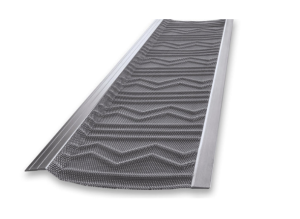
Micro-Mesh Gutter Guards (brand example: LeafBlaster Pro, pictured): fine filtration that blocks small debris like pine needles
Best for:
-
- Homes with heavy pine trees nearby
- Homeowners looking for a long-term solution with reduced maintenance
Worst for:
-
- Homes where budget is the primary concern
- Situations where installation quality is poor (these systems rely heavily on proper installation)
Important note: Based on our experience, we recommend Leaf Blaster systems because they perform the best.
Surface Tension/Reverse Curve (brand example: Gutter Helmet): uses water flow to direct rain into the gutter while shedding debris
Best for:
-
- Homes with large leaf debris (like oak or maple)
- Situations where water flow management is a priority
Worst for:
-
- Roof systems where installing under shingles could cause issues
- Do not perform well with valleys (installers usually drill holes in the guard at the valleys to prevent overflow, which then allows debris to get in the gutter)
- Homeowners who want a low-profile or less visible system
Important consideration: These systems are often installed under shingles, which can create complications if roof work is needed later.
Foam and Brush Inserts: sit inside the gutter
Best for:
-
- Short-term or DIY solutions
- Homeowners looking for the lowest upfront cost
Worst for:
-
- Long-term performance
- Homes with heavy debris or wet conditions
Reality: These systems trap debris inside the gutter and tend to break down over time, often creating more maintenance instead of less.
The best gutter guard is not the most expensive; it is the one that matches your tree type, water flow, and installation quality.
Which Systems Actually Perform Best?
Based on real-world experience, only a few systems consistently perform long-term. The best-performing systems allow debris to stay on top while keeping water flowing freely.
If these systems fail, the guard can be replaced without replacing the entire gutter. By comparison, systems like K-Guard (all-in-one gutter + guard) require full replacement if something goes wrong.
| Type | Cost | Maintenance | Best For | Biggest Drawback |
|---|---|---|---|---|
| Screen | Low | High | Light debris | Clogs quickly |
| Micro-Mesh | High | Low | Pine needles | Expensive |
| Reverse Curve | High | Low-Medium | Heavy debris areas | Visible |
| Foam | Low | High | Short-term use | Breaks down |
| Brush | Low | High | DIY installs | Debris buildup |
Which Gutter Guards Work Best for Homes with Trees Nearby?
The type of trees around your home is one of the biggest deciding factors.
Homes with Pine Trees
-
- Use micro-mesh systems like Leaf Blaster
- Especially important if trees are close to the house
Pine needles fall straight down and do not travel far, so proximity matters.
Homes with Hardwood Trees (Oak, Maple)
-
- Designed to handle larger debris and heavy water flow
If your home has both pine and hardwood trees, prioritize micro-mesh due to the difficulty of managing pine needles.
What Other Factors Affect Gutter Guard Performance?
Choosing the right gutter guard is only part of the equation. How your entire gutter system is designed plays a major role in whether it actually works.
Roof Pitch (Slope of Your Roof):
Roof pitch affects how quickly water moves off your roof and into your gutters.
-
- Steeper roofs shed water faster, which can overwhelm gutters during heavy rain
-
- Lower-pitch roofs move water more slowly but can allow debris to settle more easily
Key insight: Roof pitch matters less if your gutter system is properly sized and installed to handle water volume. If it is not, even the best gutter guard can fail during a heavy storm.
Gutter Size (Capacity Matters More Than You Think)
Gutter size directly impacts how much water your system can handle.
-
- Standard gutters may struggle during heavy Shenandoah Valley storms
- Larger gutters (like 6-inch systems) can handle significantly more water
Where this matters most:
-
- At the bottom of roof valleys (where water concentrates)
- On large roof sections
- On homes with metal roofs or large overhangs
Key takeaway: If your gutters are too small, adding guards will not fix overflow problems, it may make them worse.
Downspouts (The Most Overlooked Factor)
Downspouts are what move water away from your home. If they are undersized or too few, water has nowhere to go.
-
- Too few downspouts = water backs up and overflows
- Poor placement = uneven drainage and pooling
Common issue: Many homes simply do not have enough downspouts for the amount of water they handle.
Key takeaway: Even with gutter guards, your system will fail if water cannot exit fast enough through properly placed downspouts.
Bottom Line: Gutter guards only work as well as the system they are installed on. If the gutter size, pitch, and drainage are not correct, no guard will solve the problem.
Do Gutter Guards Eliminate the Need for Maintenance?
No.
This is one of the biggest misconceptions homeowners have.
What to Expect:
-
- Debris may sit on top temporarily
- Occasional inspections are still needed
- Cleaning is reduced, not eliminated
Realistic Maintenance Timeline:
-
- Most homes: check every 2 years
- Complex rooflines (many valleys or corners): check more often
- Ranch-style homes: typically require less maintenance
| Type | Cleaning Frequency | Surface buildup |
|---|---|---|
| Screen | 2–4x/year | Surface buildup |
| Micro-Mesh | 1–2x/5 years | Fine debris clogging |
| Reverse Curve | 1–2x/5 years | Overflow in heavy rain |
| Foam | 3–4x/year | Mold, breakdown |
| Brush | 3–4x/year | Internal clogging |
Are Gutter Guards Worth It for Your Home?
In most cases, yes.
Here is the simple math:
-
- Gutter cleaning: $300–$500 per visit
- Gutter guards: start around $1,500
Most homeowners break even on gutter guards in about three years.
When Gutter Guards Are Worth It
-
- Homes with heavy tree coverage
- Homes that require frequent cleaning
- Hard-to-reach or unsafe roof access
When They May Not Be Necessary
-
- Homes with few to no nearby trees
- Homeowners expecting zero maintenance
- Budget limitations
How Do You Choose the Right Gutter Guard for Your Home?
There are three main steps to choosing the right gutter guard for your home:
Step 1. Tree Type
-
- Pine → micro-mesh
- Hardwood → standard guard systems
Step 2. Gutter System Design
-
- Proper sizing is critical
- Downspout placement directly affects performance
Step 3. Installation Quality
-
- This is one of the biggest reasons gutter guards fail.
At Valley Roofing & Exteriors:
-
- Guards are screwed down every 24 inches
- The back edge is bent to improve water flow
- Systems are designed to handle heavy wind
Poor installs often leads to:
-
- Guards blowing off in storms
- Debris still entering the gutter system
Is Your Existing Gutter System Adequate for Gutter Guards?
You will need to consider if your existing gutter system is suitable for gutter guards, and which size is appropriate. In the following cases, we recommend a larger gutter for gutter guards to perform properly:
-
- At the bottom of large roof valleys, water concentrates in one area and can overwhelm smaller gutter systems
- Excessive roof overhangs, metal roofs and high flow areas (such as the bottom of the roof valley)
What Should You Do Next If You Are Considering Gutter Guards?
Gutter problems rarely happen all at once. They build over time.
If gutters clog, water overflows, and that is where real damage begins.
If water overflows, then fascia boards rot and landscaping is damaged.
If that continues, then foundation and siding issues may follow.
Now that you understand how gutter guards work, the types available, and what performs best in the Shenandoah Valley, you are in a position to make a confident decision.
Your next step is to evaluate your tree coverage and gutter setup to determine which system will actually work for your home.
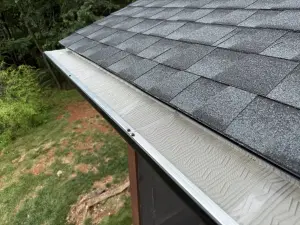
At Valley Roofing & Exteriors, we design gutter systems that work in this environment. Whether you need new guards or a full system upgrade, the goal is long-term protection.
If you want to see what quality installation looks like, explore our project gallery.
If you are ready to stop worrying about your gutters every time it rains, schedule a discovery call to find the right solution for your home.