Pricing
If you are thinking about replacing the siding on your home, you are probably asking one question first:
“How much is this going to cost?”
The honest answer is…it depends. But we can help.
Our goal is simple: Help you understand why siding prices vary so you can make an informed decision before requesting an estimate.
In this guide, we explain:
Average Siding Replacement Costs in Virginia
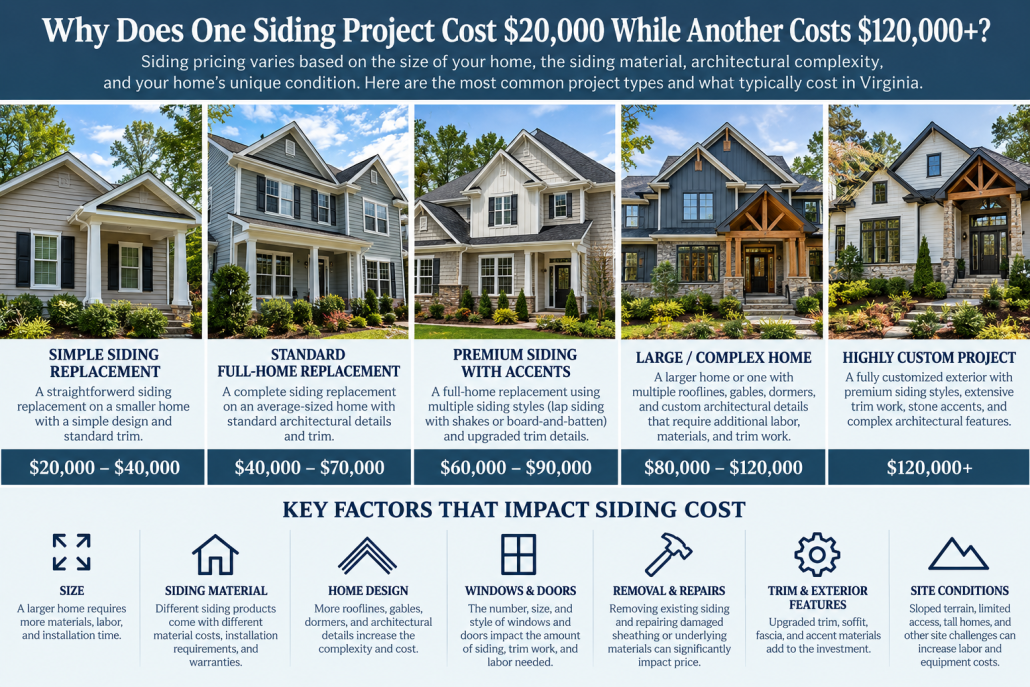
A complete siding replacement can vary considerably from one home to another.
Larger homes, more complicated architecture, premium siding styles, extensive trim work, or repairs discovered beneath the existing siding can increase the price.
Why such a large difference?
Because you are not simply buying a certain number of square feet of siding.
You are paying for an exterior wall system that needs to protect your home from water, wind, temperature changes, and the elements for years to come.
The siding material itself is only part of the project.
The size and shape of your home, removal of existing siding, wall preparation, water-resistive barrier, flashing, trim, soffit and fascia details, windows and doors, architectural features, access, and any damaged materials discovered underneath the old siding can all change the final investment.
What Makes Some Siding Contractors More or Less Expensive?
Two siding estimates can look similar on the first page and represent two very different projects.
Higher-Priced Siding Contractors May Include:
- Higher-performance siding products
- Complete removal of existing siding when appropriate
- Better wall preparation
- Proper water-resistive barriers
- Detailed flashing around windows and doors
- More complete trim packages
- Repairs to damaged materials
- Experienced installation crews
- Better warranties
- Dedicated project management
- More thorough cleanup and property protection
- More detailed estimates and communication
At Valley Roofing & Exteriors, we take a layered approach to exterior protection because siding is more than decoration.
It is one of your home’s first lines of defense against the elements.
Poor installation can allow water to reach areas around windows and doors and contribute to problems such as moisture damage, mildew, and rot.
That is why the system behind the siding matters just as much as what you see when the project is finished.
Why Is Another Siding Quote So Much Cheaper?
A lower-priced siding estimate isn’t automatically a bad estimate.
There can be perfectly legitimate reasons for the difference.
A lower quote may include:
- A less expensive siding product
- A simpler siding profile
- Less trim
- Less removal work
- Fewer repairs
- Different flashing details
- Different wall preparation
- Different warranty coverage
- Less project management
- A different scope of work
And sometimes, the contractor simply operates with lower overhead.
The important question is not:
“Which quote is cheapest?”
The better question is:
“Are these contractors actually quoting the same siding project?”
If one contractor is quoting a complete exterior system with removal, wall preparation, flashing, trim, repairs, and premium engineered siding while another is quoting siding installed over a very different scope, comparing only the bottom-line number is not useful.
Before choosing a contractor, make sure you understand exactly what you are getting, and what you are not getting.
Basic vs. Mid-Range vs. Premium Siding Projects
Not every homeowner wants or needs the same exterior.
Thinking about siding in three general levels can make pricing easier to understand.
| Basic Project | Mid-Range Project | Premium Project | |
|---|---|---|---|
| Primary goal | Functional exterior update | Performance + curb appeal | Major exterior transformation |
| Design | Simple | More design options | Highly customized |
| Siding styles | Usually one | One or more | Multiple profiles/accents |
| Trim | Standard | Upgraded | Extensive/custom |
| Architectural details | Limited | Moderate | Extensive |
| Initial investment | $ | $$ | $$$ |
There is no universally “best” level.
The right investment depends on your home, how long you expect to live there, the appearance you want, and how much value you place on durability, maintenance, and long-term performance.
Upfront Siding Cost vs. Lifetime Value
The cheapest siding project is not automatically the least expensive siding to own.
Imagine receiving two estimates.
One costs substantially less today.
The other includes better wall preparation, more careful flashing, higher-performance materials, and a stronger warranty.
Looking only at the contract price makes the first option seem like the obvious winner.
But siding protects the structure underneath it.
If saving money upfront leads to premature failure, water intrusion, repeated maintenance, or replacement years earlier than expected, the lower initial price can become the more expensive choice.
That does not mean everyone should buy the most expensive siding available.
It means homeowners should ask:
“What am I getting for the additional money?”
And:
“How long do I expect this investment to perform?”
Those questions lead to a much more useful comparison than price alone.
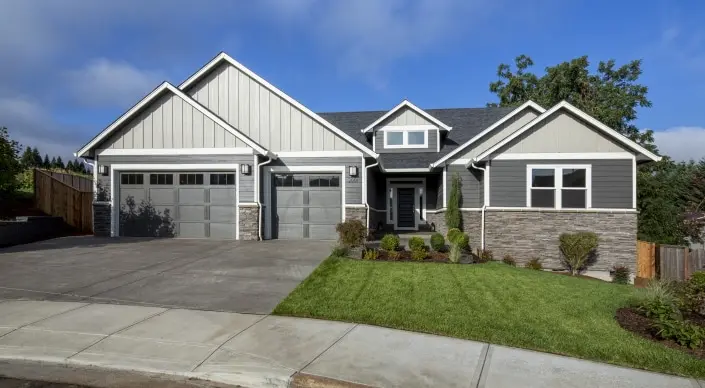
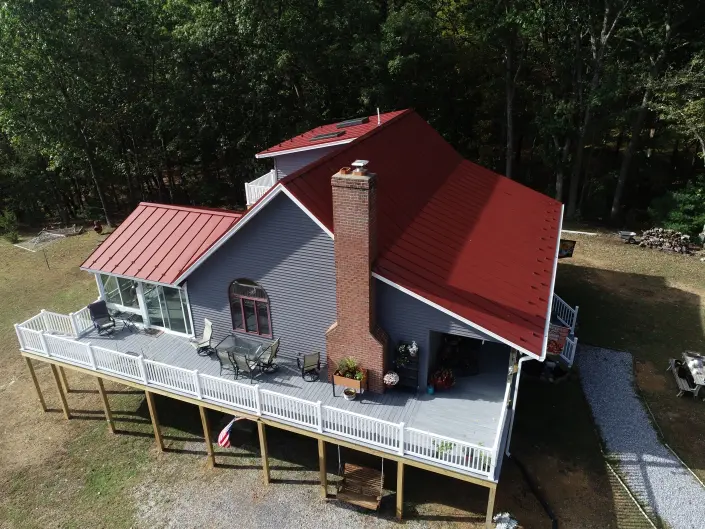

Siding Costs Homeowners Should Consider
Depending on your home, a siding project can involve additional work beyond the siding itself.
Potential costs may include:
-
- Removal and disposal of existing siding
- Rotten or damaged sheathing
- Water-damaged areas
- Window and door flashing repairs
- Housewrap or water-resistive barrier upgrades
- Soffit and fascia work
- Trim replacement
- Exterior insulation
- Gutters and downspouts that need to be removed or modified
- Electrical fixtures and exterior penetrations
- Shutters or decorative features
- Difficult access or scaffolding
- Lead-safe work practices on applicable older homes
- Painting or finishing, depending on the product
- Changes discovered after existing materials are removed
A good estimate should identify these items before work begins whenever they can reasonably be anticipated.
Nobody enjoys signing a contract for one amount and discovering halfway through the project that the actual cost is significantly higher.
That is one reason Valley Roofing & Exteriors begins with an in-person inspection and provides a detailed written estimate.
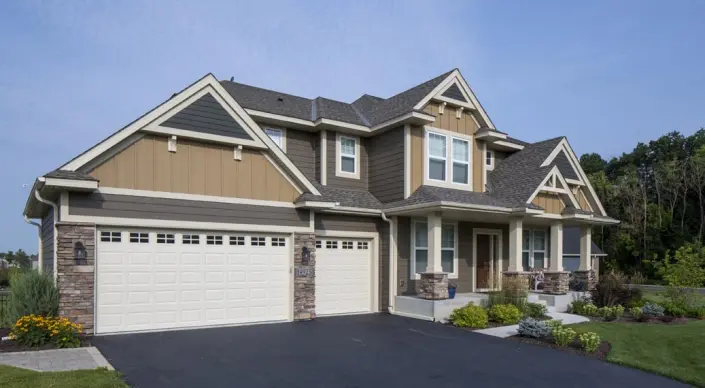
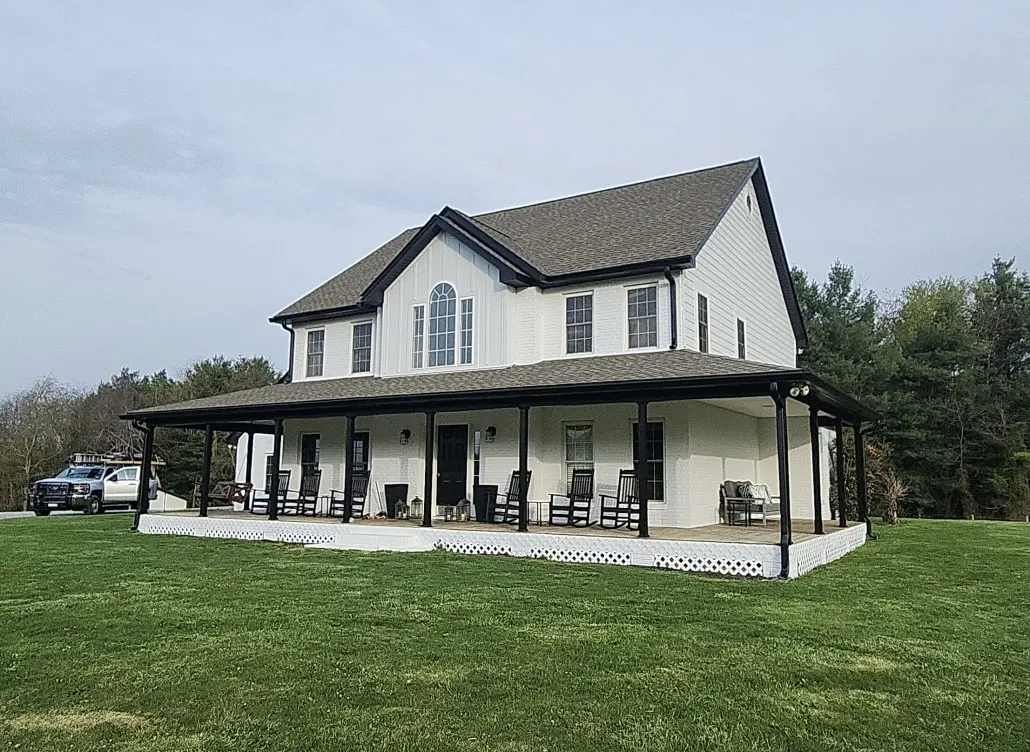
Can I Replace Siding on Only Part of My House to Save Money?
Sometimes.
If damage or deterioration is isolated to a specific area, partial replacement may be possible.
But there are trade-offs.
Matching existing colors and profiles can be difficult, particularly when the existing siding has aged, or the original product is no longer manufactured.
There can also be transitions between old and new materials that need to be carefully planned.
If a large percentage of the siding is approaching the end of its useful life, replacing one section today and another several years later may ultimately cost more than completing the exterior as one project.
The best approach depends on the condition of your existing siding and what you are trying to accomplish.
Real Siding Projects & Prices
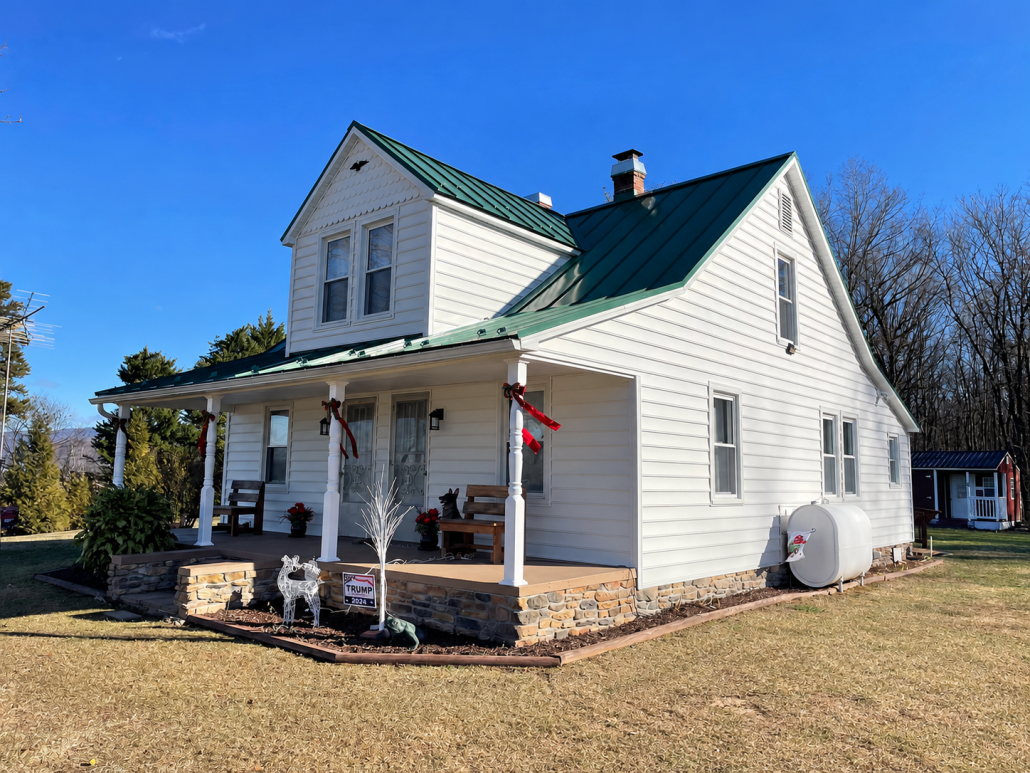
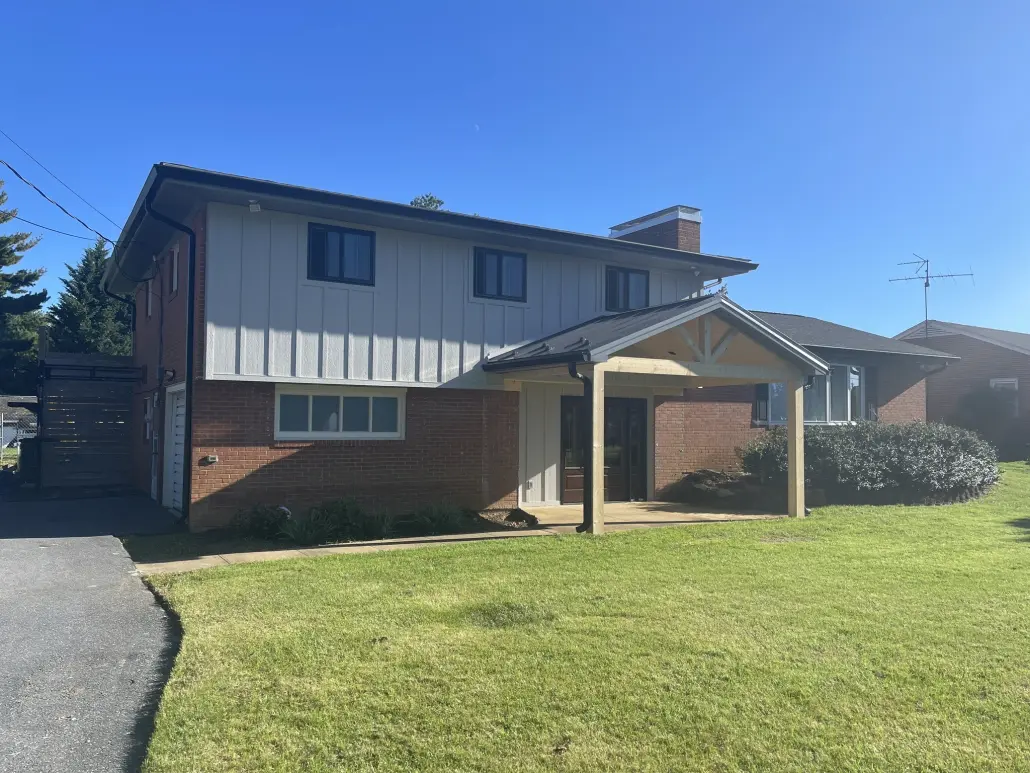
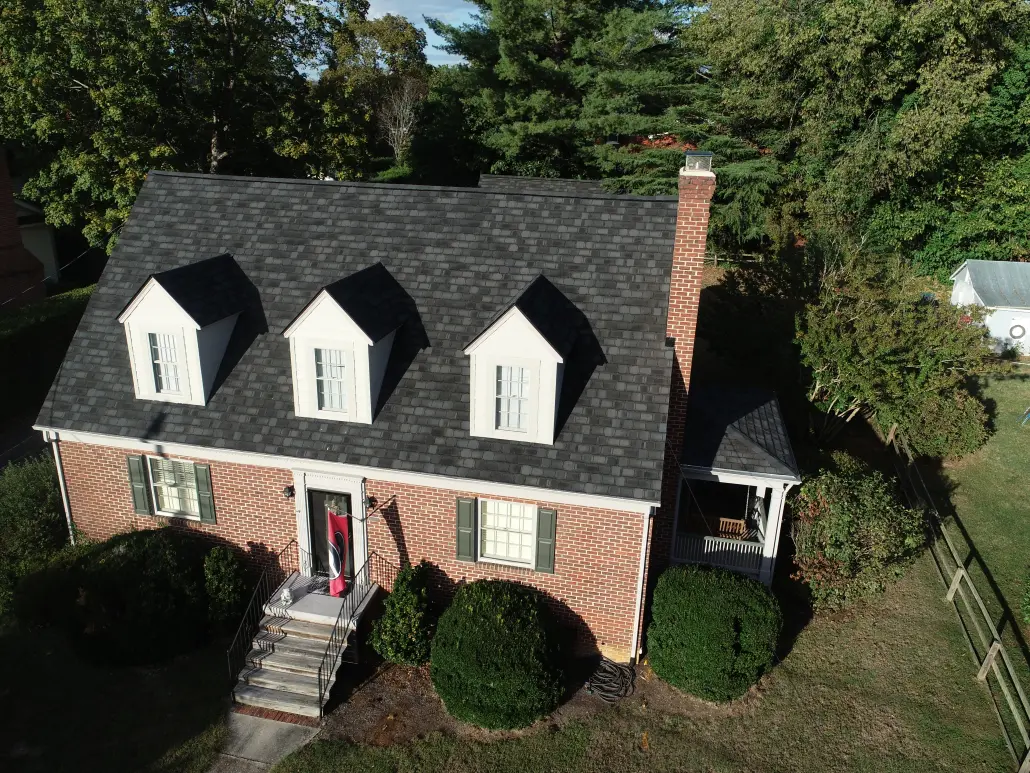
Example #1: Small House
-
- 1,200 square feet of siding
- Vinyl
- Mastic
- Approximate investment $20,000-$25,000
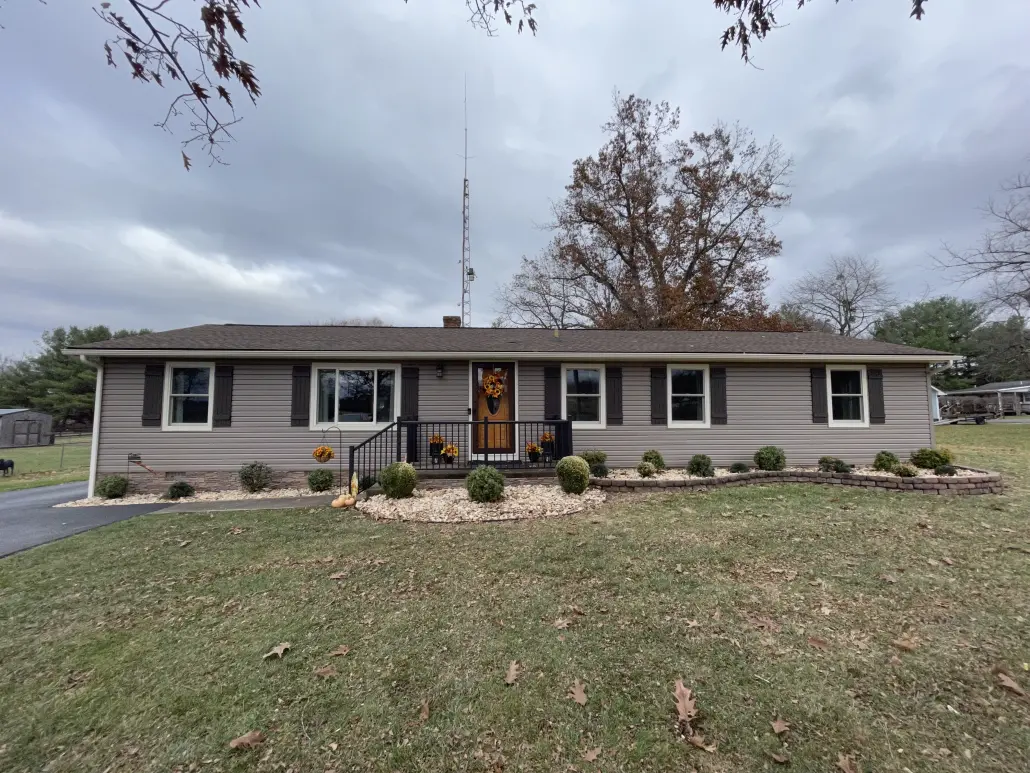
Example #2: Medium House
-
- 1,800 square feet of siding
- Vinyl
- Mastic
- Approximate investment $35,000-$40,000
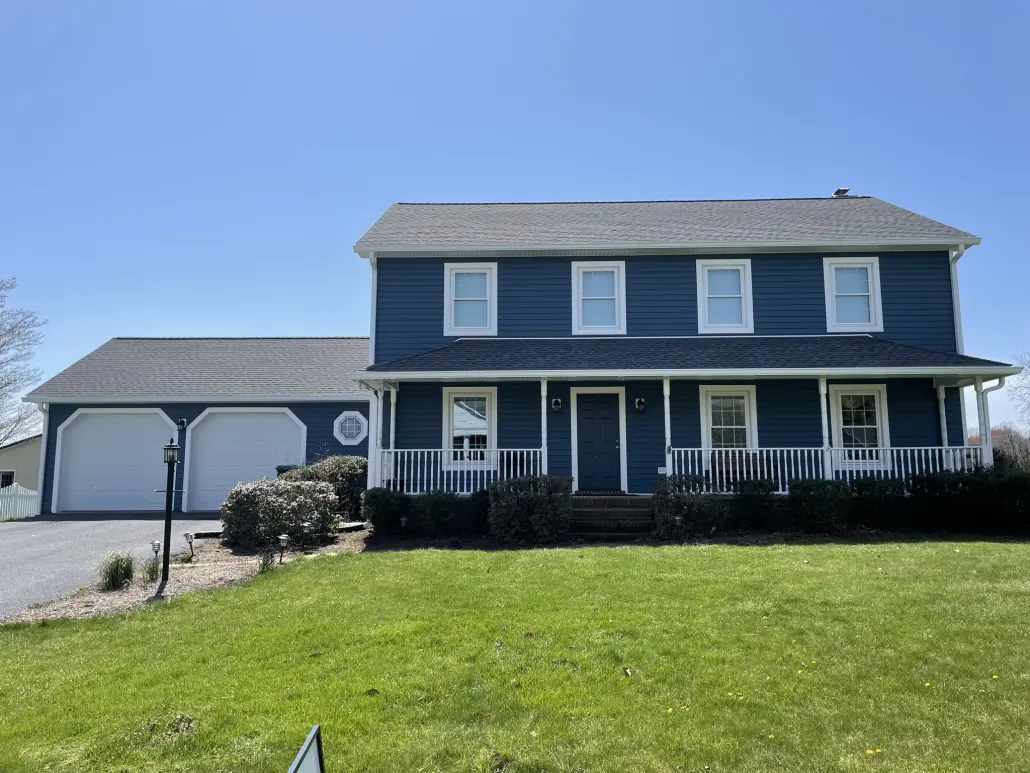
Example #3: Large House
-
- 2,400 square feet of siding
- Vinyl
- Mastic
- Approximate Investment $50,000-$60,000
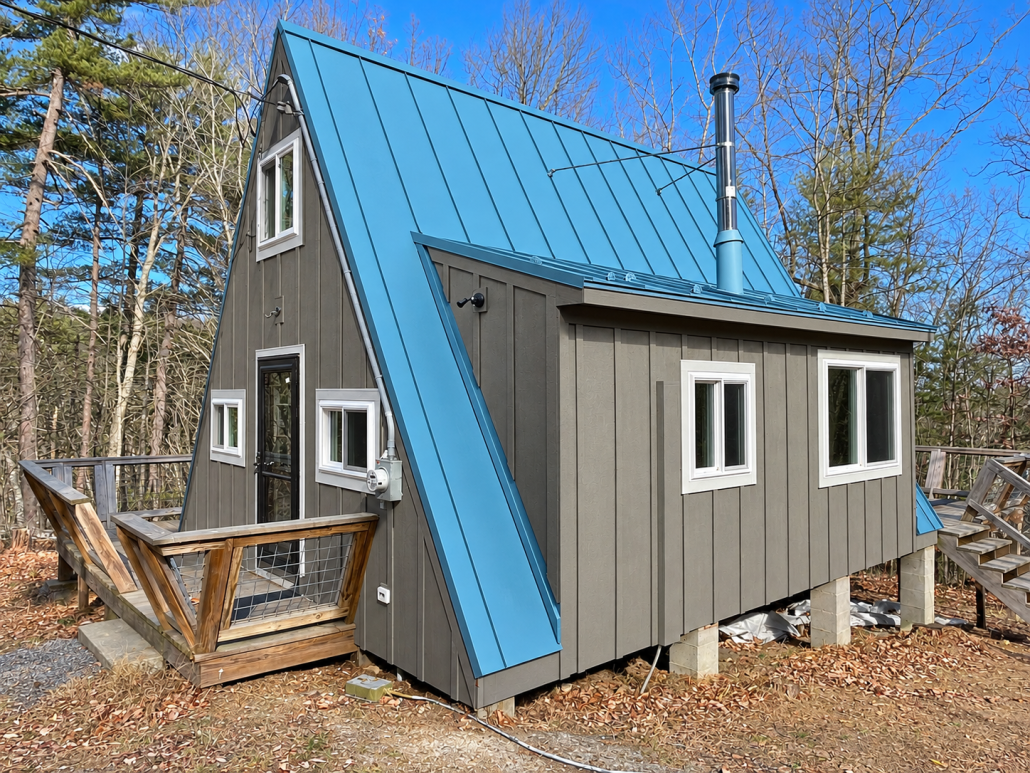
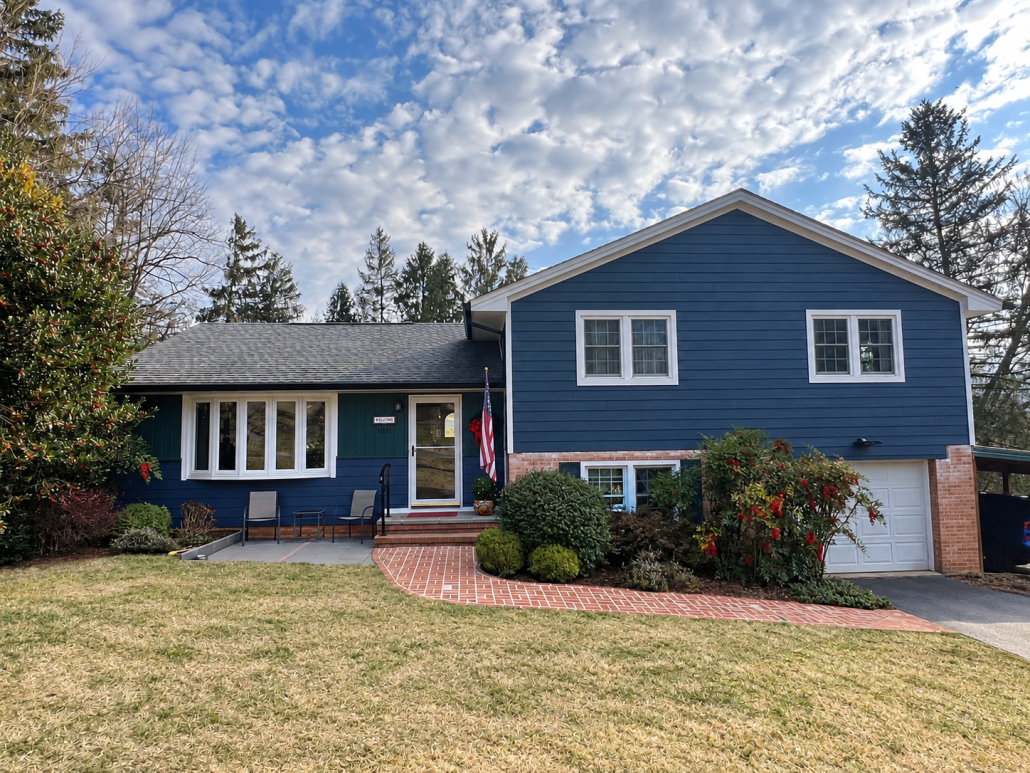
Example #4: Small House
-
- 700 square feet of siding
- Engineered wood
- LP SmartSide
- Approximate investment $18,000-$24,000
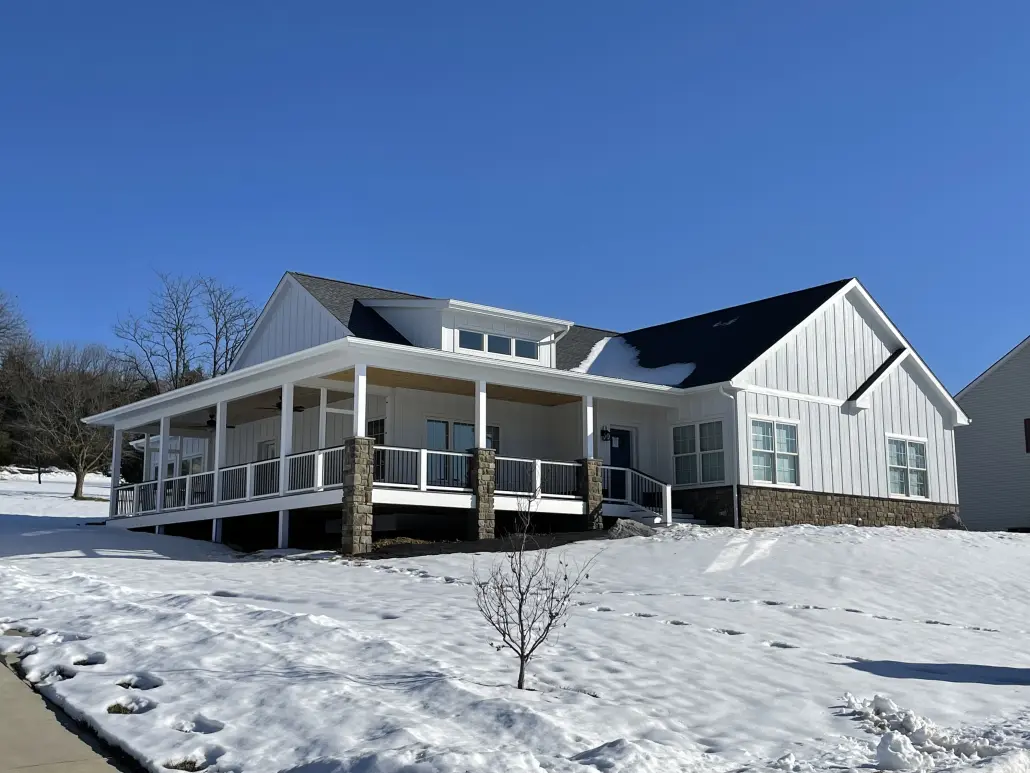
Example #5: Medium House
-
- 1,800 square feet of siding
- Engineered wood
- LP SmartSide
- Approximate investment $50,000-$60,000
Example #6: Large House
-
- 2,800 square feet of siding
- Engineered wood
- LP SmartSide
- Approximate investment $80,000-$100,000+
Frequently Asked Questions
Is LP SmartSide Worth the Extra Cost Compared to Vinyl Siding?
One of the biggest decisions you’ll make when replacing your siding is choosing between traditional vinyl siding and engineered wood siding, such as LP SmartSide.
Both are popular options, but they have different price points, appearances, and maintenance requirements.
Vinyl siding is typically the more affordable option.
Vinyl siding is popular because it offers an attractive exterior at a relatively low cost. It comes in a wide variety of colors and styles, requires very little maintenance, and never needs to be painted.
For homeowners who want to improve their home’s appearance while keeping their siding replacement budget under control, vinyl is often an excellent choice.
However, vinyl siding does have some limitations. It can crack or break from impacts, may become brittle over time, and can warp or melt when exposed to excessive heat, including concentrated sunlight reflected from certain windows.
LP SmartSide costs more, but offers a different look and level of durability.
LP SmartSide is an engineered wood siding product designed to provide the appearance of traditional wood siding with improved resistance to moisture, impact, and environmental conditions.
One of its biggest advantages is its appearance. LP SmartSide offers a more substantial, wood-like finish that many homeowners prefer, particularly on higher-end homes or homes with traditional architectural styles.
It’s also generally more impact-resistant than standard vinyl siding.
But there are trade-offs.
LP SmartSide typically has a higher initial material and installation cost. Unlike vinyl, it also has a painted finish that will eventually require maintenance and repainting.
So, is LP SmartSide worth the additional investment?
That depends on what matters most to you.
If your primary goal is to improve your home’s appearance, minimize maintenance, and keep costs down, vinyl siding may be the better investment.
If you’re looking for a more traditional wood appearance, greater impact resistance, and a premium exterior finish—and you’re comfortable with the additional upfront cost and future painting requirements—LP SmartSide may be worth the extra money.
Our recommendation: Don’t choose siding based on price alone.
Ask your contractor to provide estimates for both materials so you can compare the total installed cost, expected maintenance, appearance, and long-term ownership expenses.
At Valley Roofing & Exteriors, our goal isn’t to sell you the most expensive siding. It’s to help you understand the differences so you can choose the product that makes the most sense for your home, your budget, and how long you plan to live there.
Can new siding be installed over my existing siding?
LP SmartSide and Hardie cannot be installed over existing siding per manufacturer’s specifications.
Vinyl siding sometimes, but that doesn’t necessarily mean it should be.
Removing the existing siding allows the contractor to inspect the wall beneath it, identify damage, address water-management issues, and prepare the exterior properly.
The condition of your current siding and wall assembly should determine the approach.
Does new siding increase home value?
New siding can improve curb appeal and protect the exterior of your home, both of which can be valuable.
But homeowners should be careful about viewing siding only through the lens of immediate resale ROI.
You are also purchasing years of weather protection, reduced maintenance, improved appearance, and (depending on the existing exterior and new wall assembly) potentially better overall exterior performance.
Is expensive siding really worth it?
Sometimes.
And sometimes it is not.
Premium siding makes the most sense when the additional investment gives you something you actually value: better appearance, durability, lower maintenance, improved performance, a stronger warranty, or a design you expect to enjoy for many years.
Paying more simply because something is labeled “premium” does not automatically make it a smart purchase.
The goal should be to understand what you’re getting for the additional money and decide whether those benefits matter to you.
Is Insulated Siding Worth the Extra Cost?
Insulated siding can be a good investment for some homeowners, but it’s not always worth the additional expense.
The biggest difference between traditional vinyl siding and insulated vinyl siding is that insulated siding has a layer of rigid foam insulation attached to the back of the panels.
That additional insulation increases the price. In fact, insulated siding materials can cost roughly twice as much as traditional vinyl siding materials, depending on the products you’re comparing.
So, what are you getting for that extra money?
Insulated siding typically provides an additional R-value of approximately 1.7 to 2.8. R-value measures how well a material resists heat transfer. The higher the number, the better the insulating performance.
For comparison, a conventionally insulated exterior wall might have insulation rated between R-13 and R-19.
That means insulated siding can supplement your home’s existing insulation, but it isn’t a replacement for proper insulation inside your walls.
There are also installation costs to consider.
Because insulated siding is thicker than traditional vinyl siding, it can change how the siding fits around windows, doors, and exterior trim.
For example, insulated siding may require a 1¼-inch J-channel instead of the traditional ¾-inch J-channel used with standard vinyl siding. Depending on your home’s existing details, additional trim modifications may be necessary.
So, is insulated siding worth it?
If your home has poorly insulated walls, insulated siding may not offer enough insulation. We recommend looking at insulating the wall cavity instead.
However, if your home already has properly insulated exterior walls and you are looking to add a little bit more, this may be a solution.
Our recommendation is to compare the total installed cost, not just the siding material price, and understand what improvement you’re realistically getting before making the investment.
Should I Remove My Existing Asbestos Siding Before Installing New Siding?
If your home has asbestos siding, one of the first decisions you’ll face is whether to remove it or leave it in place.
And that decision can significantly affect the cost of your siding project.
Many older homes have asbestos-containing siding. When that siding is intact and in good condition, leaving it undisturbed may be an option.
However, if the siding is cracked, loose, deteriorating, or falling apart, professional asbestos abatement may be necessary.
There are two general approaches to consider.
Option 1: Leave the asbestos siding in place.
If the existing siding is in excellent condition, encapsulation may be possible. In certain situations, installing vinyl siding over it may be an option, provided the work can be performed safely and complies with applicable regulations.
This approach may reduce the expense associated with removing and disposing of asbestos-containing materials.
However, it also limits your ability to inspect and improve the wall system underneath.
Option 2: Have the asbestos siding professionally removed.
Removal increases the upfront project cost because asbestos-containing materials require specialized handling, safety procedures, and proper disposal.
But removal also creates an opportunity to inspect the exterior walls, identify hidden damage, and potentially add insulation from the outside.
That can be especially valuable in older homes that have little or no insulation in their wall cavities.
Without exterior access, adding insulation may require work from inside the home, which can disrupt finished walls and living spaces.
Here’s the most important thing to understand: Asbestos siding should never be disturbed casually.
Cutting, drilling, breaking, or removing asbestos-containing siding can release hazardous fibers. Any work involving disturbance must follow applicable asbestos regulations and licensing requirements.
At Valley Roofing & Exteriors, we believe homeowners should understand both the immediate cost and the long-term implications before deciding how to handle existing asbestos siding.
The least expensive option today isn’t always the best option for the home over time.
What Other Costs Should I Consider When Replacing My Siding?
One of the biggest mistakes homeowners make when budgeting for siding replacement is assuming the project only involves removing old siding and installing new panels.
In reality, a siding replacement can involve several other parts of your home’s exterior.
Depending on your home’s design and condition, your project may also affect:
- Soffit and fascia: The materials that finish and protect the roof overhangs and edges.
- Porch ceilings: Areas that may need new materials or finishing work to match the updated exterior.
- Porch beams and columns: Structural or decorative features that may need to be wrapped, repaired, or refinished.
- Railings: Components that may need to be temporarily removed or modified to allow siding installation.
- Windows and doors: Openings that require proper flashing and careful integration with the new siding.
- Decking: Deck boards or framing attached near the siding may complicate removal and installation, particularly when the deck was installed over existing siding.
- Shutters: These often need to be removed and reinstalled, replaced, or repositioned.
- Gutters and downspouts: Some may need to be temporarily removed or adjusted during the project.
- Window and door trim: Existing trim may need replacement or modification to work properly with the new siding.
Why does this matter?
Because two contractors might give you very different prices for what appears to be the same siding replacement.
One contractor may include replacing window trim, wrapping porch columns, and updating soffit and fascia.
Another may quote only the siding itself.
Neither estimate is automatically right or wrong. But you need to know exactly what’s included before comparing prices.
For example, imagine receiving a $30,000 siding estimate and a $38,000 estimate.
At first glance, the $30,000 option looks like the better deal.
But what if the $38,000 estimate includes new fascia, updated window trim, and additional porch work that you’ll eventually need anyway?
Suddenly, the price difference becomes easier to understand.
These figures are illustrative, not actual project quotes.
Our recommendation is to ask your contractor to walk you through every exterior component that could be affected by the siding replacement.
A detailed scope of work helps you understand where your money is going and reduces the chance of unexpected costs once the project begins.
How Long Does a Siding Replacement Take, and Does the Timeline Affect the Cost?
The time required to replace your siding depends on the size of your home, the complexity of the installation, and the amount of preparation or repair work needed.
For a smaller home, a three-person siding crew may be able to complete the installation in approximately one week.
Larger homes, homes with complicated architectural details, or projects involving extensive trim and repairs can take several weeks.
But there’s something important homeowners should understand:
A faster siding installation isn’t necessarily a better siding installation.
Unlike roofing, much of your siding is installed at eye level.
You’ll see it up close every day. You’ll notice how the corners line up, how the trim fits around windows, and whether the finished details look consistent.
That’s why we prefer working with smaller siding crews rather than putting as many installers as possible on the house.
With a smaller crew, it’s easier to maintain consistency in installation techniques and finishing details.
Several factors can extend the installation timeline, including:
- Removing existing siding
- Repairing damaged sheathing or framing
- Installing new water-resistive barriers and flashing
- Working around multiple windows, doors, and architectural features
- Completing detailed trim work
- Weather delays
- Addressing unexpected conditions discovered during removal
Does a longer installation automatically mean a higher price?
Not necessarily.
Labor is a major part of siding replacement costs, but the number of days a crew spends on your home doesn’t tell the whole story.
The complexity of the work, crew size, material requirements, and scope of repairs all influence the final price.
When comparing estimates, ask how long the contractor expects the project to take, what could delay completion, and whether the quoted price includes all anticipated labor.
Our goal at Valley Roofing & Exteriors is to complete your siding project efficiently without sacrificing the details that make the finished installation look and perform the way it should.
How Should You Prepare Your Home for a Siding Installation?
Preparing your property before installation day can help your siding project run more smoothly, reduce delays, and protect your landscaping.
Because siding installers need access to the exterior walls of your home, anything that makes those areas difficult to reach can slow down the work.
Here are a few things we recommend doing before your crew arrives.
Trim back trees, shrubs, and bushes.
Overgrown landscaping can prevent installers from safely reaching the walls. Trimming vegetation back gives the crew room to work and reduces the likelihood of damage to plants.
Prepare flower beds and landscaping near the house.
Our installers will need to work around your home’s perimeter. That means some areas may experience foot traffic during the project.
If you have delicate plants, decorative items, or landscaping features close to the house, consider moving or protecting them ahead of time.
Mow your lawn.
This might sound like a small detail, but it makes a difference.
Siding removal and installation can produce nails, fasteners, and small pieces of debris.
Short grass makes those materials easier to find during cleanup. Tall grass makes it more likely that small debris will be overlooked.
Make room in your driveway.
Our crews need convenient access for work vehicles, tools, materials, and equipment.
Having driveway space available helps reduce unnecessary loading and unloading time and keeps the project moving.
Move personal items away from the house.
If possible, relocate patio furniture, grills, decorations, and other movable items near the work area.
This helps protect your belongings and gives installers room to work.
Can preparing your home actually save money?
Potentially.
When crews can access the work areas easily and begin on schedule, they’re less likely to encounter avoidable delays.
While proper preparation won’t change the material cost of your siding, it can help prevent unnecessary complications that affect the project timeline.
At Valley Roofing & Exteriors, we’ll explain what needs to be done before installation so you know what to expect.
The better prepared your home is, the easier it is for our team to focus on delivering a quality siding installation.
Ready to Find Out What Your Siding Will Cost?
Online siding price ranges are useful for planning.
But they cannot account for the condition of the walls underneath your existing siding, the architecture of your home, your design preferences, accessibility, trim details, or repairs that may be necessary.
That’s why the next step is to look at your home.
During a siding estimate appointment, we’ll talk through what you’re trying to accomplish, inspect the exterior, show you material samples and options, and provide a detailed written estimate.
We’ll also help you understand which upgrades may be worth the additional investment — and which ones may unnecessarily increase your price.
The goal isn’t simply to sell you the most expensive siding project possible.
It’s to help you understand your options well enough to make the right decision for your home.