

If you are holding two or three roofing estimates in your hand right now, wondering why the prices do not match, you are not alone. Comparing estimates without knowing what to look for feels like reading a contract in a language you do not speak.
At Valley Roofing & Exteriors, with 22 years of experience roofing homes across the Shenandoah Valley, we have sat at a lot of those kitchen tables and read a lot of competing estimates. The good ones share a handful of habits. The bad ones share a handful of tells. This post compares them side by side, so you can look at any estimate, ours or anyone else’s, and see the green flags that signal quality and the red flags that warn you away.
Most homeowners read an estimate looking for what it says. We want to teach you to read it for what it proves. A strong estimate is proof that a contractor walked your roof, understood it, and is willing to write down exactly what they will do. A weak one is a promise with the details left blank.
Why Does A Good Estimate Look Different In The Shenandoah Valley?
A roof in Woodstock does not weather the same way a roof on the coast does. The Valley sits between two mountain ranges, which brings sudden hailstorms, hard freeze-thaw cycles, and thick summer humidity. Each of those punishes shingles, underlayment, and ventilation in its own way.
Many homes here are older, too, with roof decks never designed for modern shingle weight or today’s ventilation standards. So the first green flag is simple: a good estimate reads like it was written for a Central Virginia home, not pulled from a national average. If the quote could describe a roof anywhere in the country, it was not written for yours.
What To Look For In A Good Roofing Estimate
A quality estimate lists components. Every component appears by name, with a brand or product line where it matters, not hidden inside a vague phrase. The table below lines up the green flag you want to see against the red flag that should give you pause. When you compare two quotes, read them one row at a time.
| Component | Green Flag | Red Flag |
|---|---|---|
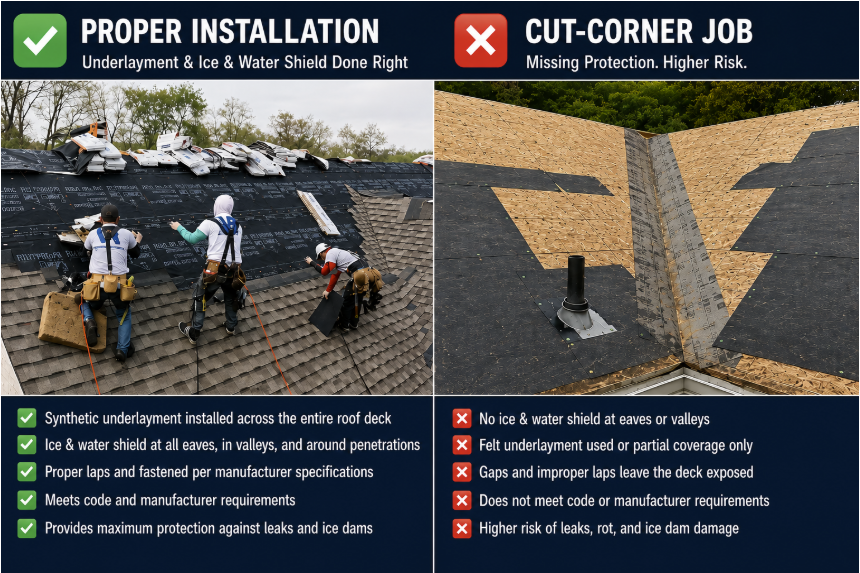
| Underlayment | Type and brand named; synthetic specified | “Underlayment included,” no brand |
| Ice and water shield | Leak barrier listed by location | No mention of it at all |
| Drip edge | New drip edge, listed and to code | Not listed; unclear if new, reused, or missing |
| Starter shingles | Purpose-made ridge cap specified | “Install ridge cap,” or field shingles bent over the ridge |
| Pipe boots | New boots included | Old rubber boots reused |
| Flashing | Scope listed by type: step, apron, chimney, wall | “Inspect and replace if necessary” |
| Valley detail | Closed, open, W-valley, or metal named | Method left unspecified |
| Ventilation | Intake and exhaust calculated for your roof | Left off, or “we always install ridge vent” |
| Nail pattern | Pattern specified to warranty spec | Not specified, which can void the warranty |
| Shingle | Brand, product line, and full system | Only says “shingles” |
| Warranty | Written terms attached | Verbal only |
| Licensing and insurance | Offered up front, in writing | Missing, or produced only if you ask multiple times |
Notice the pattern. A green-flag estimate is specific because a company that knows what it will install has no reason to hide it. A red-flag estimate is vague because vagueness leaves room to cut corners later, and the components most often left blank are the ones homeowners never think to check: drip edge, starter, ridge cap, synthetic underlayment, and pipe boots.
What Are The Red Flags In A Roofing Estimate?
Some red flags are worth calling out on their own, because they show up again and again.
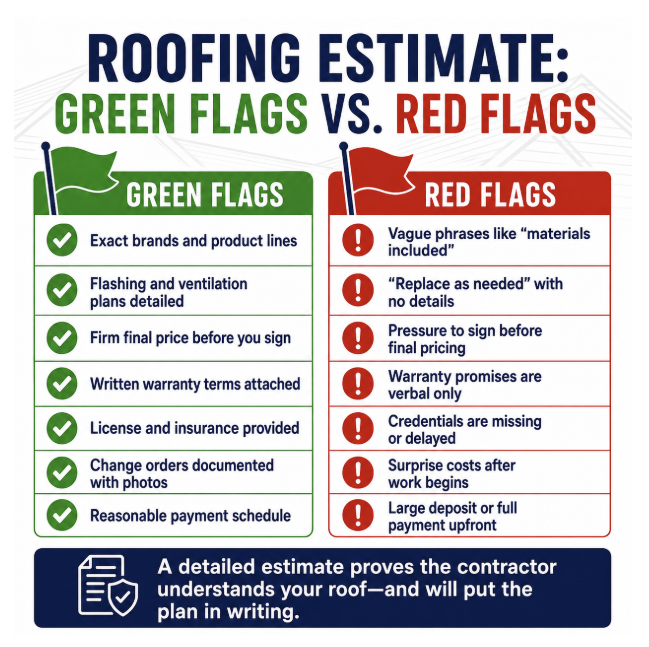
The estimate is short on details. We have reviewed quotes that were a single page of blank fields and handwritten numbers, no product names, nothing a homeowner could verify. A short, vague estimate is not a time-saver. It is a signal that corners are about to be cut.
The flashing plan is vague on purpose. “Replace as needed” is intentionally soft. A good estimate names step, apron, chimney, and wall flashing, plus valley metal. Reused flashing is one of the most common sources of a leak on an otherwise brand-new roof.
They will not give a final price before you sign. Some contractors hand you a rough number and hold the firm price until after you have signed the contract. A trustworthy contractor can give you a complete, final number first. Asking for your signature before showing you the real total is a red flag by design.
The materials are quietly downgraded. We once helped a homeowner in Edinburg compare our estimate to a cheaper quote. On the total line, they looked close, but the cheaper one specified a noticeably inferior shingle, the kind of detail no one spots from the dollar amount alone. Once we walked through the components side by side, the homeowner chose the better value estimate. Watch especially for lines that quietly swap in a cheap product that fails within ten years.
Cannot prove licensing and insurance. A green-flag contractor hands these over before you ask. Confirm the business license yourself through the DPOR License Lookup tool, and request a certificate of liability from the insurer directly. Then ask a question many contractors never explain: does this policy specifically cover roofing operations? Some exclude it. And even a fully insured contractor can hire subcontractors who are not covered, so ask whether subcontractors will be used and whether they carry their own insurance.
It arrives as a storm-chasing sales pitch. After a hailstorm, be wary of door-to-door contractors who want to inspect your roof and have you sign on the same visit, often on a contract that only takes effect if they find damage to report to your insurer. Storm chasers frequently work from a PO Box or an out-of-state address, so ask directly: where is your office?
What Can An Estimate Never Tell You On Its Own?
Even a detailed, green-flag estimate leaves some questions unanswered, because the answers live in how a company works, not on the page. Ask these out loud, and treat a clear, confident answer as a green flag in itself.
- Roof deck: How will you confirm the deck is structurally sound before you install? Some contractors barely look.
- Attic: Will you go into the attic? Skipping it misses mold, moisture, ventilation problems, and signs of past leaks.
- Ventilation: Not just “what is your plan,” but “how did you calculate intake and exhaust?” Many crews install ridge vents by default.
- Supervision: Who is responsible if something goes wrong while the crew is on site? Many companies have no on-site superintendent.
- The crew: Are the installers employees or subcontractors? How long have they worked together? Are they covered by workers’ compensation and authorized to work in the United States?
- Workmanship warranty: “Lifetime” means little by itself. What is covered, who does the repair, how quickly, is it prorated, and is it transferable?
- Change orders: If rotten wood turns up, how will I know the extra work is truly needed? A good company photographs it and explains the cost before proceeding.
- Payment and cleanup: Watch for large deposits or full payment due before materials arrive. Confirm cleanup covers scraps, gutters, flower beds, the driveway, and a magnetic nail sweep.
- References: Not “do you have references,” but “can I speak with someone whose roof you replaced last year?” Time matters, because a roof that has weathered a full season tells you more than one finished last week.
Where Do The Savings In A Cheap Estimate Really Come From?
Not every low estimate is dishonest, but nearly every unusually low estimate is low for a reason. The savings almost always come from one of four places.
- They leave items off. Drip edge, ventilation upgrades, flashing, or synthetic underlayment may simply not appear. The price looks great because you are not comparing the same scope; you are not comparing apples-to-apples.
- They substitute lower-grade materials. Two quotes may both say “architectural shingles,” but one means an entry-level product and the other a premium line with stronger wind resistance and better warranty coverage.
- They cut labor. Labor is often the highest cost. Some companies lean on inexperienced crews, temporary labor, or loosely supervised subcontractors. Ask who will actually install your roof and who supervises them.
- They shift costs down the road. A low upfront number is not always the final number. Language like “replace decking as needed” turns into surprise charges once the old roof is off. A good contractor documents those possibilities before work begins.
Which Questions Indicate A Green Flag?
Bring this short list to every estimate meeting. Clear answers are green flags. Hesitation is a red one.
- Can you give me a final, firm price today, without a signature first?
- What exact shingle brand and product line are you quoting, and does it include the full manufacturer system and warranty?
- Is new drip edge included and to code, and which flashing is replaced versus reused?
- How did you calculate ventilation for this specific roof?
- How will you check the deck, and how are change orders for rotten wood handled?
- Will subcontractors be used, and are they licensed, insured, and covered by workers’ compensation?
- Who supervises the crew, and what does the written workmanship warranty actually cover?
Are You Ready To Read Your Estimate With Confidence?
A detailed estimate is not a courtesy. A detailed estimate is proof that a contractor knows exactly what your roof needs and is willing to put it in writing. Specific product lines, a named flashing and ventilation plan, and a firm price before any signature are the clearest green flags that a company will do the job right. Blank fields, vague material lines, and pressure to sign are the surest red flags they will not. Now that you can see both, you can read any estimate and know which one you are holding.
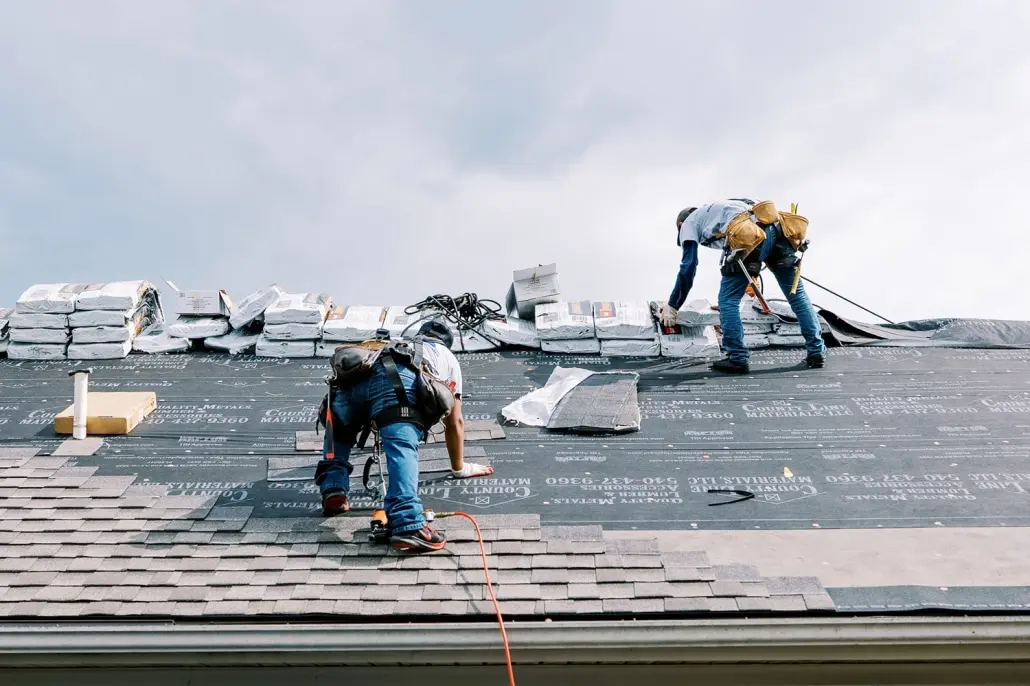
To see what green-flag work looks like on real Valley homes, browse our project gallery. And when you are ready for a detailed, honest estimate, schedule a discovery call with a Valley Roofing project consultant. We will walk your roof and your estimate, line by line.