

By James Groff
Have you ever stood in your yard at dawn, coffee going cold in your hand, staring up at shingles scattered across the grass with a dark stain creeping across the ceiling? That knot in your stomach is real. The wind is gone, the sky is clear, and now the whole thing rests on your shoulders. What do you do first? Who do you call? And how do you keep one bad night from turning into a very expensive year?
At Valley Roofing & Exteriors, we have spent more than 22 years helping our Central Virginia and Shenandoah Valley neighbors answer exactly that question. We have tarped roofs and sat at the kitchen table while a homeowner and an insurer worked out a dollar amount. This guide covers the first steps after a storm, how to tell whether damage is even worth a claim, and how the insurance process really works. It is for the homeowner who woke up to a mess and just wants to take the right next step.
What makes storms in the Shenandoah Valley so hard on a roof?
The Valley is beautiful, but the weather here does not always play nice. Tucked between the Blue Ridge and the Allegheny Mountains, this stretch of Virginia experiences fast-moving summer thunderstorms, sudden hail, and hard winter winds right down the valley floor.
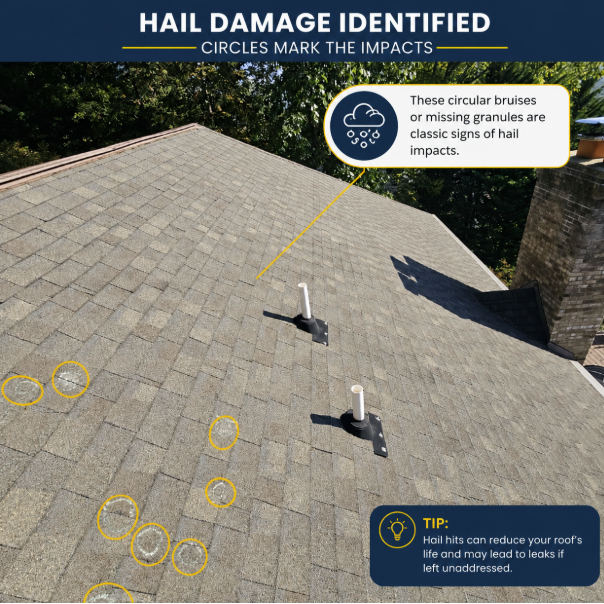
Then add the older and historic homes that give towns like Staunton, Harrisonburg, and Lexington their charm. A steep slate roof on a century-old farmhouse reacts very differently to a hailstorm than a ten-year-old build does. Aging roofs plus severe weather make a tough pairing, and that is exactly why knowing your first move matters so much here.
What is the very first thing to do after a storm damages your roof?
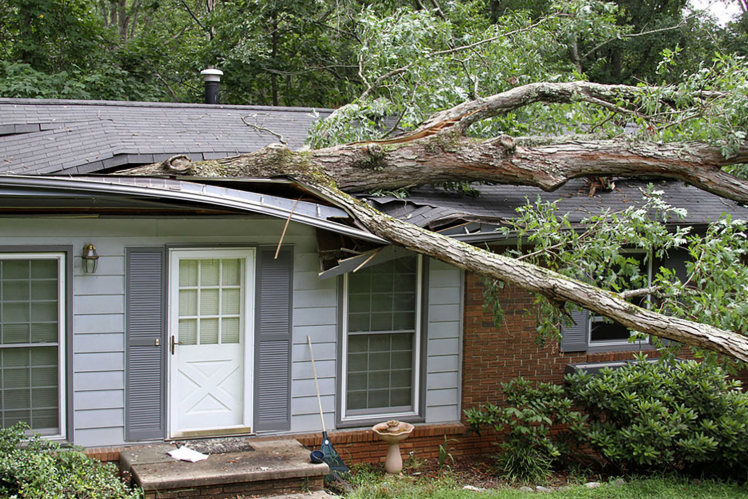
If you can see damage from the ground, a limb through the deck, missing shingles, or water inside, you have two jobs, and you do them simultaneously.
First, call a licensed, local roofing contractor and ask for a temporary dry-in. A dry-in is emergency work, usually tarping, that seals the opening so your home is no longer vulnerable to the next rain.
Second, contact your insurance company and start the claim. Click here for information on filing a homeowners insurance claim from the Insurance Information Institute. The sooner a contractor is on site, the sooner they can photograph and assess the damage, and those images matter. When a contractor documents everything early, insurance can sometimes settle straight from that assessment, without a long wait for an adjuster.
Here is the good news: insurance almost always pays for the dry-in. Insurers know an open roof creates enormous liability inside the home, where costs climb fast, so they want that vulnerability sealed quickly. Protecting the house first is the safe move and the smart one.
| Action (first 48 hours) | What that looks like | Why it matters |
|---|---|---|
| Stay safe first | Keep off a wet, steep, or damaged roof, and watch for downed power lines and sagging ceilings inside | No repair is worth an injury, and a sagging ceiling can mean water is already trapped above it |
| Call a local roofing contractor for a temporary dry-in | Ask for emergency tarping to seal any openings, and get them on site as fast as possible | Stops interior damage, the most expensive kind, and starts your paper trail |
| Document everything | Take dated photos and video from the ground of the roof, gutters, siding, and any interior stains | Builds the evidence your claim is judged on, before repairs change the scene |
| Open a claim with your insurer | Call or file online, write down your claim number, and ask about your deductible and filing window | Starts the clock, and many Virginia policies expect prompt notice of a loss |
| Save receipts and a damaged sample | Keep receipts for tarps, emergency work, or a hotel stay, and set aside a damaged shingle if you safely can | These costs are often reimbursable, and a sample helps prove wind or hail damage |
| Do not start permanent repairs yet | Hold off on full replacement until the adjuster has inspected or approved the damage | Repairing too early can complicate, delay, or shrink your settlement |
Why should you hire a local roofing contractor after a storm?
After a big storm, out-of-town crews known as “storm chasers” roll in fast. A contractor who is not from your market is not your neighbor and will not treat you like one. To them, you are an opportunity, and once the season ends, they are gone. At Valley Roofing & Exteriors, every customer is our neighbor, and we would rather do the job right than do it fast and disappear.
How do you know if roof damage is worth filing a claim for?
Not every storm is an insurance claim, and your deductible is the clearest rule. If the damage costs less to fix than your deductible, filing makes no sense, because you would pay out of pocket anyway. And deductibles have grown. Where policies once carried $500 to $1,000 deductibles, many now sit at $2,000 to $5,000. Even when damage runs to a small multiple of the deductible, paying out of pocket can beat filing, because a claim can raise your rates for years. Review how deductibles work before you pick up the phone.
| Situation | Usually the smart move |
|---|---|
| Repair costs less than your deductible | Pay out of pocket; do not file |
| Repair is a small multiple of your deductible | Weigh the repair cost against likely rate increases |
| Widespread, obvious storm damage | File the claim and document it well |
| A tree through the roof or active water intrusion | Dry-in first, then file right away |
What do homeowners most often get wrong about insurance?
Two myths cost people real money, so we want to clear them up plainly.
The first sounds like this: “I paid premiums for 30 years and never filed a claim, so they owe me.” A homeowners policy is not a savings account. You are not banking money for a future repair; you are paying to offset risk that is shared across a whole group of people. When the year ends with no claim, you still received exactly what you paid for: the insurer carried the risk so you did not have to.
The second myth is that insurance covers regular maintenance. It does not. A shingle roof is a lot like the brake pads on your car: it wears out, and a worn roof fails more easily to wind and hail. Replacing worn shingles within their expected lifespan is your job, not your insurer’s. Insurance exists for the unforeseen event that causes sudden, critical damage, not for age and normal wear. Staying on top of maintenance keeps coverage on your side.
How does the roof insurance claim process actually work?
Once it is established that a storm caused damage covered by your policy, the process tends to follow a clear path. Understanding the claims payment steps ahead of time removes a great deal of stress.
The adjuster creates a settlement document that lists each piece of damage and a value for it. Sometimes those numbers are accurate, and sometimes they are not, so a short negotiation often follows between you, your contractor, and the insurer to agree on a fair value. Here is a point we feel strongly about: many roofing companies ask you to sign a waiver so they can handle that negotiation for you. Valley Roofing & Exteriors does not do that. It is your home and your policy, which means you hold the bargaining power. You get to say, “I want this contractor, and I expect you to cover their cost.” We would rather keep you in control of your settlement.
On that settlement, you will see two numbers plus depreciation. The adjuster will often write a check on the spot for roughly 60 percent of the total, and hold back the rest as depreciation.
| Term | What it means for you |
|---|---|
| Actual Cash Value (ACV) | The first check, about 60% of the total |
| Depreciation | The held-back amount, roughly the other 40% |
| Replacement Cost Value (RCV) | The full cost to replace, paid once work is done |
| Recoverable depreciation | The held-back money, released after the repair |
That withheld depreciation is recoverable. Once the work is finished and you turn in a signed contract or paid invoice, your insurer releases the remainder, their way of ensuring the repair actually happens. Finishing the job is how you collect the full value you are owed.
So, what should you do first after a storm hits?
Take a breath, because you now know the plan. Protect your home with a temporary dry-in, start your claim at the same time, and let your deductible decide whether a claim makes sense. Remember that insurance is for the unforeseen, not for normal wear, and that you, not a waiver, hold the power in your settlement. Do the repair, and collect every dollar you are owed.
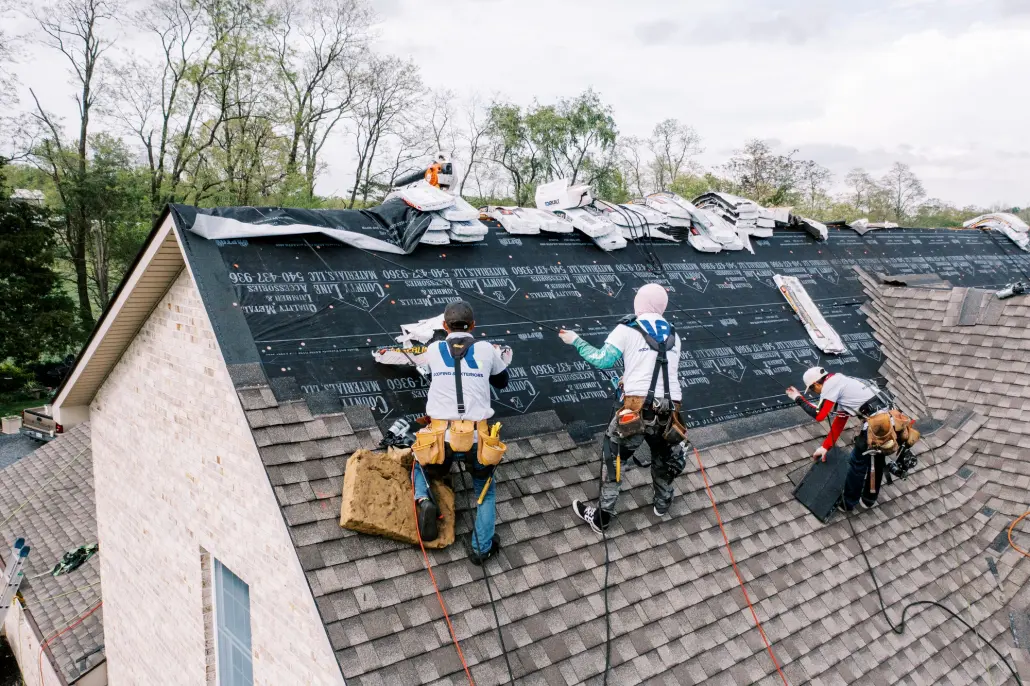
When you are ready to see what careful, honest work looks like, take a look at our project gallery.
And when you want a real plan for your roof, contact a Valley Roofing & Exteriors project consultant. We will treat your home like our neighbor’s.