
Pricing
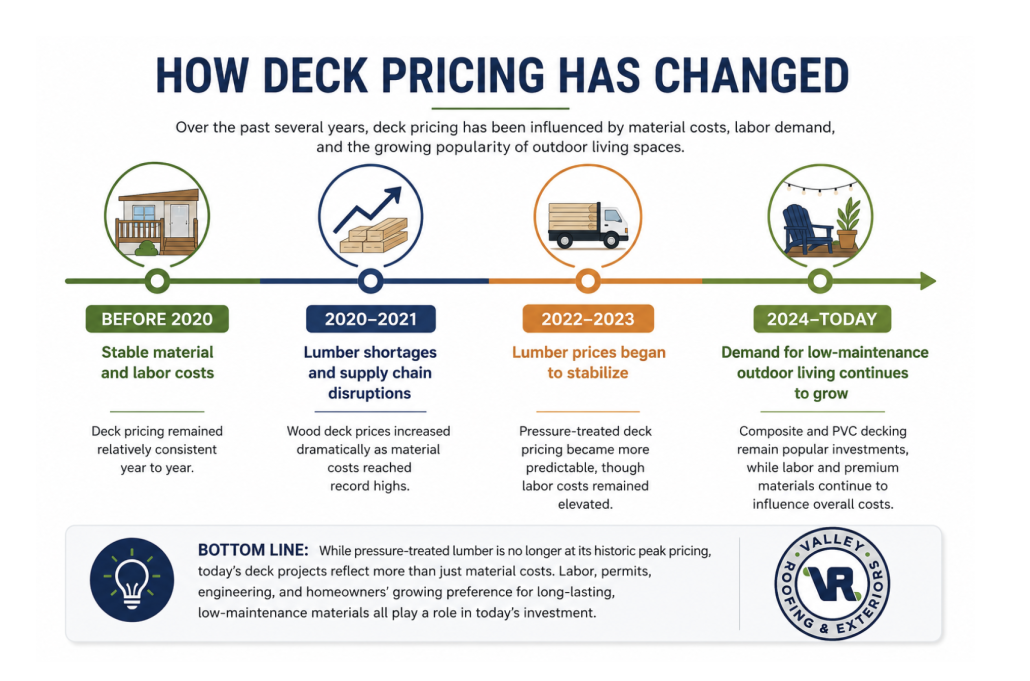
If you are thinking about adding a new deck to your home, you are probably asking one question first: “How much will it cost?”
The honest answer is…it depends. But we can help!
In this guide, we explain:
- Average deck costs in Virginia
- What makes one deck cost significantly more than another
- The biggest pricing factors
- The differences between wood, composite, and PVC decking
- Hidden costs homeowners often overlook
- How to determine the right investment for your home
Our goal is simple: Help you understand why deck prices vary so you can make an informed decision before requesting estimates.
Average Deck Costs in Virginia
| Average cost for a 200 square foot deck (10’x20′) | Typical Investment |
|---|---|
| Pressure-Treated Wood Deck | $14,000-18,000+ |
| Composite Deck | $20,000-24,000+ |
| Premium PVC Deck | $24,000-28,000+ |
| Thermally Modified Oak or IPE Deck | $30,000-50,000+ |
Why Does One Deck Cost $15,000 While Another Costs $60,000?
Several factors influence the final investment.
1. Deck Size
2. Material Selection
The larger your deck, the more materials, framing, labor, and railing are required. Larger decks typically require:
-
- Additional footings
- More framing lumber
- More decking boards
- Additional railings
- More installation time
Even adding a few feet can significantly affect the total investment, while smaller decks can sometimes cost more per square foot.
The decking material you choose is one of the biggest factors affecting your overall investment. While pressure-treated lumber has the lowest upfront cost, composite and PVC decking provide greater durability and require far less maintenance over time. Read an in-depth comparison of deck materials.
3. Railings
4. Height of the Deck
Railings are often one of the most overlooked cost factors. Options include:
-
- Pressure-treated wood
- Aluminum
- Composite
- Cable railing
- Glass railing
Glass and cable systems create a modern appearance, but typically increase the overall investment compared to traditional railing systems.
Ground-level decks are generally less expensive to build.
Raised decks often require:
-
- Additional framing
- More stairs
- More railing
- Larger concrete footings
As deck height increases, so do construction complexity and build time.
5. Stairs
6. Site Conditions
A single staircase adds both labor and materials. Stairs can actually cost more per square foot than the deck itself. Multiple staircases, wider or wrap-around designs, and custom landings can increase project costs further.
Every backyard presents unique challenges. Pricing can vary based on:
-
- Sloped yards
- Limited access
- Rock excavation
- Tree removal
- Drainage improvements
- HOA requirements
- Existing structures
A relatively flat, accessible backyard generally costs less to build on than one with difficult terrain.
What Makes Some Deck Builders More Expensive Or Cheaper?
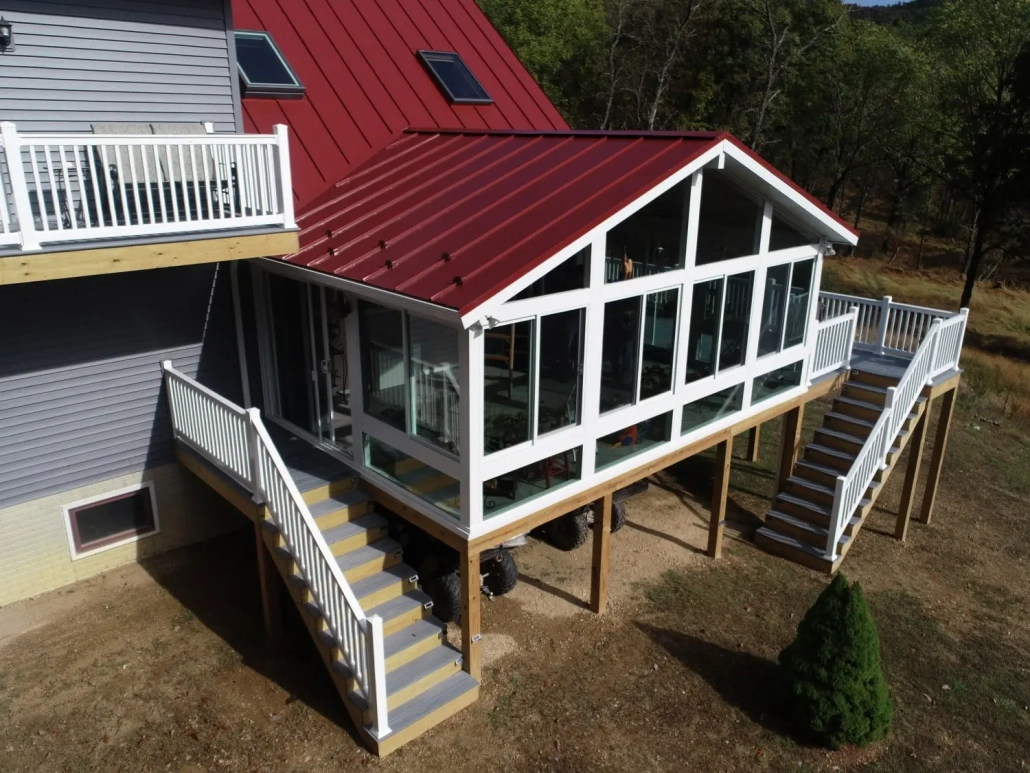
Higher-priced contractors often include:
-
- Engineered structural designs
- Premium framing techniques
- Hidden fastener systems
- Better warranties
- Experienced, drug-free/smoke-free installation crews
- Dedicated project management
- Higher-quality decking products
- Better communication throughout the project
Oftentimes, paying more upfront results in fewer repairs and lower maintenance costs over the life of your deck.
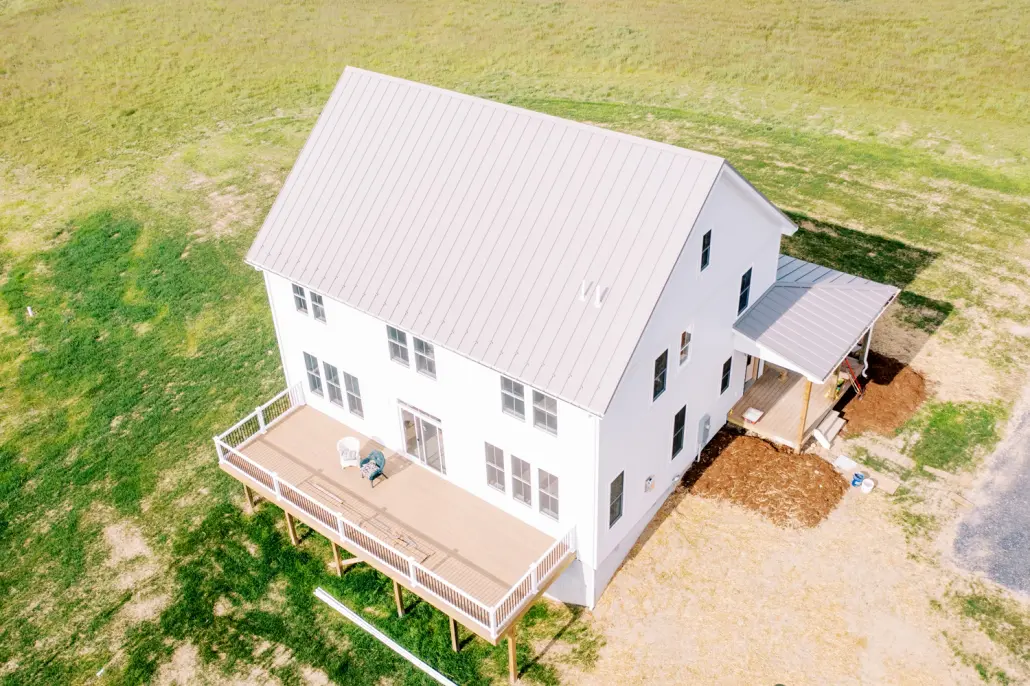
Lower-priced estimates may reflect:
-
- Lower-quality materials
- Minimal structural upgrades
- Less experienced labor
- Limited, if any, warranties
- Fewer design options
- Reduced project oversight
- No drug screening for crews
The lowest price isn’t always the best value. Understanding exactly what’s included, and what’s not, helps you compare estimates fairly.
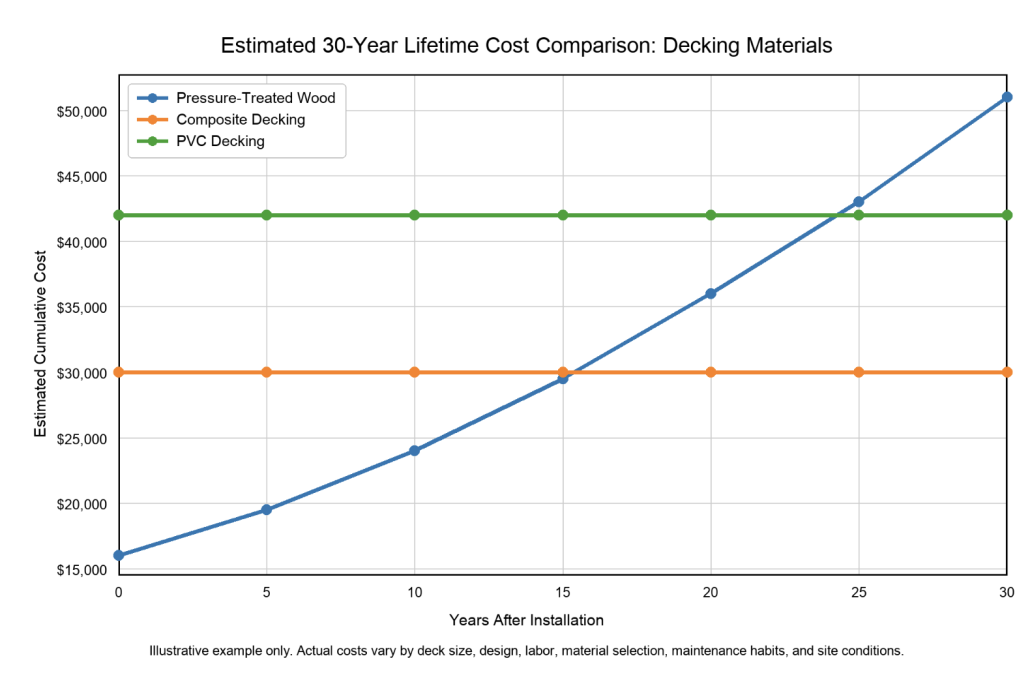
Upfront Cost vs. Lifetime Cost
Choosing the least expensive deck today doesn’t always mean spending the least over time.
Pressure-treated wood requires regular staining, sealing, and occasional board replacement.
Composite and PVC decking cost more initially but generally require far less maintenance and fewer repairs over their lifespan.
Wood vs. Composite vs. PVC
| Material | Typical Investment | Maintenance | Lifespan | Best For |
|---|---|---|---|---|
| Pressure-Treated Wood | $ | High (stain or seal every 2–3 years) | 12-20 years | Homeowners looking for the lowest upfront cost |
| Composite Decking | $$–$$$ | Low (occasional cleaning) | 25–35 years | Homeowners wanting long-term durability with minimal maintenance |
| PVC Decking | $$$–$$$$ | Very Low | 30–50+ years | Premium decks with maximum longevity and the least maintenance |
Wood vs. Composite vs. PVC – The Quick Comparison
| Feature | Pressure-Treated | Composite | PVC |
|---|---|---|---|
| Lowest Initial Cost | ✅ | ❌ | ❌ |
| Low Maintenance | ❌ | ✅ | ✅ |
| Fade Resistance | ❌ | ✅ | ✅ |
| Moisture Resistance | ⚠️ | ✅ | ⭐ Excellent |
| Longest Lifespan | ❌ | ✅ | ⭐ Best |
| Best Long-Term Value | ⚠️ | ✅ | ✅ |
Legend: ✅ Meets criterion • ❌ Does not meet criterion • ⚠️ Mixed/conditional • ⭐ Top performer
Hidden Costs Homeowners Should Consider
Depending on your project, additional costs may include:
-
- Permits (read more on deck permitting here)
- Demolition of an existing deck
- Concrete footings
- Lighting
- Electrical work
- Landscaping repairs
- Drainage improvements
Understanding these potential costs early helps avoid surprises later.
Real Deck Projects & Price Examples
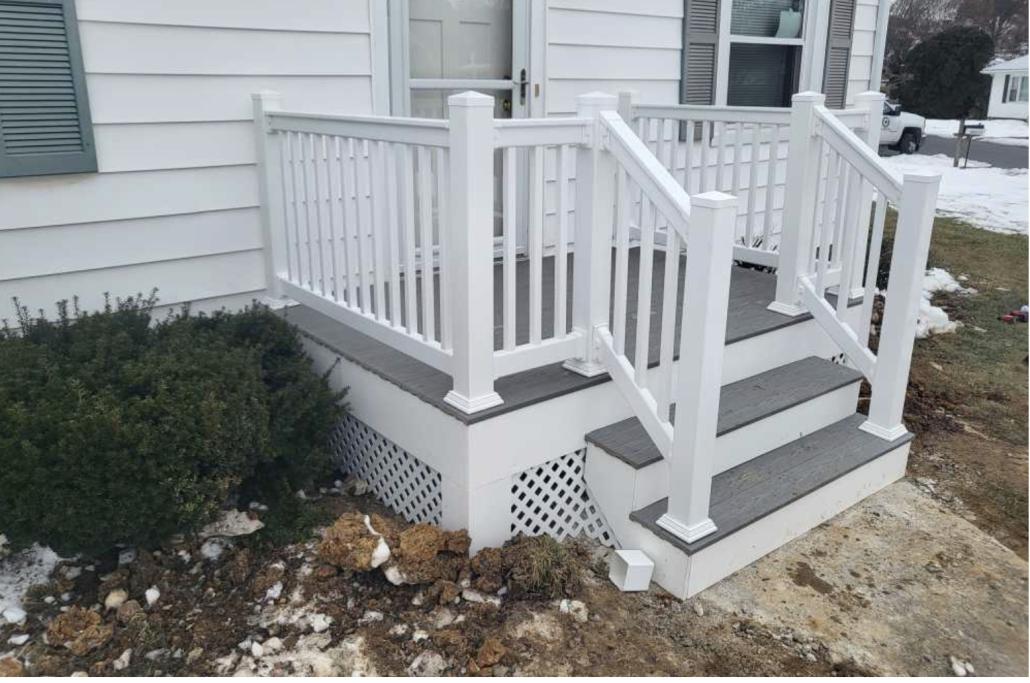
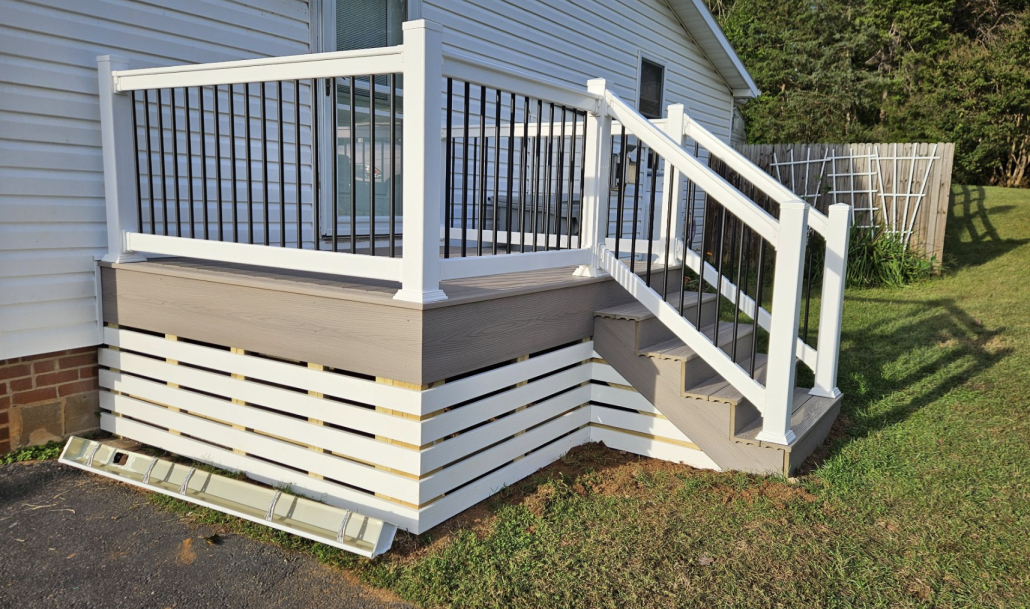
Example #1: Front Deck
-
- 6’x8’
- Composite
- Vinyl railing
- Maintenance-free wraps and lattice around base
- Approximate Investment $10,000-15,000
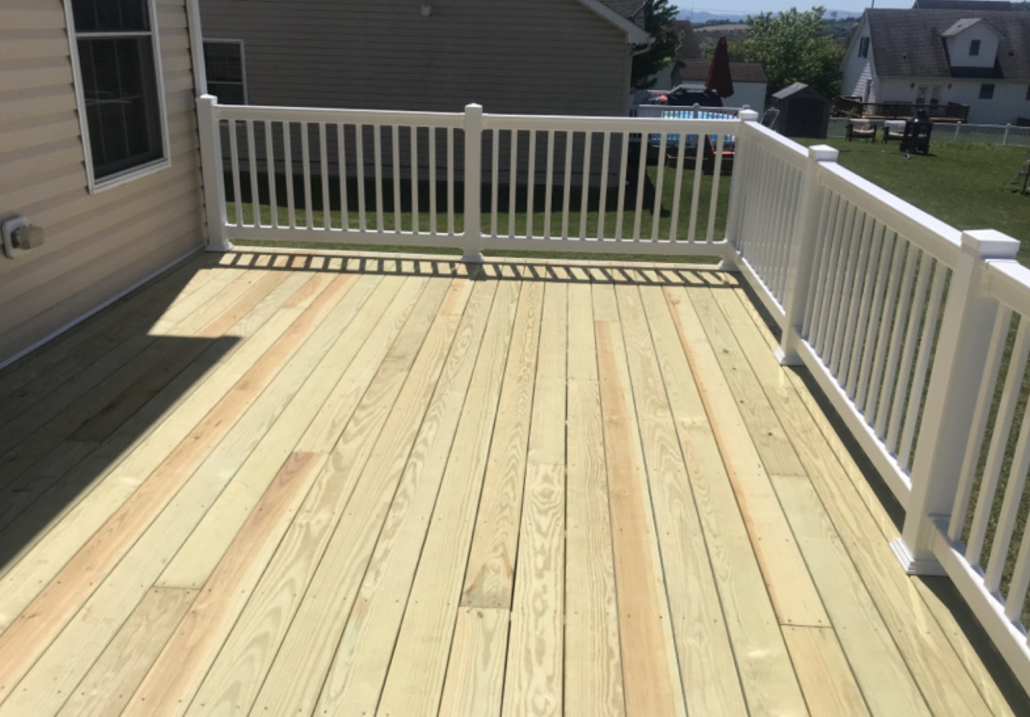
Example #2: Front Deck
-
- 8’x22′
- Composite Fiberon Boards
- Aluminum railing & posts
- Approximate Investment $20,000-24,000
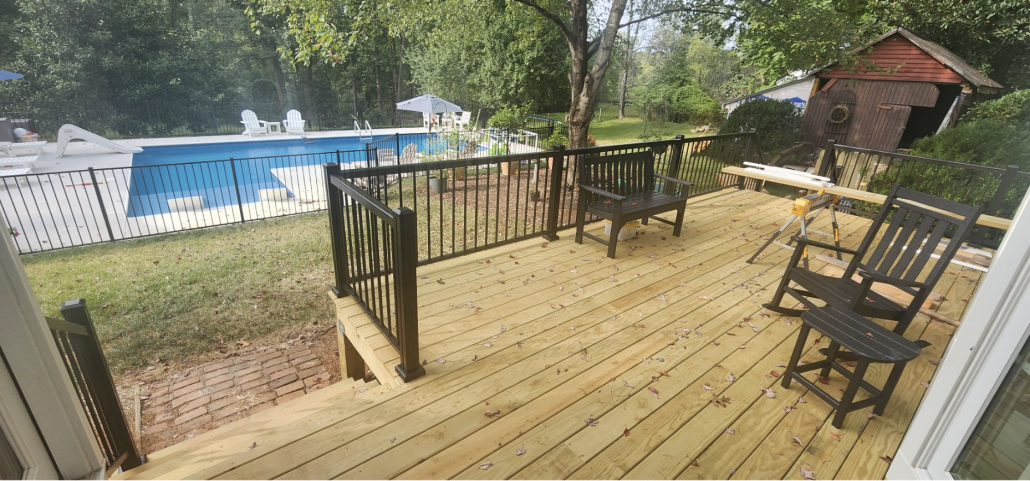
Example #3: Backyard Deck
-
- 12’×20′
- Pressure-Treated Wood
- Vinyl railing
- Approximate Investment $14,000–18,000
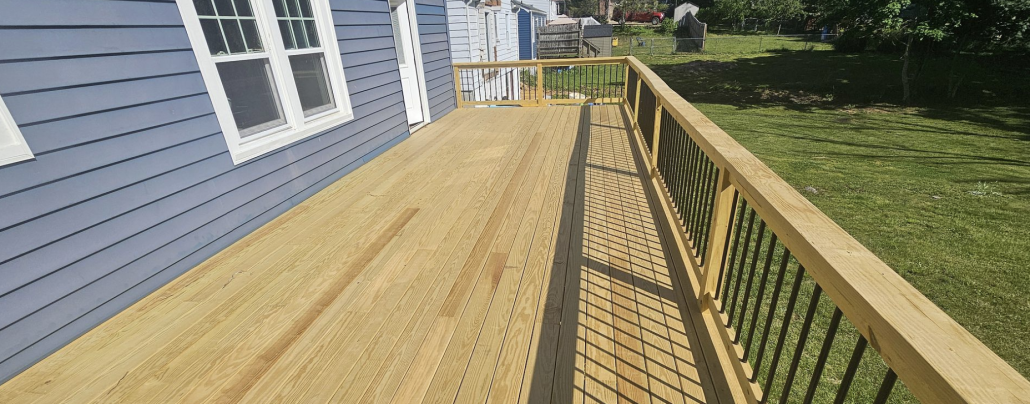
Example #4: Backyard Deck
-
- 11’x24’
- Pressure-Treated Pine
- Aluminum railing
- Approximate Investment $20,000-25,000
Example #5: Back Deck
-
- 12’x32′
- Pressure-treated deck
- Wood railing
- Black spindles
- Approximate investment $20,000-25,000
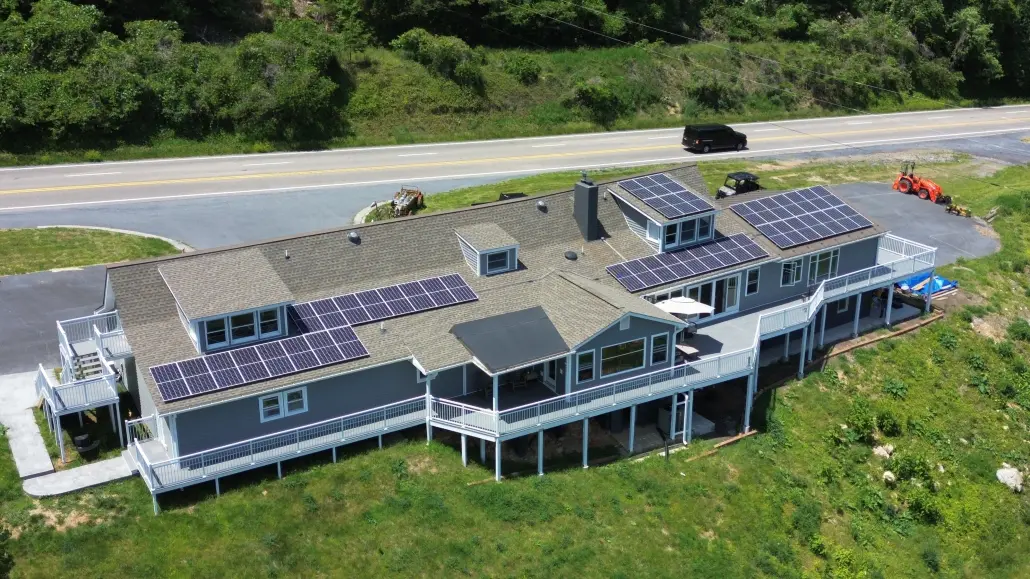
Example #6: Wrap-around Deck
-
- Approximately 1,000 square feet
- Composite decking
- Aluminum railing
- Approximate Investment $100,000+
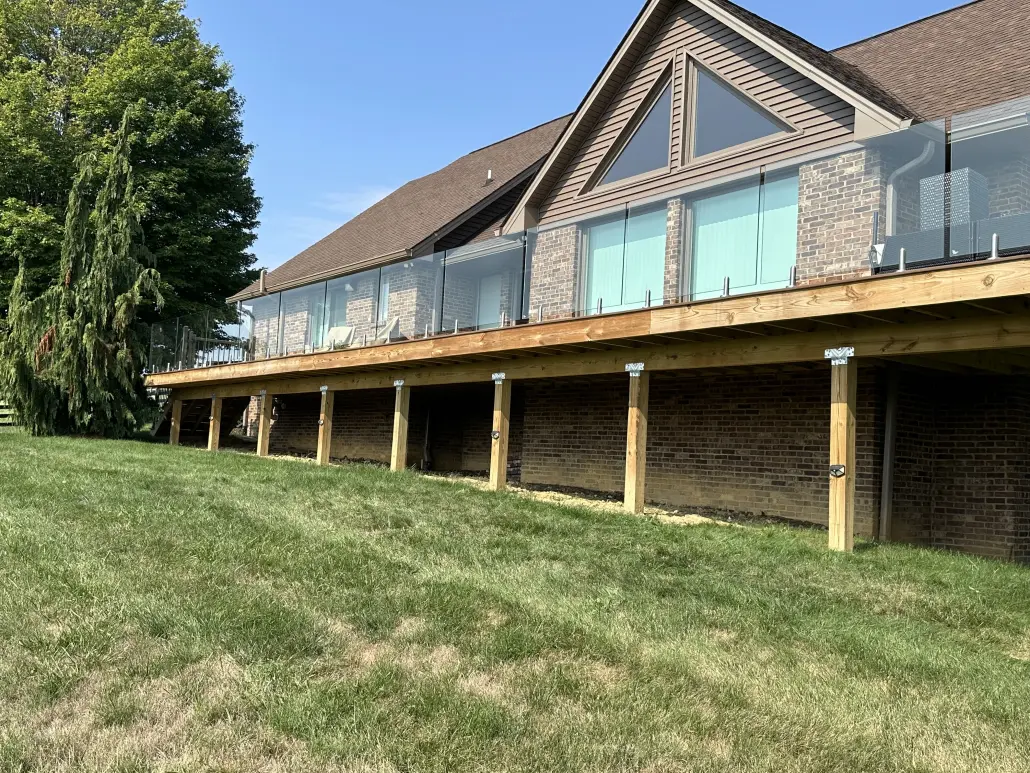
Example #7: Back Deck
-
- Approximately 1,100 square feet
- Fiberon decking
- Frameless glass railing
- Approximate Investment $70,000-80,000
Frequently Asked Questions
Is composite decking worth the extra cost?
For many homeowners, yes. Composite decking typically requires significantly less maintenance and lasts much longer than pressure-treated wood.
Do I need a permit?
Most deck projects require permits, but requirements vary by municipality. Learn more about deck permitting.
How long does it take to build a deck?
Most projects take one to four weeks depending on size, weather, and complexity.
Can decks be built during winter?
Yes. In many cases, deck construction can continue through much of Virginia’s winter season.
Which decking material lasts the longest?
PVC decking generally offers the longest lifespan, followed closely by composite decking.
Is a premium deck worth the investment?
The answer depends on how you plan to use your outdoor space (read more on planning your dream outdoor space). If you are building a simple backyard deck and expect to move within a few years, a pressure-treated deck may make sense. If this is your forever home, investing in composite or PVC decking often provides greater enjoyment, lower maintenance, and better long-term value.
Ready to Find Out Exactly What Your Deck Project Will Cost?
Schedule a free assessment.