
Why Does Your Roof Choice Matter More in the Shenandoah Valley?
The Shenandoah Valley is not an average American climate, and that matters when you are choosing a roof that needs to last decades.
Summers here are humid, humid enough to accelerate granule loss on asphalt shingles and encourage moss and algae growth on shaded roof faces. Winters bring genuine freeze-thaw cycles that stress every seam, nail hole, and flashing joint each time temperatures drop below 32°F. When derechos and severe thunderstorms roll over the Alleghenies, wind uplift is not a theoretical number on a spec sheet; it is a real force that separates well-installed roofs from poorly installed ones. And a heavy, wet snow load is not rare.
Add to that the region’s housing character. Harrisonburg, Staunton, and Charlottesville are full of farmhouses, Victorians, and homes sitting inside historic districts where standing-seam metal is not a modern upgrade; it is a traditional choice that has covered these rooflines for a century or more. Choosing the wrong material for your home’s architecture can look out of place and, in some districts, may not even be permitted.
How Much Does a Metal Roof Cost Compared to Shingles in Virginia?
The honest answer: metal costs significantly more upfront. Metal runs roughly two to three times the installed cost of a comparable shingle roof.
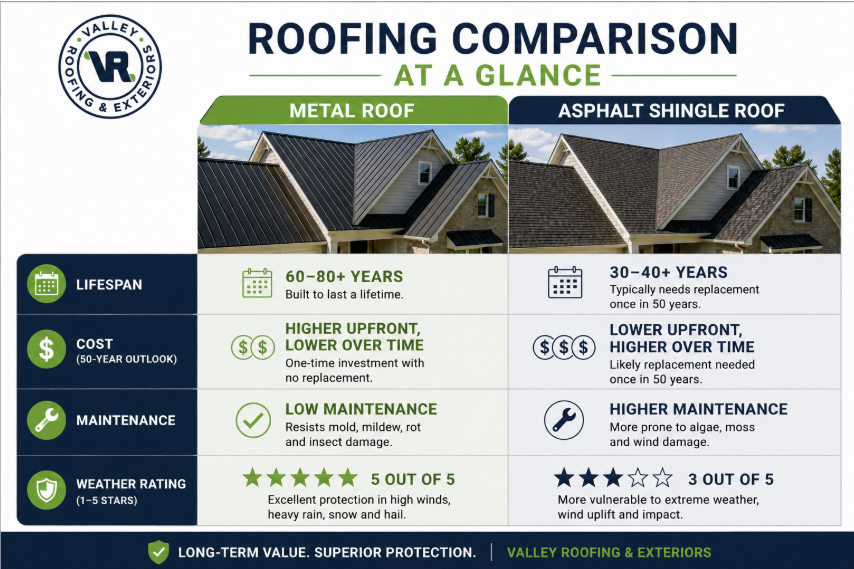
The cheapest roof today is not always the cheapest roof over 50 years. If you replace an asphalt roof every 15–20 years, you may be buying two or three roofs in the same span that one well-installed metal roof covers. Over the course of a century, the costs will likely balance out. See real budget ranges here.
If upfront cost is a barrier, payment options are available. You can also learn more about our specific products for standard asphalt shingles and metal roofing.

Which Roof Lasts Longer and Holds Up Better in Valley Weather?
How long does each roof actually last here?
Valley Roofing & Exteriors has been pulling old roofs off Valley homes for over two decades, and what we see repeatedly is asphalt shingles marketed as 25- or 30-year products being routinely replaced at 15 to 20 years. Installation quality, attic ventilation, sun exposure, and the weather swings will all take years off the rated lifespan.
Metal is more variable. There are times when a metal roof is not installed properly, where it might need to be replaced between 10 and 20 years. But we see many old metal roofs that have been on homes for 70 to 100 years.
Why metal roof warranties work differently, and what that means for you
Metal warranty coverage works differently from shingle warranties, and it is worth understanding before you sign a contract. Because Valley Roofing & Exteriors rolls our own metal panels on-site from steel coil, there is no third-party manufacturer covering the finished product the way GAF or Owens Corning back shingles. The raw coil typically carries a 20-year material warranty; the paint or coating may carry a 35- to 40-year warranty. But the installing contractor is the primary, and often only, source of recourse if something goes wrong.
That is one of the reasons it is crucial to choose the right contractor when you’re doing a metal roof. A homeowner can’t call the metal manufacturer and say this roof is leaking, because all they did was sell the coil.
Shingles, ironically, offer stronger warranty protection on paper precisely because a single manufacturer controls the entire product, material and coating together. Valley Roofing & Exteriors back our metal work through our warranty program, including GAF’s Golden Pledge for qualifying shingle installs.
How does each roof type handle the elements?
| Weather Threat | Standard Asphalt | Designer Asphalt | Metal (Shingles or Standing Seam) |
|---|---|---|---|
| High wind | Moderate, depends heavily on installation | Good, heavier, better adhesion | Excellent, mechanically fastened, no tabs to lift |
| Hail | Moderate, granule loss accelerates aging | Better, impact-resistant options available (Class 4) | Very good, UL 2218 Class 4 rated panels available |
| Snow shedding | Snow tends to sit and add load | Snow tends to sit | Excellent, slick surface sheds snow quickly |
| UV/heat | Granule loss over time; dark colors absorb heat | Same, with some cool-roof color options | Reflective coatings available; retains structural integrity |
| Fire | Class A with proper underlayment | Class A | Class A (noncombustible) |
One important nuance for Valley homeowners with metal roofs: snow sheds fast, which is a feature in terms of structural load, but a hazard if it avalanches off the eave onto a walkway, deck, or HVAC unit. Snow guards meter the release and are worth discussing with your contractor during the design phase.
Will a Metal Roof Look Right on My Home in the Shenandoah Valley?
This is one of the most common questions we hear, especially from owners of older Valley homes, and the answer is almost always yes, with the right product selection.
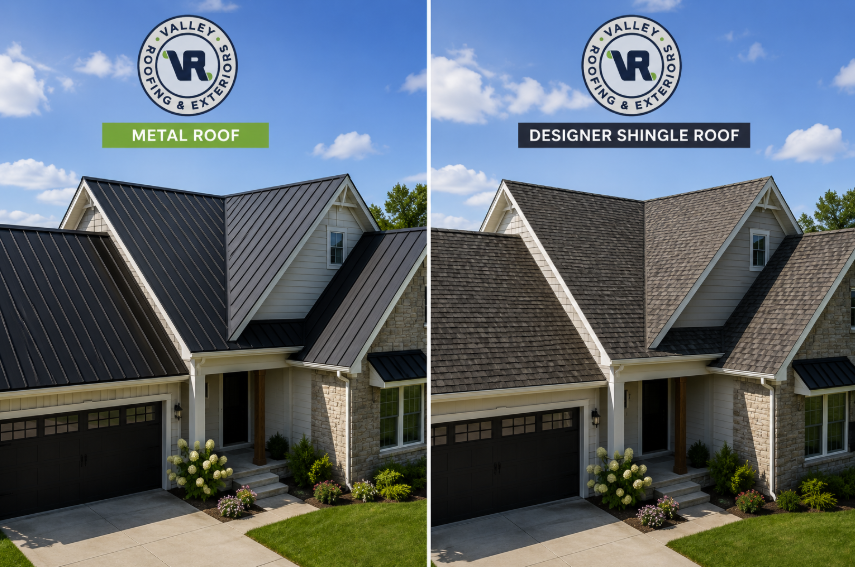
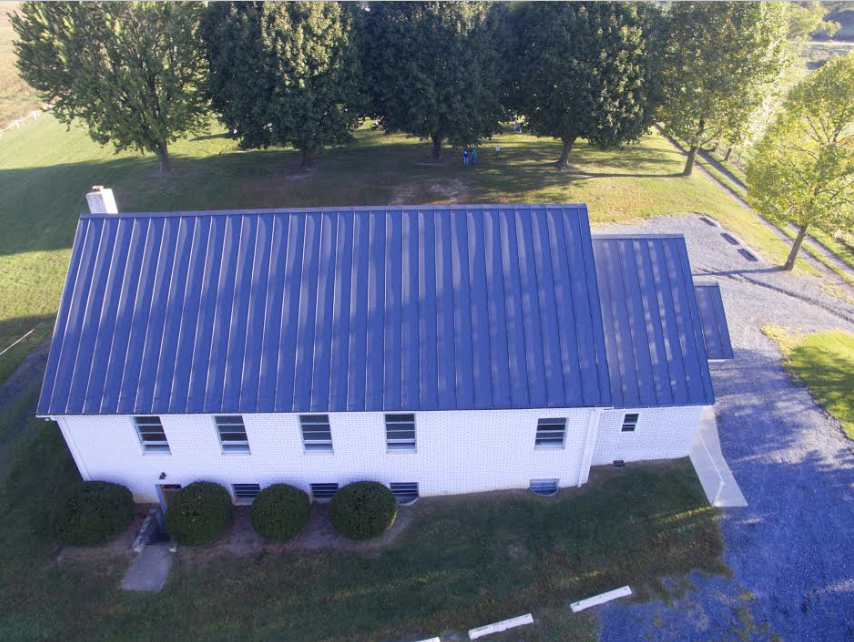
Standing-seam metal has been the traditional roofing choice on Shenandoah Valley farmhouses and historic properties for well over a century. If your home has that architectural lineage, a standing seam often looks more authentic than asphalt ever will. See our metal roofing gallery for completed Valley Roofing & Exteriors projects.
Metal shingles mimic the profile of traditional asphalt or even cedar shake, making them a strong fit for homes where the standing-seam look would feel out of place, newer suburban builds, certain Colonial or craftsman styles.
Designer asphalt shingles offer the widest range of profiles and colors and are the right choice when the goal is a premium look at a lower price point. Explore designer asphalt options and metal shingles side by side.
Note: some historic districts in the Valley do not permit switching from shingle or cedar shake to metal, even if metal would perform better. We recommend verifying with your local historic preservation board before committing to a material. It is a quick check that can save a lot of frustration.
Which Roof Needs Less Maintenance?
Asphalt shingles require more ongoing attention. Granule loss is normal and accelerates with UV exposure and weather events, those granules in your gutters are not just debris, they are years off your roof’s life. Moss and algae growth are real issues in the Valley’s humid summers, particularly on north-facing faces with tree shade. Flashing and sealants around penetrations need periodic inspection.
Metal requires significantly less routine maintenance. Where asphalt calls for annual attention, a properly installed metal roof typically needs a professional inspection only every three to five years. There is no granule loss to monitor, no moss treatment to schedule, and no sealant around penetrations to reapply every few years. Standing seam panels, which use concealed fasteners, have the fewest maintenance points of any roofing system. Once installed correctly, your main task is to keep debris out of the valleys and gutters. Exposed-fastener metal panels require a bit more attention: the fastener washers should be checked every seven to ten years for compression or cracking and replaced before they allow water in. Paint or coating can fade or chalk after several decades, but that is a cosmetic issue, not a structural one.
Does a Metal Roof Save Money on Energy and Insurance?
Reflective metal roofing is often marketed as an energy saver, and in the right climate, it is. But we offer a more honest take for Central Virginia specifically. The biggest key difference to any roof in terms of your energy bill is the insulation and the ventilation in your attic. That will have way more impact on your energy bill than the type of roof.
Beyond that, Virginia’s balanced seasons complicate the math. A reflective light-colored metal roof absorbs less heat in summer, which is good. But in winter, a darker roof that absorbs solar heat can reduce heating load. Here in Virginia, since we have a very balanced season, half of our year is hot, half of it’s cold, it’s almost a trade-off. The energy efficiency argument for light metal roofs is stronger in the Deep South; the argument for darker roofs is stronger further north. Virginia sits in between.
If energy performance matters to you, ENERGY STAR’s cool roofing resources and the Department of Energy’s roofing guidance are good starting points, but factor in your attic insulation situation first.
On insurance: the landscape has shifted considerably in recent years and varies by carrier, so specific discount claims are hard to make with confidence. Insurance companies do look at the roof when they get ready to renew your policy. Having a new metal roof is a lot of security for the insurance company because they will not need to replace your roof for several years. Whether that translates to a measurable premium discount in your situation is a conversation worth having directly with your insurer.
Is a Metal or Shingle Roof Right for Your Shenandoah Valley Home?
Here is the honest summary:
Metal lasts longer, genuinely. When installed properly, a metal roof can outlast two or three asphalt roofs. The Valley’s weather history backs this up. Our crews pull off 70- and 100-year-old metal roofs regularly. But installation quality matters enormously, and the contractor is your primary warranty.
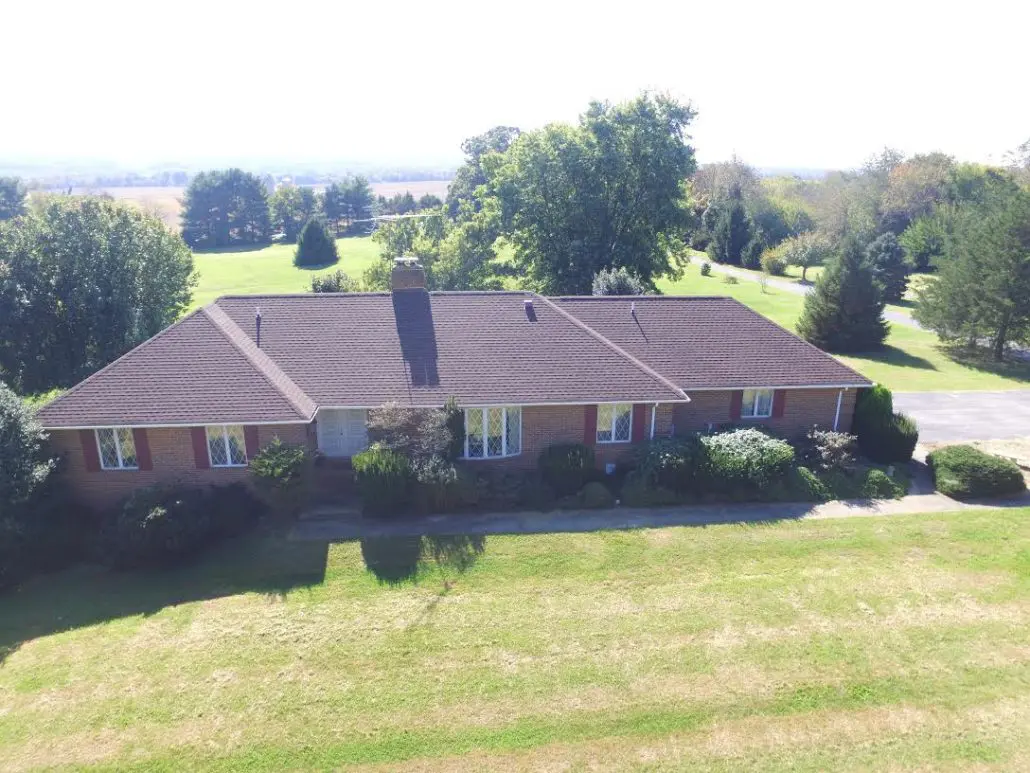
Asphalt costs less upfront and has more straightforward warranty coverage. A quality designer shingle from a reputable manufacturer, installed correctly, can deliver 30 or more years of solid performance. The warranty structure is simpler and backed by a manufacturer invested in the outcome.
The costs mostly balance out over a lifetime. Over the course of a hundred years, the costs are mostly going to balance out. Metal is two to three times the upfront investment, but you are probably buying it only once.
Pick the roof you want. After 22 years of installs, this is our advice: do not let budget math or outside pressure push you toward a roof you never actually wanted. Spending $35,000 on metal because you felt like you had to, but never really loved the look, is a bad outcome, even if the roof performs perfectly. And the reverse is equally true: if you genuinely love the look of a classic shingle and a quality product backed by a strong manufacturer warranty sounds right for your home, that is a completely valid choice. There is no wrong answer between two good options. The wrong answer is spending a lot of money on the one you did not want.
Whether it is $20,000 or $50,000, it is a lot of money. Spend it on the roof you actually want.
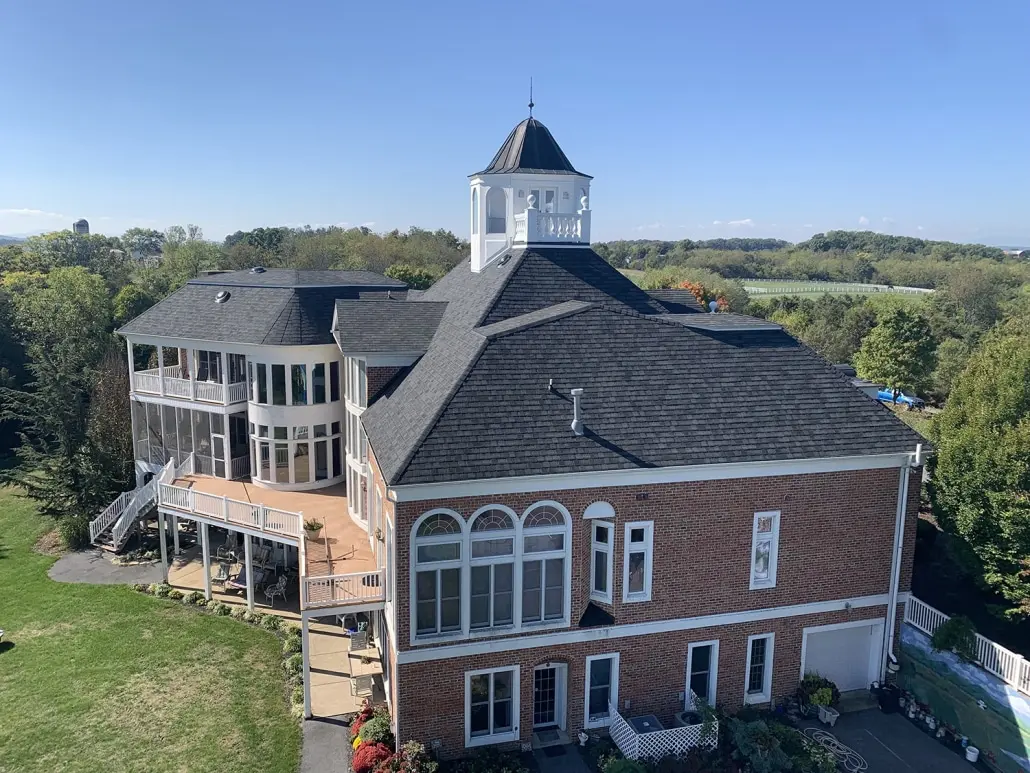
Browse our project gallery to see what quality metal and shingle work looks like on homes in the Valley. When you are ready to talk numbers and specifics, request a free estimate and schedule time with one of our project consultants.