

Why does planning an outdoor space matter more in the Shenandoah Valley?
Our weather, our homes, and our views all shape the design in ways that are easy to overlook:
-
- Seasonal swings: Hot, humid summers and cold, snowy winters demand materials and rooflines that can handle expansion, moisture, and snow loads.
- Historic and traditional architecture: Many homes in Central Virginia feature original rooflines and structures that require careful integration rather than a simple add-on.
- Mountain views: Outdoor spaces here are often designed to capture the Blue Ridge or pasture views, which directly influence orientation and layout.
If these factors are ignored early, the result is often a space that feels disconnected from the home or fails to perform well over time.

What actually happens during your first planning meeting with Valley Roofing & Exteriors?
Many homeowners worry the first meeting will be a quick walk-around followed by a price emailed later that day. That is not how we approach this.
We start by right-sizing the room. If a homeowner says they want a “20×20” addition, we walk inside and measure their living room. Most living rooms are smaller than 400 square feet, and seeing that comparison in real life often shifts the conversation completely.
Next, we look at roofline complexity. Is the existing roof a gable, a studio (shed) style, or a more custom hip-style roof? That answer alone can shift the budget by tens of thousands of dollars.
Then we focus on the use case. Morning coffee? A quiet plant conservatory? A wraparound couch for eight people? An indoor-outdoor extension of the kitchen?
We plan for three hours. We rarely rush this meeting, because there are hundreds of choices that drive the final design and price. A thorough first meeting is not about selling. It is about preventing expensive mistakes later.
How do you avoid common outdoor space planning mistakes?
The most expensive mistakes happen before construction even begins. Many issues come from rushing the planning phase.
We worked with a homeowner in Waynesboro who chose a cheaper contractor after we had quoted the project. That contractor built the addition but could not tie into the home’s existing metal roof. We were called back to install a TPO roof. The homeowner ended up spending drastically more than our original estimate.
| Mistake | Consequence | Prevention |
|---|---|---|
| Oversizing | Wasted space and cost | Compare to interior rooms |
| Poor roof integration | Structural challenges | Evaluate early |
| Undefined purpose | Underused space | Define primary use |
| Rushed planning | Budget overruns | Invest time upfront |
A well-planned project reduces stress, shortens timelines, and improves long-term satisfaction.
How do you determine the right size for an outdoor living space?
Most homeowners either underestimate how much space they will need or overbuild beyond what they will actually use. Oversizing is a common and costly mistake.
| Common Request | Reality Check | Planning Insight |
|---|---|---|
| 12×12 | Feels tight with furniture | Best for small seating areas |
| 16×16 | Moderate usability | Works for dining and seating |
| 20×20 | Large, open feel | Ideal for entertaining |
| 24×24+ | Expansive | Requires strong design intent |
The key is not square footage alone. It is how the space functions with furniture, traffic flow, and intended use.
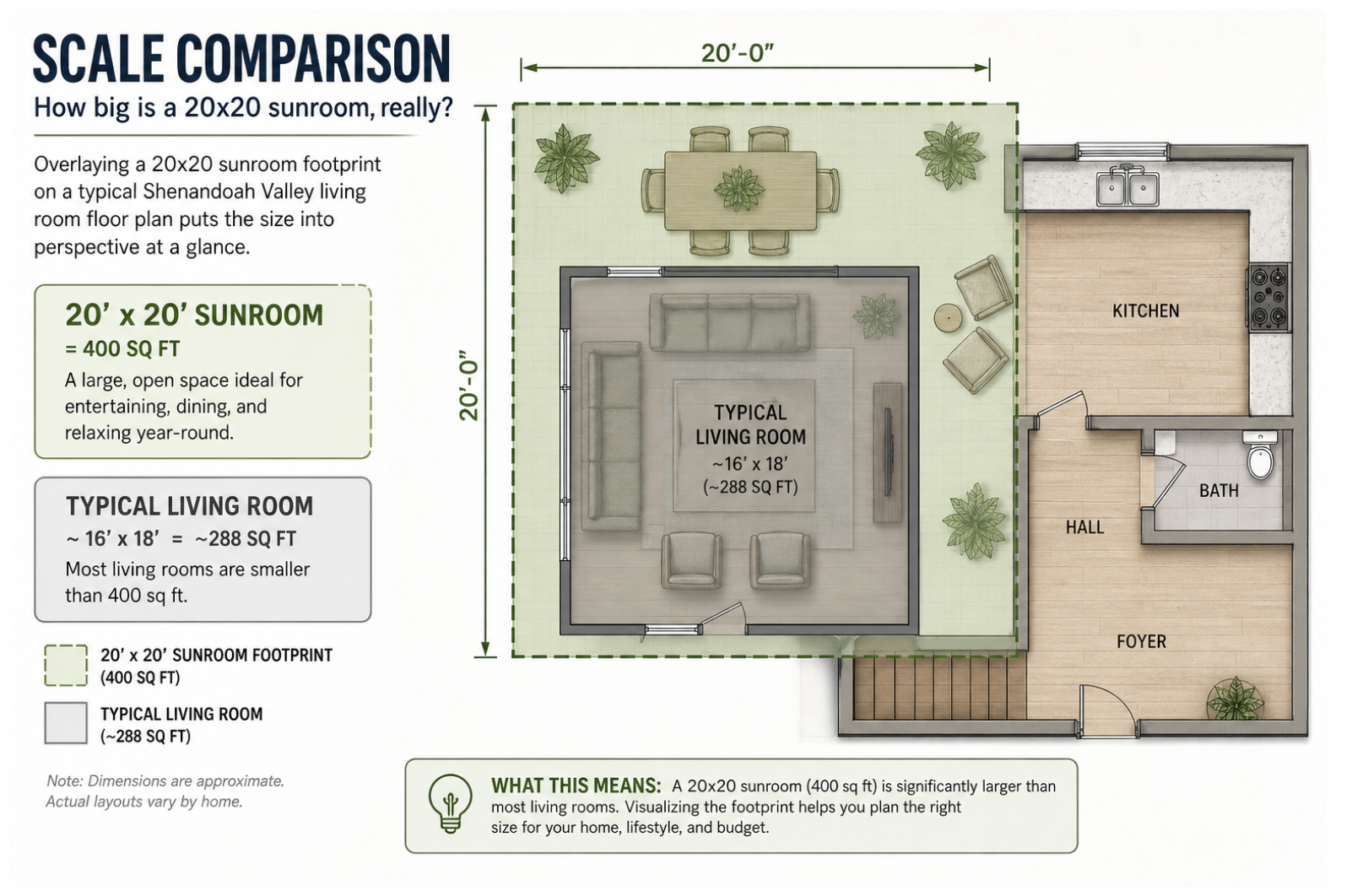
Comparing the proposed footprint to a familiar interior room is the fastest way to feel the scale. That helps homeowners visualize scale more effectively than measurements alone.
How does roof design drive project cost?
Roof design is one of the biggest cost drivers in your entire project.
While size gets most of the attention early on, the way a new structure ties into your existing roof can add or subtract tens of thousands of dollars from the final price.
Here is why:
-
- Structural complexity = higher labor and engineering costs.
A simple tie-in to a flat wall is far less expensive. - Material requirements increase with complexity.
More valleys, ridges, and transitions mean more flashing, more cutting, and more potential failure points that must be properly sealed. - Time on site directly impacts cost.
A straightforward shed roof might take days to frame, while a complex hip or multi-plane gable integration extends timelines significantly.
- Structural complexity = higher labor and engineering costs.
The most complicated tie-in we have completed required blending nearly ten roof planes into one cohesive structure. The finished result was beautiful, but it required careful engineering, additional materials, and a much larger investment than a simpler design.
Common roof styles and their cost impact:
-
- Shed (studio): Typically, the most cost-effective due to its single slope and simpler construction
- Gable: Moderate cost, balancing aesthetics and complexity
- Hip: Higher cost due to additional framing, angles, and structural requirements
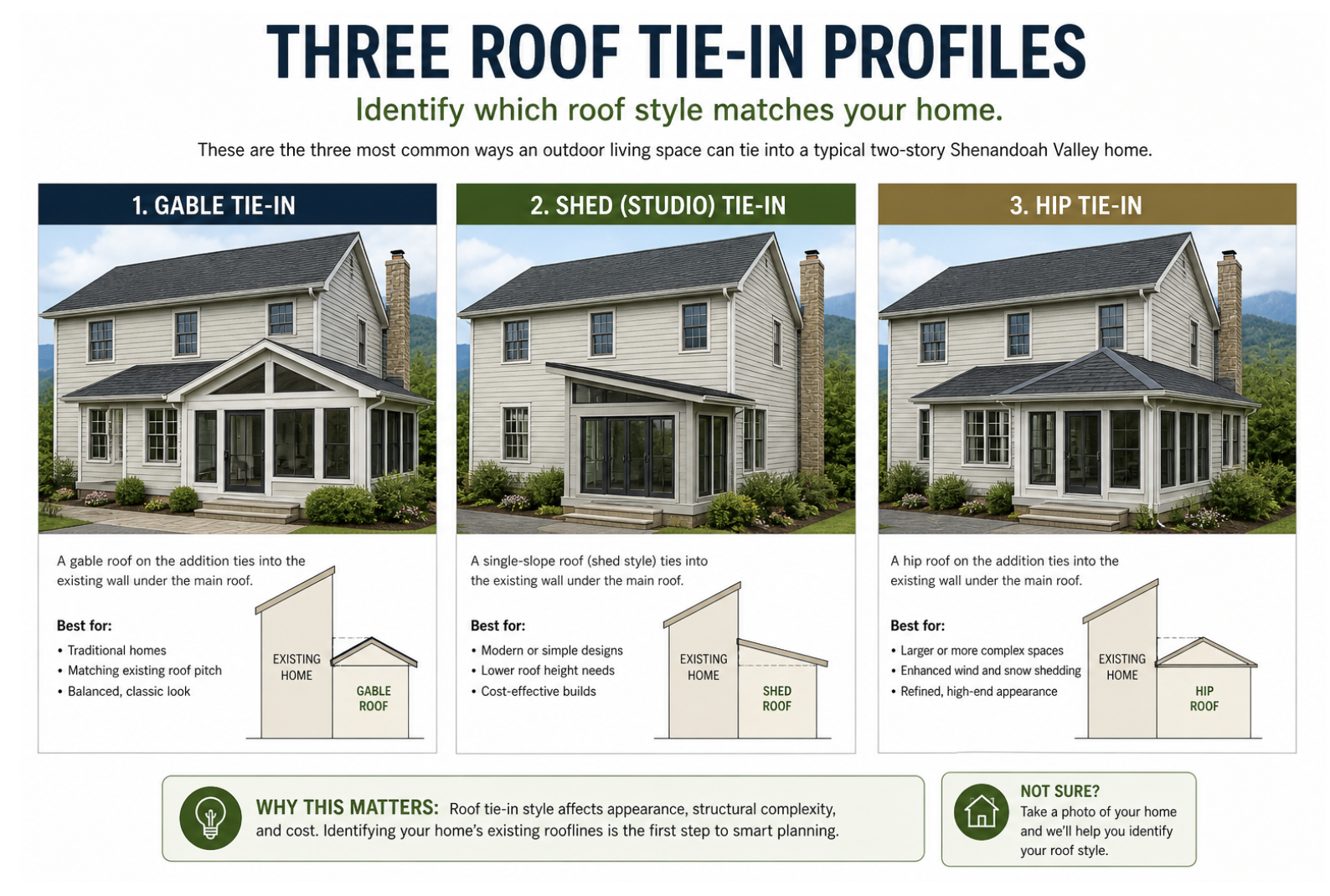
In many Shenandoah Valley homes, existing rooflines are not simple. That means the real cost is not just the new space itself, but how well it integrates with what is already there.
This is why evaluating roof design early is critical. If it is overlooked during planning, homeowners often face redesigns, delays, or unexpected cost increases once construction begins.
The takeaway is simple: The roof is not just a design choice. It is one of the most important financial decisions in your entire project.
How will you use the outdoor space?
The most important question is not size or materials. It is how you will use the space. The purpose of the space should drive every design decision.
Consider the following use cases:
-
- Relaxation: Quiet seating, shade, and privacy
- Entertaining: Open layouts, lighting, and durable surfaces
- Dining: Space for tables, proximity to kitchen access
- Indoor-outdoor living: Seamless transitions with large openings or covered areas
| Use Case | Key Design Features | Common Mistakes |
|---|---|---|
| Morning coffee | Smaller, cozy layout | Oversizing the space |
| Entertaining | Open flow, lighting | Ignoring traffic flow |
| Plant space | Sun exposure, ventilation | Disregarding seasonal changes |
| Multi-use | Flexible layout | Trying to do too much in one space |
Many sunrooms we build become the most decorated room in the house during the holidays.
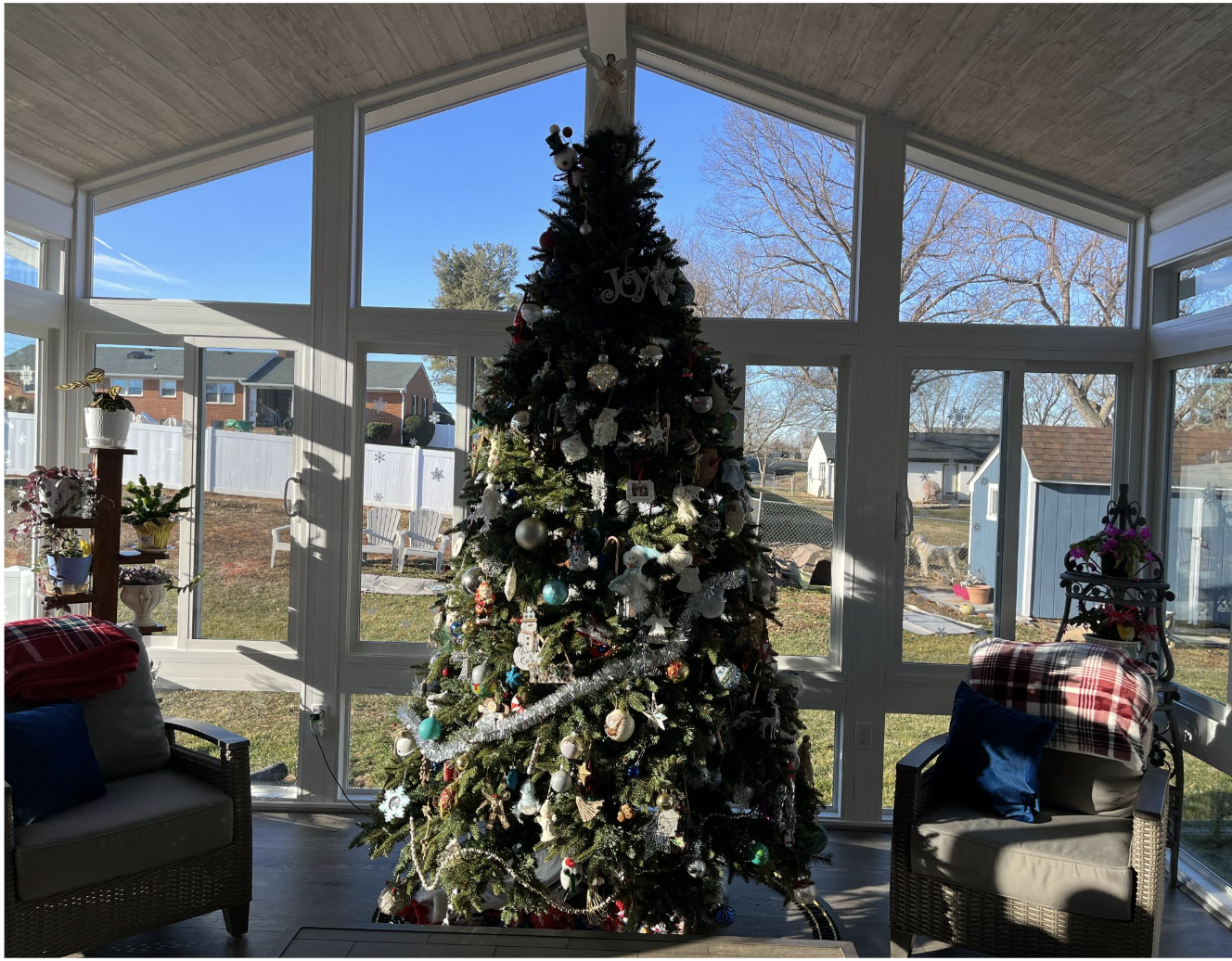
Another common lesson: pairing a small deck beside a sunroom makes the space feel twice as big when guests come over, because people overflow onto the deck rather than back into the house.
What budget clarity should you expect?
Unclear pricing is the single biggest reason outdoor projects exceed their budget.
When a contractor cannot break down where the money is going, three things happen. Scope quietly creeps. Mid-build “surprises” cost extra. And the homeowner realizes that the lowest bid was lowest because something important was left out.
Real budget clarity is not one number on one sheet of paper. It looks like this:
| What You Should See | Why It Matters |
|---|---|
| Multiple design concepts | You compare options before locking in |
| Budget ranges tied to each option | Trade-offs are visible, not hidden |
| Line-item view of major costs | You see what foundation, roof, glass, and finish each contribute |
| Transparency on what drives cost | You know which choices move the number most |
| A clear list of what is excluded | No surprise add-ons three weeks into the build |
Hundreds of decisions drive the final price, foundation, roof, glass, decking, electrical, lighting, finish.
The honest “I want X” conversation needs to happen during planning. Once a homeowner sees the price tied to each item, the wish list usually evolves. The same conversation mid-build is called a change order, and change orders are where budgets die.
If a contractor cannot explain where every dollar is going during the planning phase, they will not explain it any better once the framing is up.
How long does the entire planning and build process actually take?
This question catches most homeowners off guard.
After the first meeting, design and budget alignment usually takes about two weeks. Permitting and drawings add roughly another month. From there, the build itself can run from less than a week (a simple deck) to three months (a sunroom with complex tie-ins). Most homeowners meet with us three to four times before the first nail is driven.
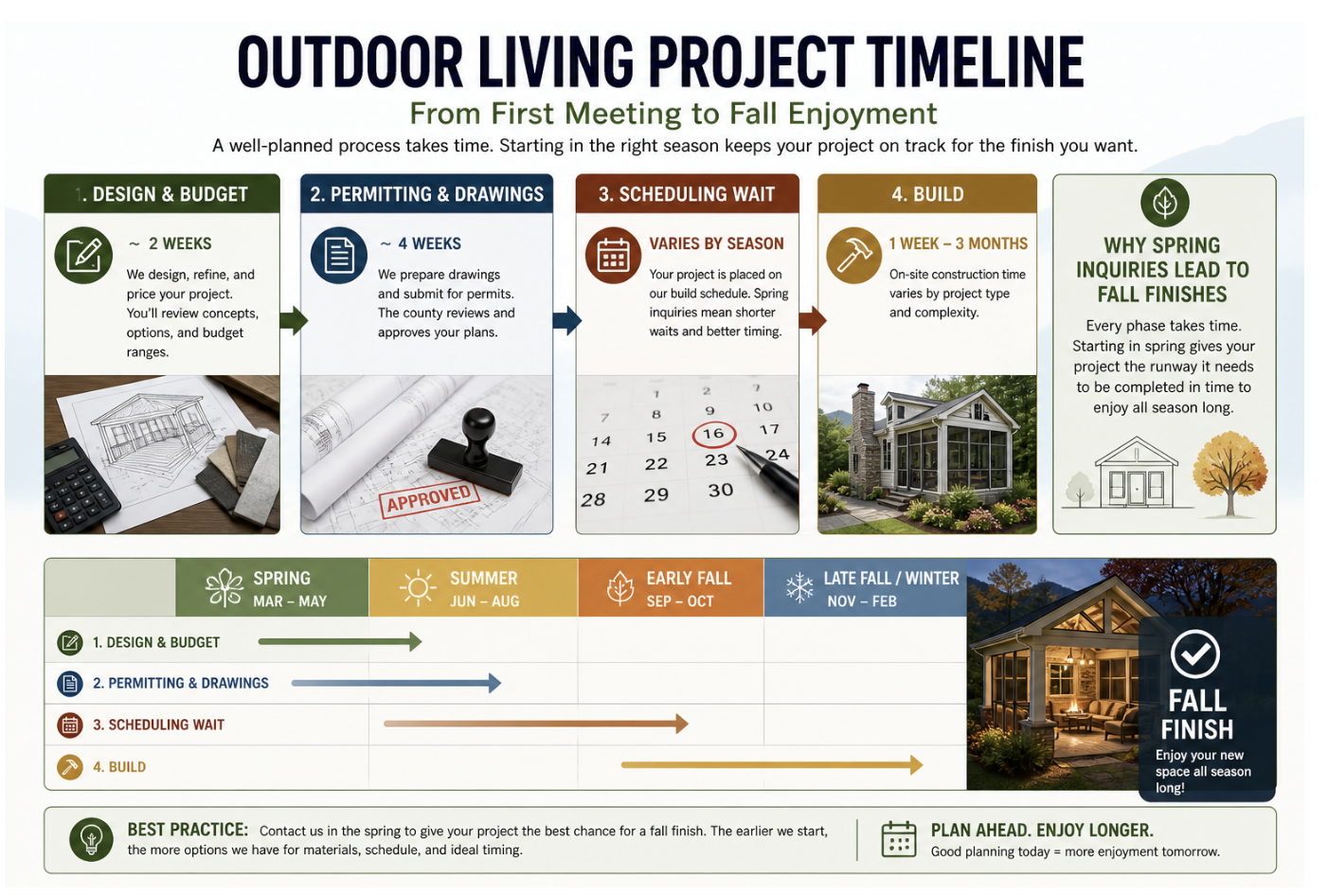
If the goal is a finished sunroom by fall, the time to call is spring. If the call comes in the fall, the build will most likely land the following spring.
What should you do next if you are ready to plan your outdoor space?
Planning an outdoor space can feel overwhelming. There are so many variables that can affect the outcome.
If design and budget are not aligned from the beginning, frustration is almost guaranteed. That is why a thoughtful, in-depth planning process is crucial.
Valley Roofing & Exteriors helps homeowners navigate this process every day, using a system built around real-world experience and transparency.
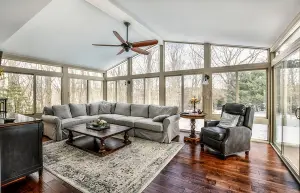
Explore the project gallery to see what well-designed outdoor spaces actually look like in real homes.
If you are ready to plan your outdoor space with clarity and confidence, contact us to begin planning a dream space that truly fits your home, lifestyle, and budget.