

Why does additional work happen on home improvement projects?
First, let us define the term. “Additional work” refers to any change in the scope of your project after work has already started, usually because something was uncovered that nobody could see beforehand.
It is different from “additional cost,” which covers items like per-sheet plywood pricing that are already written into your original contract at a known rate.
Additional work means we found something we did not originally contract to fix, and a new decision needs to be made together. This usually happens when the crew uncovers conditions not visible before demolition began.
Roofs, walls, and exterior assemblies are layered systems. Until we pull back the surface, there are real limits to what any inspection can reveal.
That does not mean every project will have surprises. It means that when surprises happen, they are usually the result of hidden conditions, not bad intentions.
Additional work is not always a red flag. The red flag is how a contractor handles it. If the conversation feels rushed, vague, or pressured, that is a problem. If the contractor pauses, documents the issue, presents options, and lets you decide, that is the right approach.

What makes Shenandoah Valley homes more prone to hidden issues?
Homes in Central Virginia face a specific mix of conditions. Our climate is moisture-heavy, with humid summers, wet springs, and freeze-thaw cycles in winter that create ice damming.
We also have a lot of older housing stock, including homes built decades before modern flashing, ventilation, and underlayment standards existed. Wind and hail add another layer of wear.
-
- Humidity and rainfall — Promotes rot in decking, fascia, and trim. Risk level: High.
- Freeze-thaw cycles — Causes ice damming, especially on north-facing roofs. Risk level: Medium to High.
- Older homes — Original framing and ventilation may be undersized. Risk level: High.
- Wind and hail — Damages shingles and exposes underlying wood. Risk level: Medium.
If your home is older, has a low-pitch roof, or has a north-facing slope that rarely sees direct sun, your odds of hidden issues go up.
What hidden problems most often cause additional work?
In our experience, the issues we uncover mostly fall into the following four categories:
-
-
What happens when rot is found in your home?
-
Rot is the most common issue we discover, showing up in roof decking, fascia boards, and the wood behind siding. When a leak is new, you usually see a stain on your drywall. But when a leak has been quiet for years, the wood acts like a sponge, soaking up water before it reaches your ceiling. Many homeowners are shocked when we open a roof and find heavy rot they never suspected.
-
-
What structural damage might be discovered?
-
Structural problems include sagging decking, shifted framing, and improper past repairs. On homes over 40 years old, the plywood deck can be too soft to hold nails. Installing a new roof over a failing deck is gambling on a foundation that cannot support the investment.
-
-
How do water damage and leaks create bigger issues?
-
Long-term moisture does more than rot wood. It creates conditions for mold, weakens framing, and travels through the home. A leak that looks like a roof problem may actually start at a window, a siding seam, or a pipe boot. Walls, windows, and chimneys all connect to the roof, and water finds the weakest point.
-
-
Can poor previous work lead to additional repairs?
-
Yes, more often than people realize. We see workmanship issues on roughly 25 to 30 percent of homes. Improper flashing, missing underlayment, undersized ventilation, and time-saving shortcuts all create problems we cannot ignore. If the original work was wrong, we cannot install new materials correctly until that mistake is fixed.
Why can these problems not always be found before the project starts?
A pre-project inspection is indispensable, but it does have limits. We can examine what is visible. We cannot see through finished surfaces.
Worn shingles — Yes, detectable before the project. Visible from the surface.
Missing flashing — Sometimes detectable before the project. Partially visible at edges.
Rotted decking — No, not detectable before the project. Hidden under shingles and underlayment.
Framing issues — Rarely detectable before the project. Concealed inside walls and roof structure.
Improper old repairs — No, not detectable before the project. Buried beneath finished surfaces.
A good contractor will tell you upfront that some unknowns are possible. An honest estimate accounts for that uncertainty rather than hiding it.
What happens when additional work is discovered during your project?
When we find hidden damage on a job, the process looks like this: pause the work, document the issue with photos, walk the homeowner through what we found, and present options.
If there are two ways to address the problem, we explain both.
Option A might be the most permanent fix.
Option B might be a smaller repair that fits a tighter budget.
The decision belongs to you, not to the crew on the roof.
How does additional work affect cost and timeline?
The honest answer is that it depends on what we find. Some additional work is small. Some is significant.
| Issue | Cost Impact | Timeline Impact |
|---|---|---|
| Plywood sheet replacement | Priced per sheet in original contract | Minimal |
| Full roof deck replacement | Several thousand dollars | One to two extra days |
| Framing repair | Variable, often substantial | One to two extra days |
| Ventilation correction | Moderate | One to two extra days |
A reasonable contract includes pricing for common items like plywood replacement, so you are not blindsided when a sheet or two needs to come up.
What should you do as a homeowner if additional work is found?
Ask for photos. Ask for a clear written description of the issue. Ask what happens if you do nothing. Ask what the long-term cost looks like compared to the short-term cost.
The biggest mistake homeowners make is focusing only on today’s budget without thinking about what happens five or ten years from now.
The most expensive roof is the one you have to install twice, often because a future home inspector will flag work that was never corrected.
What should every homeowner remember about additional work?
Additional work is a normal part of many projects because hidden conditions exist behind finished surfaces.
What matters is how your contractor handles it.
If they document, explain, and give you options, you’re in good hands. If they pressure or rush you, that is a red flag.
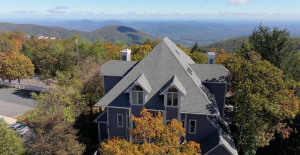
Want to see what quality work looks like in person? Browse our project gallery for examples of completed homes across the Shenandoah Valley.
When you are ready for a clear, no-pressure conversation about your home, schedule a discovery call so that we can review your project and discuss potential risks before any work begins.