
What Is Hardie® Siding and How Does It Perform?
Hardie® siding is a fiber cement product made from cement, sand, and cellulose fibers. It is widely recognized and often considered a premium siding option.
How It Performs in the Real World
When you handle it, you have to be very careful. When you cut it, you have to be very careful. Hardie siding is a rigid product, and that comes with trade-offs.
It is a brittle material requiring very precise installation.
-
- Nails must be placed approximately three-quarters of an inch from the edge
- Nails driven too close to the edge can cause cracking over time
- Overdriven nails can damage the board from behind
Cutting methods matter. Certain tools can create small fractures that are not visible immediately but can lead to chipping or delamination (when the material starts to separate into layers, causing the surface to peel, flake, or break apart over time) years later.
Hardie® siding is not completely immune to moisture. While it does not rot like wood, it can absorb moisture over time and begin to deteriorate or flake under the right conditions.
Impact resistance is another consideration. Because of its rigidity, Hardie® is more likely to crack when struck by debris or objects.
Advantages:
-
- Fire resistance
- Pest resistance
- Strong brand recognition
Disadvantages:
-
- Brittle and prone to cracking
- Highly dependent on precise installation
- Can absorb moisture over time
Ideal Homeowner Profile
Hardie® siding is often best suited for homeowners who:
-
- Prioritize fire resistance
- Are confident in hiring a highly skilled installer
- Are comfortable with a shorter lifespan compared to alternatives
What Is LP® SmartSide® and How Does It Perform?
LP® SmartSide® is an engineered wood siding treated with zinc borate to resist pests and decay. The flexibility of LP® SmartSide® makes it more forgiving during installation, which reduces the risk of long-term issues caused by minor installation errors.
How It Performs in the Real World
Because it is engineered wood, it does not crack under normal conditions
The zinc borate treatment helps protect against insects and decay, reducing long-term risks.
One potential concern is woodpecker damage. While rare, it can occur with any wood-based product. However, proper treatment and lack of insect activity reduce the likelihood.
Advantages:
-
- Impact resistant
- Easier to install
- Longer lifespan
- More forgiving material
Disadvantages:
-
- Wood-based product
- Small risk of woodpecker damage
Ideal Homeowner Profile
LP® SmartSide® is often best suited for homeowners who:
-
- Want long-term value
- Prefer durability with less installation risk
- Want a balance of performance and cost
How Do Hardie® and LP® SmartSide® Compare?
LP® SmartSide®is less prone to breakage during installation and performs more consistently when minor installation imperfections occur.
Cost is one of the most important factors in the decision-making process, and this is where the comparison becomes more meaningful.
In most cases:
-
- Hardie® siding is 5–10% more expensive than LP® SmartSide®
- Material and installation costs are otherwise very similar
Cost Comparison Table
| Factor | Hardie® siding | LP® SmartSide® |
|---|---|---|
| Material Cost | Higher | Moderate |
| Installation | Labor-intensive | Easier install |
| Long-Term Value | Lower | Higher |
The key insight: pricing is close, but value is not equal.
Project cost will still vary based on:
-
- Home size
- Labor complexity
- Preparation and trim work
Which Siding Lasts Longer in the Shenandoah Valley Climate?
The Shenandoah Valley presents a unique combination of environmental conditions that directly impact siding performance:
-
- High humidity and consistent moisture exposure
- Frequent rain throughout the year
- Seasonal temperature swings cause expansion and contraction
- A mix of historic and modern homes requires different aesthetic approaches
These factors mean siding materials must do more than look good; they must perform consistently over time.
Moisture is the biggest test. Even materials marketed as “moisture resistant” can fail if installed improperly or exposed to long-term water intrusion. In this region, installation quality and material behavior under moisture stress matter.
Lifespan is one of the most important differences between the two products.
-
- Hardie® siding: 30-year warranty
- LP® SmartSide®: 50-year warranty
That 20-year difference has a major impact on long-term value.
Real-World Value Example
For a $60,000 siding project:
-
- Hardie®: $2,000 per year over 30 years
- LP® SmartSide®: $1,200 per year over 50 years
LP® SmartSide® provides significantly more value over time for nearly the same upfront cost.
Performance Considerations
-
- Both resist rot when properly installed
- Most long-term issues are tied to installation quality
- Moisture exposure will highlight weaknesses in either system
Which Option Requires Less Maintenance Over Time?
Both siding types require ongoing maintenance.
-
- Repainting is typically needed every 15 years
- Routine cleaning is required
- Repairs may be needed depending on exposure and installation quality
Neither product is maintenance-free. Long-term performance depends heavily on installation quality. The biggest factor influencing maintenance is not the material; it is how well the siding was installed.
Which Siding Looks Better on Homes in the Shenandoah Valley?
Appearance often comes down to personal preference.
-
- LP® SmartSide® has a more aggressive, natural wood grain texture
- Hardie® siding offers a smoother finish and specialty profiles like beaded siding
Both options:
-
- Offer a wide range of colors
- Works well on historic and modern homes
Many homeowners prefer LP® SmartSide® for its texture, but both products can achieve strong curb appeal.
What Are the Biggest Problems with Hardie® and LP® SmartSide® Siding?
Hardie® Siding Problems
-
- Brittle material that can crack
- Installation-sensitive
- Can absorb moisture and deteriorate over time
Many of these issues appear years later, often 10–12 years after installation.
LP® SmartSide® Problems
-
- Wood-based material concerns
- Potential for woodpecker damage
Which Siding Is Better for Your Home?
There is no universal “best” option, only the best fit for specific priorities.
| Category | Winner |
|---|---|
| Durability | LP® SmartSide® |
| Cost | LP® SmartSide® |
| Maintenance | Similar |
| Installation Ease | LP® SmartSide® |
| Fire Resistance | Hardie® |
What Should You Do Next?
Choosing siding is not just about appearance; it is about long-term performance, cost, and reliability.
If long-term value is the priority, then LP® SmartSide® is likely the better investment.
If fire resistance is the primary concern, then Hardie® is worth considering.
If installation quality is uncertain, then choosing a more forgiving material becomes critical.
Valley Roofing & Exteriors helps homeowners in the Shenandoah Valley select siding solutions based on real-world performance.
Homeowners often start this process feeling uncertain about which product to trust. Now, there is a clear understanding of how these materials compare and what factors matter most.
The next step is to apply this knowledge to a real home.
We understand that every homeowner has different priorities when it comes to siding.
Based on our experience, LP® SmartSide® is typically the product we recommend first. We have found it offers a strong balance of durability, appearance, and long-term performance in our local climate.
That said, we also install Hardie® siding and are fully equipped to deliver a high-quality result with either option. The right choice ultimately depends on your goals, your budget, and what matters most to you as a homeowner.
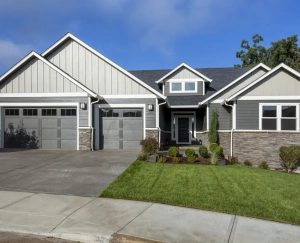
View our project gallery to see examples of completed siding projects and what quality installation looks like.
If you are ready for a personalized recommendation, schedule a consultation so we can evaluate the best option for your home and situation.