
What makes deck board selection different in the Shenandoah Valley?
Choosing deck boards in the Shenandoah Valley is not the same as choosing them in other parts of the country. The local climate creates a unique challenge.
Materials in this area must handle:
-
- Extreme heat in the summer
- Freeze-thaw cycles in the winter
- High moisture exposure year-round
The result: deck boards expand, contract, absorb moisture, and dry out repeatedly throughout the year.
If a material cannot handle both moisture and temperature swings, it will fail faster in this region.

What are the main types of deck boards homeowners can choose from?
Most homeowners will choose from five main categories:
-
- Pressure-treated wood
- Composite decking
- PVC decking
- Hardwood decking (like IPE or teak)
- Thermally modified wood
Each option comes with trade-offs in cost, durability, maintenance, and appearance. The sections below break down how they compare in real-world conditions.
How does pressure-treated wood decking compare to other deck boards?
Pressure-treated wood is the most common and most affordable decking material. It offers a natural look that many homeowners prefer, especially when trying to balance out homes with heavy synthetic materials like vinyl siding.
However, it comes with clear limitations.
Pressure-treated decks have historically been expected to last around 20 years, but in many cases today, that lifespan is closer to 10–15 years, especially if they are not consistently and properly maintained.
Pros:
-
- Lowest upfront cost
- Natural appearance
- Widely available
Cons:
-
- Require regular maintenance (sealing, staining)
- Shorter lifespan
- More susceptible to moisture damage
Best use cases:
-
- Covered porches with less exposure
- Budget-conscious projects
- Short-term solutions (extending the life of an existing deck)
| Feature | Details |
|---|---|
| Cost | Low |
| Maintenance | High |
| Lifespan | 10–15 years |
| Appearance | Natural |
Pressure-treated wood is affordable upfront, but often costs more over time in maintenance and replacement.
What is composite decking, and how does it compare to wood?
Composite decking is made from a blend of wood fibers and plastic, designed to reduce maintenance and increase longevity compared to traditional wood.
However, not all composite decking is the same. Performance, appearance, and durability can vary significantly depending on the manufacturer and product tier. Entry-level composites tend to be more prone to fading, staining, and a more artificial appearance, while higher-end products offer better color retention, more realistic wood grain textures, and longer lifespans.
Compared to wood, most composite options are more resistant to moisture, rot, and insect damage, but how well they perform over time depends heavily on the quality of the product you choose.
Pros:
-
- Lower maintenance than wood
- Longer lifespan than wood (especially mid- to high-tier products)
- Resistant to rot and insects
Cons:
-
- Higher upfront cost
- Appearance varies widely by brand and tier
- Can retain heat in direct sunlight
Some homeowners are satisfied with the durability but disappointed with the look, especially when choosing lower-tier products that appear more “plasticky.” Higher-end composites address this, but are most costly.
| Feature | Composite (varies by tier) | Wood |
|---|---|---|
| Maintenance | Low | High |
| Cost | Moderate to high | Lower upfront |
| Lifespan | 25–30+ years | 10–15 years |
Composite decking can significantly reduce maintenance, but the overall experience, especially appearance and longevity, depends on choosing the right manufacturer and product level.
What are the pros and cons of PVC decking?
PVC decking (pictured below) is a fully synthetic material, which makes it fundamentally different from composite decking. While composite boards still contain wood fibers, PVC boards do not contain any organic material at all.
For homeowners, this difference matters most in how the deck handles moisture, longevity, and performance in extreme conditions.
Pros:
-
- Extremely resistant to moisture
- Long lifespan (often 50-year warranties)
- Ideal for high-exposure or moisture-heavy areas
Cons:
-
- Higher cost
- Less natural appearance
- Can feel less like real wood
PVC is especially recommended for specific applications like covered porch systems with tongue-and-groove boards, where longevity and moisture resistance are critical.
| Feature | PVC Decking |
|---|---|
| Water Resistance | Excellent |
| Cost | High |
| Lifespan | 30-50+ years |
| Maintenance | Very low |
PVC decking is one of the longest-lasting options, especially for moisture-prone areas.
Are hardwood deck boards like IPE or teak worth the investment?
Hardwood decking, including IPE and teak, is considered a premium option. These materials are extremely dense, durable, and long-lasting. In some cases, boards can last 40–50 years or more, and even be reused after structural repairs.
Pros:
-
- Exceptional durability
- Natural, high-end appearance
- Long lifespan
Cons:
-
- Very high cost
- Complex installation (requires pre-drilling)
- Limited availability
Installation is significantly more labor-intensive. These materials are so dense that every fastener hole must be pre-drilled to prevent the wood from splitting.
| Feature | Hardwood Decking |
|---|---|
| Cost | Very high |
| Lifespan | 40-50 years |
| Maintenance | Low to moderate |
| Appearance | Premium |
Hardwood decking offers unmatched longevity but requires a significant upfront investment.
What is thermally modified wood, and how does it compare?
Thermally modified wood is a newer option that bridges the gap between natural wood and synthetic materials. It is created by heating wood under pressure, which alters its structure and improves resistance to rot and moisture.
Pros:
-
- Natural appearance
- Improved durability over traditional wood
- More sustainable than tropical hardwoods
Cons:
-
- Higher cost than pressure-treated wood
- Less widely known
This option is ideal for homeowners who want the look of real wood without the short lifespan of traditional lumber.
Thermally modified wood offers a balance between natural aesthetics and long-term performance.
How do you choose the right type of deck board for your home?
Choosing the right material depends on your priorities, not only the product.
Use this framework:
| Priority | Best Deck Board Option |
|---|---|
| Lowest upfront cost | Pressure-treated wood |
| Low maintenance | Composite or PVC decking |
| Longest lifespan | Hardwood (IPE, teak) or PVC |
| Natural appearance | Wood or thermally modified wood |
There is no single “best” deck board, only the best option for your specific goals and expectations.
What mistakes should homeowners avoid when choosing deck boards?
Many of the biggest regrets happen after the deck is already built. Common mistakes include:
-
- Choosing based on price alone
- Ignoring climate conditions
- Underestimating maintenance requirements
- Selecting materials that do not match the home’s aesthetic
The wrong material choice often leads to higher costs and frustration over time.
How do you confidently choose the right deck board for your home?
Choosing the right deck board is not just about how it looks today. It is about how it performs over the next 10, 20, or even 50 years.
The best choice depends on what matters most to you:
-
- Best for lowest upfront cost: Pressure-treated wood
- Best for low maintenance: Composite or PVC decking
- Best for longest lifespan: Hardwood (like IPE or teak) or PVC
- Best for natural appearance: Wood or thermally modified wood
There is no single “best” material, only the one that aligns with your priorities, your budget, and how much time you want to spend maintaining your deck.
Many homeowners start this process feeling overwhelmed by conflicting information and uncertain about what will actually last. We hope you now have a clearer understanding of how each material performs and what trade-offs come with each choice.
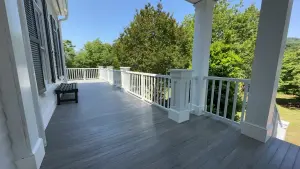
Valley Roofing & Exteriors helps homeowners throughout the Shenandoah Valley make informed decisions about outdoor living spaces built to last. To see what high-quality craftsmanship looks like in real projects, explore the project gallery.
If you are ready to take the next step, schedule a discovery call to discuss the right deck board option for your home.