
Is Adding a Roof to a Deck Worth It in the Shenandoah Valley?
In the Shenandoah Valley, outdoor living spaces face a unique challenge: they are often underused because of the weather.
Rain, humidity, and seasonal swings make open decks far less practical than homeowners expect. Industry insights inform us that open decks may only get used a handful of days per year, while covered spaces are used significantly more often.
A roof transforms a deck from an occasional feature into a functional living space.
There are also design considerations specific to the region. Historic homes and homeowners’ associations’ guidelines can influence how a roof is built, especially when it comes to trim details and maintaining architectural consistency. In many cases, a balance between modern materials and historically appropriate finishes is needed to complete the project.

What Are the Pros and Cons of Putting a Roof Over a Deck?
What are the benefits of a covered deck?
The most noticeable benefit is simple: people actually use the space. Homeowners consistently report that covered areas become part of their daily living space, while open decks are often ignored.
Other benefits include:
-
- Protection from rain and sun
- Increased comfort and usability
- Better long-term value from the deck itself
A covered deck often solves the core problem of underused outdoor space.
What problems can a roof over a deck cause?
In real-world applications, adding a roof tends to solve more problems than it creates. However, potential challenges include:
-
- Structural limitations of the existing deck
- Complexity in tying the new roof into the home
- Design mismatches if not planned correctly
Most issues come from poor planning, not the roof itself.
We run into very few situations where building a roof onto a deck has created problems. In almost all cases, the roof fixes problems.
What Structural Requirements Are Needed for a Roof Over a Deck?
Not every deck is built to support a roof. Here are the key indicators we look for:
-
- Was the deck built with a permit?
If not, it likely was not designed to carry additional weight. - How old is the deck?
Decks older than 10 years may need to be replaced rather than modified. - What is the condition of the structure?
A physical inspection often determines whether reinforcement is possible.
- Was the deck built with a permit?
If the structure is not sound, adding a roof is not safe without rebuilding or reinforcement.
What Factors Drive the Cost of Building a Roof Over a Deck?
The cost of adding a roof over a deck varies widely, but two factors drive most of the price: the roof design and how it ties into your existing home.
1. Roof Design
The type of roof you choose has a direct impact on both material and labor costs. Some designs are simple and efficient, while others require more framing, engineering, and time to build.
Shed (Studio) Roof
A shed roof, also called a studio roof, is the simplest and most cost-effective option.
-
- Slopes in one direction
- Easier to build and tie into the home
- Requires fewer materials and less labor
Best for: Homeowners looking for a clean, functional solution at a lower price point.
Gable Roof
A gable roof has two sloping sides that meet at a peak, creating a more open and balanced look.
-
- Better airflow and ventilation
- More visually appealing for many homes
- Requires more framing than a shed roof
Best for: Homeowners who want a more traditional look and are willing to invest a bit more for aesthetics and comfort.
Hip Roof
A hip roof slopes on all sides, making it more complex to build.
-
- Stronger in high-wind conditions
- More architecturally refined
- Requires additional materials and labor
Best for: Homes where durability and design consistency are a priority.
Custom Designs
Custom roof designs are tailored to the home and may include multiple slopes, angles, or unique architectural features.
-
- Designed specifically for your home’s layout
- Often required for complex roof tie-ins
- Highest cost due to design and labor complexity
Best for: Homeowners who want a seamless, high-end look that fully integrates with their existing roofline.
Key Takeaway: The more complex the roof design, the higher the cost—but also the greater the potential for a seamless, long-lasting result.
2. Roof Tie-In to the Home
-
- Simple tie-ins reduce cost significantly
- Complex tie-ins increase labor and materials
The design and tie-in complexity will determine the majority of your cost.
| Factor | Impact on Cost |
|---|---|
| Roof style | Moderate to high |
| Tie-in complexity | High |
| Structural upgrades | Variable |
| Permitting/engineering requirements | Variable to high |
| Materials | Moderate |
What Are The Hidden Costs of Building a Roof Over Your Deck?
There are not usually “hidden” costs in the traditional sense, but there can be factors that are easy to overlook early in the planning process.
One of the biggest challenges homeowners run into is unrealistic pricing expectations. Many low-cost examples found online are based on DIY projects or non-professional labor, which may not reflect the true cost of a professionally built structure.
In some cases, additional costs can arise from structural adjustments or more complex roof tie-ins than originally anticipated. These are not necessarily hidden, but they may not be fully understood until the project is evaluated in detail.
What Types of Roofs Can You Put Over a Deck?
The most common options include several distinct roof styles, each with its own advantages depending on your home, budget, and how you plan to use the space.
-
- Shed (Studio) Roof – Simple and cost-effective
- Gable Roof – Balanced design with better airflow
- Hip Roof – More complex, often more durable
- Custom Designs – Tailored to the home’s structure
How Do You Choose the Right Roof Style?
In most cases, the decision is not made in isolation. Contractors typically guide homeowners by:
-
- Showing photos of past projects
- Explaining how each design would connect to the home
- Recommending options based on structural and aesthetic fit
Some roof styles work better than others depending on how they tie into the existing roofline, which is often the most important factor in the decision.
The best roof style depends on both aesthetics and how it connects to your house.
Will a Roof Over My Deck Add Value to My Home?
In most cases, yes. A well-built covered deck generally increases both usability and appeal, which contributes to home value.
However, there are exceptions:
-
- If the home already has multiple similar outdoor spaces
- If the project replaces a poorly built structure without adding functionality
Value comes from improving how the space is used, not simply adding a feature.
When Should You NOT Put a Roof Over Your Deck?
There are situations where adding a roof is not the right move:
-
- The deck is structurally unsound
- The deck is older and near the end of its lifespan
- The cost outweighs the expected use
- The home already has sufficient covered outdoor space
If the structure or use case is not right, a roof will not fix the problem.
How Do You Choose the Right Contractor for a Covered Deck Project?
Choosing the right contractor is critical because this project involves both roofing and structural work. Look for:
-
- Experience with roof tie-ins and structural evaluations
- Knowledge of local codes and permitting
- Ability to show past project examples
- Clear explanations of design and cost factors
The complexity of the tie-in and structure makes experience non-negotiable.
Is Putting a Roof Over Your Deck the Right Choice for You?
Adding a roof over a deck can completely change how a home is used, but only if it is done for the right reasons.
If the goal is to create a space that gets used regularly, then a covered deck is often a strong investment.
If the existing deck is older or was not built to support additional weight, then structural upgrades or a rebuild may be necessary first.
If the design integrates well with the home and is built correctly, then it will likely add both function and value.
Homeowners across the Shenandoah Valley often start with the same question: Is this worth it? The answer depends on structure, design, and how the space will actually be used.
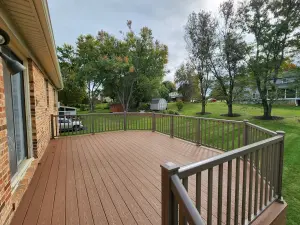
Valley Roofing & Exteriors works with homeowners to evaluate these factors and design solutions that are both practical and built to last. To see what a well-built covered deck looks like, explore the project gallery.
If a more personalized evaluation is needed, the next step is to schedule a discovery call to determine what is possible for your specific home.