How to Choose a Roofing Contractor
10 Questions Every Homeowner Should Ask

10 Questions Every Homeowner Should Ask
Ever lie awake at night wondering if you are about to hand a stranger a five-figure check…and end up with a leaky roof in a few short years?
If you are planning a roof replacement, choosing the right contractor matters. And if you are reading this, you are probably trying to avoid the classic homeowner nightmare: a “new” roof that fails, a contractor who disappears, and water damage that costs more than the roof itself. Roofing feels high-stakes, because it is.
At Valley Roofing & Exteriors, we understand that not every homeowner will choose us for their project, and that is okay. Our goal is simply to help homeowners make informed decisions. This list will help you identify reputable contractors, compare proposals more clearly, and avoid costly mistakes.
Over the years, we have been called in to complete or fix projects after another contractor started the work but could not finish. In many cases, the contractor got in over their head and lacked the experience, equipment, or financial stability to finish the work properly.
We have installed and repaired thousands of roofs throughout the Shenandoah Valley. With more than 22 years in roofing and exterior construction, we have seen the mistakes homeowners regret the most (shoddy workmanship, hidden costs, uninsured contractors).
Because our homes and weather expose shortcuts quickly.
The Shenandoah Valley experiences humid summers, cold winters, heavy rain, and large temperature swings. These conditions put stress on roofing systems and quickly reveal installation mistakes. Research from the Insurance Institute for Business and Home Safety (IBHS) shows roof performance depends heavily on installation quality, not just the materials used.
Many homes in our area are also older or architecturally complex. Historic homes often include multiple roof planes, chimneys, skylights, and siding transitions that require careful flashing work.
Every roof is different. Yet many proposals use the exact same generic template. When the scope of work is not customized to your home, important details are often missing.
Use these questions when comparing contractors. A trustworthy roofer will answer them clearly and confidently.
Virginia contractor licensing is handled through the Virginia Department of Professional and Occupational Regulation (DPOR), Board for Contractors.
West Virginia has its own contractor licensing requirements, and the state is particularly strict about out-of-town contractors working without proper registration. A contractor based outside West Virginia typically must register with the West Virginia Contractor Licensing Board, obtain a state license, and follow additional tax and regulatory requirements before starting the project.
Contractors working in cities such as Harrisonburg, Rockingham County, Staunton, or Waynesboro may need additional local business licensing.
Always ask for the license number and verify it yourself.
Good sign: They provide the license number immediately. They explain how to verify it.
Red flag: “We do not need a license for this,” or “We are licensed somewhere else.”
2. Do you carry general liability insurance and workers’ compensation?
Many homeowners ask if a contractor is insured. Far fewer ask to see proof of insurance.
This proof should come in the form of a Certificate of Insurance (COI) from the contractor’s insurance provider. It shows coverage limits, the policyholder, and whether the policy is active.
Most reputable roofing contractors carry at least $1 million per occurrence and $2 million aggregate in general liability coverage, which is considered the standard minimum for residential roofing projects.
Without proper insurance, you could be financially responsible if something goes wrong on your property.
Good sign: They provide a certificate of insurance showing adequate coverage.
Red flag: “My crew is made of subcontractors, so I do not need workers’ comp.
3. Who will actually be on my roof: employees or subcontractors, and who supervises them? You are not being picky; you are clarifying accountability.
Subcontractors are not automatically a problem. Many reputable roofing companies use experienced subcontract crews who have worked with the same supervisors for years. When crews are properly trained and managed, the quality can be just as consistent as in-house employees.
What matters is whether those crews are vetted and supervised, not randomly hired labor.
Good sign: One clear point of contact, a dedicated supervisor or crew leader.
Red flag: “I am not sure who will be there.”
4. What roof system are you proposing, and why is it right for my home?
A roof is not just shingles. A roof is decking, underlayment, flashing, ventilation, and water-control details working as a system.
When contractors cut corners, problems usually show up in the details.
Flashing around chimneys, walls, and skylights is one of the most common sources of leaks. Each siding material, whether wood, aluminum, or stucco, requires different flashing methods.
Skylights are another common issue. During roof replacement, the surrounding materials are disturbed, and older skylights often start leaking. That is why many contractors recommend replacing skylights during roof replacement.
Good sign: The contractor explains the system and why it fits your home.
Red flag: They only talk about shingle color or price.
5. What happens if a roofer finds hidden damage?
Hidden damage is common during roof replacements. When old shingles are removed, contractors frequently uncover rotted roof decking caused by long-term leaks. Often, the damage is invisible from inside the attic until the roof is opened.
Your proposal should clearly explain how unexpected repairs will be handled.
Good sign: A written change-order process with clear approval steps before additional work commences.
Red flag: “We will figure it out later.”
6. How will you handle flashing around chimneys, walls, skylights, and valleys?
Flashing details are the most overlooked part of roofing.
For example, chimney flashing must be properly integrated into the masonry itself. If the masonry above the flashing is deteriorated, even a perfectly installed flashing system will eventually fail.
These small details separate an average roof installation from a long-lasting one.
Good sign: Clear explanations of step flashing, counterflashing, and water protection.
Red flag: “Flashing is included,” without explanation.
7. How will you ensure my attic ventilation is correct?
Ventilation problems are a common issue we find during roof inspections because ventilation plays a major role in roof performance.
Several common attic issues include insulation blocking soffit vents, bathroom vents exhausting moist air into the attic, and trapped moisture causing mold.
In older homes, ventilation can be difficult to balance.
Another situation becoming more common is spray foam insulation attached directly to the roof deck, which creates a sealed attic with no traditional ventilation. This affects how roofing systems are installed and how manufacturers evaluate warranties.
Good sign: The contractor inspects the attic to confirm airflow.
Red flag: “Ventilation does not matter.”
8. What is the Difference Between a Workmanship Warranty and a Manufacturer Warranty?
Most roofs include two warranties.
The contractor provides the workmanship warranty, which covers installation errors.
The manufacturer warranty covers defects in roofing materials.
Some manufacturers offer extended warranties that also include workmanship coverage, but those systems require strict installation standards.
Good sign: The contractor explains what each warranty covers.
Red flag: They advertise a “lifetime warranty,” but cannot explain the details.
9. How will you protect my property and clean up after the job?
Professional contractors plan clean-up before the project begins. This should include protecting landscaping and driveways, daily jobsite clean-up, magnetic nail sweeps and a final walkthrough inspection.
Problems can occur during construction. What matters is how the contractor handles them.
Good sign: A clear clean-up and protection plan.
Red flag: “We will try our best.”
10. What is the full timeline, and how will you communicate job delays?
Roofing schedules depend heavily on weather. In the Shenandoah Valley, rain and storms can delay work unexpectedly.
Good sign: A good contractor explains the expected project timeline, how weather delays are handled, and how you will receive updates.
Red flag: Unmet expectations, uncertain dates, unexpected additional costs, and vague communication.
The cheapest estimate often omits important details.
When reviewing multiple roofing estimates, use this checklist to compare each contractor line-by-line.
| What to Compare | What you want to see | Why it matters |
|---|---|---|
| License | Virginia DPOR license number | Verified legitimacy |
| Insurance | Certificate of Insurance (COI) | Protects you and your property if something goes wrong |
| Tear-off scope | Layers removed, disposal included | Prevents hidden damage |
| Underlayment | Type and coverage | Impacts leak protection |
| Flashing details | Chimney and wall flashing plan | Most leaks occur here |
| Ventilation | Intake and exhaust strategy | Prevents moisture issues |
| Decking policy | How damage is handled | Prevents surprise costs |
| Warranty | Written workmanship coverage | Clarifies accountability |
| Clean-up | Nail sweeps and protection | Safety and professionalism |
| Communication | Timeline and method of updates | Sets realistic expectations |
Pro tip: When two bids are far apart in price, the scope of work is usually different.
Watch for these warning signs:
One simple but revealing question is: What is the full name and address of your company?
A contractor with an established office and track record is far easier to hold accountable.
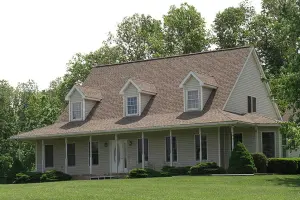
If you ask these ten questions, you will quickly identify which roofing contractors are transparent, experienced, and prepared to do the job right.
If you are still researching, browse our project gallery to see real roofing work completed across the Shenandoah Valley.
If you are ready to talk with a contractor, schedule a discovery call with Valley Roofing & Exteriors to walk you through your roof, your options, and what to expect.
We Make It Last A Lifetime.